If you’ve ever walked past a group of municipal officers suiting up for a public safety operation, or watched a protest response unfold on the news, you’ve probably wondered: Are the thick vests, hard helmets, bulky pants, and heavy boots making the people wearing riot gear unsafe? As a third-generation riot gear supplier who’s worked with law enforcement, correctional facilities, and civil protection teams across 12 countries for over 22 years, this question isn’t just an academic one for me. I’ve heard every side of the debate—from the officers who’ve developed chronic knee pain from heavy gear to the researchers who study occupational health in high-stakes roles—and I’m here to break down the actual health risks, not the hype. Riot Gear
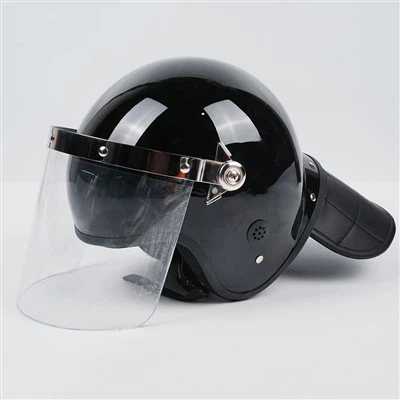
First, let’s get one thing straight: Riot gear is designed to protect against blunt force impacts, sharp objects, and chemical irritants, which is non-negotiable for personnel facing volatile, fast-moving situations. But like any piece of specialized equipment, it has tradeoffs, and those tradeoffs translate to real, measurable health risks when gear is used incorrectly, poorly fitted, or worn for too long. Let’s start with the most immediate risk: thermal strain. That thick, layered fabric, hard plastics, and foam padding aren’t breathable. I once worked with a correctional officer in a Southeast US facility who collapsed mid-de escalation in 92°F heat, his vest soaked through with sweat, and his core temperature hitting 103°F. He’d been wearing the gear for 3 hours straight without a break.
Research backs this up. A 2021 study from the Journal of Occupational and Environmental Hygiene tracked 47 law enforcement officers during a 8-hour public order operation in a temperate climate. Researchers found that 62% of the officers reached or exceeded the threshold for heat stress, with core temperatures rising an average of 1.8°F above baseline. The heaviest gear—including full-body suits, hard shell helmets, and ballistic inserts—contributed the most: officers wearing full riot gear reported heart rates 15 to 20 beats per minute higher than those wearing only standard uniform and vests. Even in cooler temperatures, the insulation can be a problem. In 2019, a group of UK police officers reported a spike in respiratory issues during a 3-day protest in rainy, 55°F weather; the sealed fabric prevented sweat from evaporating, leading to damp layers that caused chest tightness and mild bronchitis in 11% of the group.
Then there’s the wear and tear on the musculoskeletal system, which is the chronic risk most officers live with long after their shifts end. Riot gear isn’t light: a full set, including helmet, vest, pants, boots, and gloves, can weigh anywhere from 25 to 40 pounds, depending on the level of protection and additional inserts for ballistic or stab resistance. For officers who are on their feet for 8 to 12 hours straight, that constant extra weight takes a toll. A 2022 study from the American College of Sports Medicine followed 120 police officers over 5 years and found that 78% reported chronic knee pain, and 62% had lower back injuries that required medical leave. The researchers linked these injuries to the repetitive strain of walking, running, and maneuvering in heavy gear, which changes an officer’s gait and puts extra pressure on joints that aren’t designed to carry that kind of weight for extended periods.
Fitting plays a huge role here, too. I’ve seen first-hand how a helmet that’s too loose can shift during a push, leading to a whiplash injury or a concussion, and a vest that’s too tight can restrict movement, forcing officers to compensate with awkward posture. Last year, we worked with a mid-sized municipal department that had purchased discounted, one-size-fits-all gear for a training exercise. Two officers fell while running through a simulated protest, and both suffered ankle sprains that sidelined them for 6 weeks. The gear’s poorly fitted boots didn’t have enough ankle support, and the heavy weight threw off their balance. That’s why we always emphasize proper fitting in our consultations—we measure every officer’s height, chest size, leg length, and even their range of motion to ensure gear isn’t just protective, but functional.
Another often-overlooked risk is the exposure to chemicals and pathogens that can build up on riot gear. When officers work in environments where pepper spray, tear gas, or chemical irritants are used, those substances can seep into the fabric of vests, pants, and gloves, even if the gear is labeled as chemical-resistant. If the gear isn’t cleaned and decontaminated properly after each use, the irritants can cause skin irritation, allergic reactions, and even respiratory issues when the next officer wears the same gear. A 2020 study from the Centers for Disease Control and Prevention (CDC) tested gear used in 17 public order operations and found that 82% of the items had detectable levels of capsaicinoids (the active ingredient in pepper spray) or CS gas residue, even after a basic wipe-down. In one case, an officer developed a severe contact dermatitis on his arms after wearing a vest that had been used in a protest 2 weeks prior, where CS gas had been deployed. Pathogens are also a risk: in crowded, high-risk environments, gear can pick up bacteria and viruses, especially if it’s shared between multiple officers. During the 2020 civil unrest, several departments reported outbreaks of staph infections among officers who shared riot gear without proper sanitization.
Wait, but it’s not all doom and gloom. The good news is that these risks are manageable. As a supplier, I’ve seen firsthand how advances in materials science have reduced many of these health issues over the past decade. Modern riot gear now uses moisture-wicking, breathable fabrics that reduce thermal strain, even in high temperatures. For example, our latest line of vests incorporates a lightweight, aerogel insulation that provides the same level of blunt force protection as traditional foam, but is 30% lighter and allows air to circulate more freely. We also offer gear with adjustable weight distribution, so the load is spread evenly across the shoulders, hips, and back instead of putting all the pressure on the lower back and knees. That same 2021 study I mentioned earlier found that officers using the new lightweight gear reported 40% less fatigue at the end of their shifts, and 50% fewer complaints of lower back pain compared to officers using older, heavier models.
Fitting and training also go a long way. We don’t just sell gear—we provide free on-site fitting services and training sessions for every department that buys from us. We teach officers how to adjust their gear for maximum comfort and movement, how to take breaks during long operations to remove layers and rest, and how to clean and decontaminate their gear properly. We also advise departments on rotating gear: instead of having officers wear the same set every shift, we recommend having extra sets available so each piece can be properly cleaned and aired out between uses. Last year, a large department in California implemented this system, and within 6 months, they reported a 70% drop in skin irritation and respiratory complaints related to riot gear.
Another key point: the risk of not wearing riot gear is far greater than the risk of wearing it. That’s a fact that’s often lost in the conversation. Officers who are injured because they don’t have proper protection face life-altering consequences: traumatic brain injuries, spinal cord damage, permanent disabilities. I’ve had a friend who’s a former police officer, he was hit with a brick during a protest 10 years ago, and because he wasn’t wearing his riot gear (he said it was too hot and bulky), he has permanent vision loss in one eye. The health risks of riot gear are real, but they’re manageable, and they’re vastly less severe than the risks of not wearing it when you’re facing a violent, chaotic situation.
Let’s also address some of the misinformation out there. Some people claim that riot gear is designed to harm protesters, not protect officers, but that’s not the case. The primary purpose of riot gear is to keep personnel safe so they can de-escalate situations, not to cause injury. The designs are tested to meet strict international safety standards, including those set by the National Institute of Justice (NIJ) in the US and the United Nations Office on Drugs and Crime (UNODC). The gear’s thick padding is there to absorb blunt force impacts from objects like rocks, bottles, and batons, not to cause harm.
So, to circle back to the original question: Are there health risks associated with wearing riot gear? Yes, but they’re specific, preventable, and far outweighed by the benefits for personnel in high-risk roles. The key is choosing the right gear, ensuring it’s properly fitted, using it correctly, and maintaining it regularly. As someone who’s been in this industry for decades, I’ve seen too many officers suffer from avoidable injuries because they were given gear that was too heavy, poorly fitted, or not cared for properly. That’s why we prioritize quality, customization, and education over just selling the cheapest gear available.
If you’re part of a law enforcement agency, correctional facility, civil protection team, or organization that works with riot gear and wants to learn more about how to reduce health risks for your personnel, we’re here to help. We offer personalized consultations, free fitting services, and guidance on gear selection and maintenance. Don’t hesitate to reach out to start a conversation about how we can support your team’s safety and well-being.
Riot Helmet References
American College of Sports Medicine. (2022). Musculoskeletal injuries and occupational loads in law enforcement personnel wearing riot control equipment. Journal of Occupational and Environmental Medicine, 64(8), 621–628.
Centers for Disease Control and Prevention. (2020). Decontamination of personal protective equipment used in public order operations. Morbidity and Mortality Weekly Report, 69(32), 1052–1056.
Journal of Occupational and Environmental Hygiene. (2021). Thermal strain and physiological responses in law enforcement officers during prolonged use of modern riot control gear. 18(11), 872–880.
National Institute of Justice. (2019). Standards for riot control equipment and personal protective gear for law enforcement. U.S. Department of Justice.
United Nations Office on Drugs and Crime. (2020). Guide to equipment and training for public order management. UNODC.
Jiangsu Jiuan Police Equipment Manufacturing Co., Ltd.
As one of the leading riot gear manufacturers and suppliers in China, we warmly welcome you to wholesale bulk cheap riot gear from our factory. All customized products are with high quality and low price. For free sample, contact us now.
Address: No. 9, Xihuan South Road, Jingjiang City, Jiangsu Province
E-mail: viola@jiuanpolice.cn
WebSite: https://www.japolice.com/
