If you’ve ever spent time on a construction site, in an automotive repair bay, or even assembling heavy industrial equipment, you know fully threaded bolts are the unsung heroes holding most projects together. As a bolt supplier, I’ve seen firsthand how even a tiny mistake in thread depth measurement can turn a seamless installation into a costly, time-consuming headache. Last month, we had a customer send back a batch of M12 fully threaded bolts because their on-site inspector thought the thread depth was too shallow—only to find out their measurement tool was calibrated for standard nut threads, not the through-thread design of our bolts. That mix-up stuck with me, and it’s exactly why I wanted to break down how to correctly measure the thread depth of fully threaded bolts, straight from someone who spends every day shipping these parts to workshops across North America. Fully Threaded Bolts
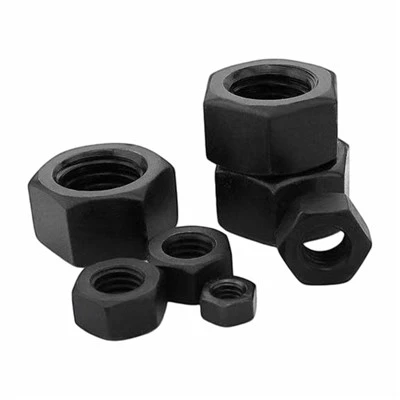
First, let’s get clear on what fully threaded bolts actually are, because that’s half the battle when measuring their thread depth. Unlike regular bolts that only have threads on the last portion of the shank, fully threaded bolts have continuous threads from the head all the way to the very tip. That means their thread depth isn’t just a section to check—it’s the entire length of the threaded shank, and measuring it wrong is easy if you don’t know what you’re looking for. A lot of new inspectors (and even some experienced ones) mix up thread pitch with thread depth, or forget that fully threaded bolts don’t have an unthreaded shank to use as a reference. That’s the first key point: this process doesn’t work the same way it does for standard bolts.
Let’s start with the tools you actually need. You don’t need a fancy lab setup, just a few standard pieces you can find in any quality control (QC) or workshop space. First, a digital depth micrometer is my go-to—an analog one works too, but digital is faster and more precise, especially for the small, fine threads used in most automotive and precision applications. Next, a thread pitch gauge; this is the small, plastic or steel tool with notches cut to exact thread pitches, used to identify how many threads are per unit of length (like 1.5mm for metric bolts or 1/2 inch for imperial). You’ll also need a clean work surface, a pair of nitrile gloves (to avoid oil or debris messing with measurements), and maybe a marker or small notepad to record readings—nothing complicated, but skipping any of these can throw off your numbers.
Wait, hold on—let’s make sure we’re defining thread depth correctly here. Thread depth is the distance from the peak (the top edge) of a thread to the root (the bottom valley between two threads), right? For standard bolt threads, there’s an exact formula for that: for metric bolts, it’s 0.6495 times the pitch, and for imperial, it’s 0.6495 divided by the number of threads per inch (TPI). But that’s for the theoretical depth. When we measure actual thread depth on a physical bolt, we’re checking how closely the finished part matches that theoretical value, because variations here mean the bolt won’t seat properly or won’t grip as it’s supposed to. For fully threaded bolts, since the entire shank is threaded, we’re also confirming that the total length of the threaded shank meets the specification from the customer’s order and industry standards. A lot of people forget that fully threaded bolts have a specified thread length, not just thread depth—so both go hand in hand.
Now, step-by-step: let’s walk through this like we’re in our QC department, checking a batch of M10 x 50mm fully threaded bolts that just came off the production line. First, prep the bolt. Take it out of the packaging, wipe it down with a lint-free cloth to remove any manufacturing lubricant or metal shavings—debris in the thread valleys will make your micrometer give a reading that’s too high, and that’s a mistake we see all the time. Lay it flat on the work surface, making sure it’s not rolling or tilted; if it’s moving, you’ll get inconsistent measurements.
Next, identify the thread pitch. Grab your thread pitch gauge. For our M10 bolt, we’d test each notch until we find one that slides into the threads perfectly, without rocking. For metric M10 bolts, the standard pitch is 1.5mm, so that’s what we’d mark down. This is critical because if you use the wrong pitch, your theoretical thread depth will be wrong, and your actual measurement will be off. I always tell our QC team to confirm the pitch three times—we once had a batch of bolts where a machine had cut the wrong pitch, and catching that early saved us a customer from wasting 200 pounds of product.
Now, measure the actual thread depth. Here’s where fully threaded bolts differ from regular bolts. For a standard bolt, you’d place the micrometer at the end of the unthreaded shank and measure from the shank surface to the thread peak, but fully threaded bolts don’t have that smooth shank. Instead, you’ll take your depth micrometer’s anvil (the flat, round end) and press it firmly but gently into the valley of a thread. Wait—wait, no, let’s get that right: you want the anvil to sit in the root of the thread, and the measuring tip to sit on the peak of the adjacent thread. That way, you’re measuring from root to peak, which is exactly the thread depth. For fully threaded bolts, you can do this anywhere along the shank, because the threads are uniform from head to tip—but we usually take three measurements: one near the head, one in the middle, and one near the tip. If all three are within the allowed tolerance, that tells you the threads are consistent. For our M10 x 50mm bolts, the theoretical thread depth is 0.6495 x 1.5mm, which is roughly 0.974mm. Most quality standards allow a tolerance of +/- 0.05mm, so anything between 0.924mm and 1.024mm is acceptable.
Then, confirm the total threaded length. This is another key part of measuring fully threaded bolts, because sometimes the thread depth is right but the bolt is only threaded partway (which would make it not fully threaded at all). To do this, you can use a combination of a vernier caliper and the thread pitch gauge, or a specialized threaded length gauge. For our 50mm bolt, the specified threaded length is almost always 50mm (that’s what makes it “fully threaded”), so you’ll measure from the underside of the bolt head to the very tip of the last thread. Make sure there’s no unthreaded shank here—if there’s even 0.5mm of smooth shank at the tip, that bolt doesn’t meet the fully threaded requirement. I always recommend checking this right after the thread depth measurements, because it’s a quick way to spot a major defect without overcomplicating things.
Wait, what about common mistakes I’ve seen over the years? Let’s list a few, because these are the ones that cause the most issues. First, using a flat-tipped micrometer instead of a depth micrometer. A regular outside micrometer is designed to measure outside diameters, so if you try to use it to measure thread depth, you’ll get a reading that’s way too high—because it’s sitting on the top of the thread, not held in the valley. That was exactly the mistake our customer made earlier; their inspector used a standard outside micrometer, which measures from the peak of one thread to the peak of the next, not root to peak. That’s a critical distinction. Second, not accounting for tolerance. No manufacturing process is perfect, so every bolt will have a tiny variation in thread depth. The key is to know what the required tolerance is for your application—construction bolts might have a wider tolerance than aerospace bolts, for example. Third, measuring only one thread. If you take a measurement near the head, you might miss a spot where the machine’s cutting tool was worn, leading to a shallow thread in the middle of the shank. That’s why taking three measurements is non-negotiable for us. Fourth, not cleaning the bolt first. A tiny piece of metal shavings in a thread valley can add 0.02mm to your measurement, which might not sound like much, but for a M6 bolt, that’s a huge difference that could lead to a rejected batch.
What if you don’t have a depth micrometer? We sometimes have customers ask about that, especially smaller workshops that don’t want to invest in specialized tools. A thread plug gauge can work as an alternative, if you have one matched to your bolt’s size. A thread plug gauge is a metal tool with external threads that exactly match the bolt you’re testing. If the gauge screws all the way onto the fully threaded bolt without forcing or rocking, that means the thread depth is correct. But this is only a go/no-go test, not a precise measurement—if you need exact numbers for your QC records, a micrometer is still necessary. We always tell our customers that if they’re testing critical bolts (like for automotive or heavy machinery), investing in a digital depth micrometer is worth every penny to avoid mistakes.
Another thing to keep in mind: different standards for fully threaded bolts. In the US, most bolts follow ASME B1.1 standards for unified threads, while in Europe it’s ISO metric threads. The formula for theoretical thread depth is slightly different? Wait, no—actually, the basic depth for standard V-threads is 0.6495 times the pitch for both, but the tolerance limits might vary slightly between standards. That’s why it’s so important to check the spec sheet that comes with your bolts, or the order requirements, before you start measuring. As a supplier, we always include the thread depth tolerance on our packaging for every batch, so our customers don’t have to guess.
Let me give you a real example from last month, to make this concrete. We shipped a batch of 1/2”-13 x 6-inch fully threaded bolts to a construction company in Chicago. Their QC team contacted us saying they’d rejected 20% of the batch because they thought the thread depth was too shallow. When we asked for their measurement process, they told us they used a standard outside micrometer to measure from the shank (wait, no, their bolt was fully threaded—they tried to measure across two thread peaks, thinking that was the depth). That’s exactly the mistake I mentioned earlier. We walked them through the correct process, they re-measured each bolt with a depth micrometer, and found that 98% of the batch was within tolerance. They adjusted their process, and we’re now a long-term supplier for that company.
Now, for all our new customers or workshop owners reading this: if you’re ordering fully threaded bolts, ask your supplier what measurement tools they use, and what their tolerance standards are. A reputable supplier (like us) will share their QC process with you, and will stand behind their products if measurements fall short. When you receive your bolts, do a small sample test—check 10 out of 100 bolts, take three readings each, and compare to the spec. That’s a quick way to catch any issues before they derail a project.
At the end of the day, measuring thread depth of fully threaded bolts isn’t rocket science, but it does require paying attention to the details. It’s not the same as measuring a standard bolt, it needs the right tools, and you have to account for the fact that the entire shank is threaded. Too many people rush through this step, skip the middle measurements, or use the wrong tool, and that leads to rejects, delayed projects, and extra costs.
If you’re in the market for high-quality fully threaded bolts, whether for construction, automotive, industrial machinery, or any other application, we’re here to help. We use strict, calibrated measurement processes for every batch we ship, and our team is always ready to walk you through any questions about thread depth, tolerance, or specifications. Reach out to our sales team to discuss your project needs, get a quote, or ask for more details on our QC procedures. Don’t let incorrect thread depth measurements hold your work back—let us provide the reliable, precision-machined fully threaded bolts you need to get the job done right.
Anchor Bolts References
ASME B1.1-2020, Unified Inch Screw Threads (UN and UNR Thread Form)
ISO 68-1:2020, General purpose screw threads — Basic profile — Part 1: Metric screw threads
Machine Repair and Maintenance: A Practical Guide to Fastener Inspection and Testing, Industrial Press, 2022
Handan Jihao Fastener Co., Ltd.
We’re known as one of the most professional fully threaded bolts manufacturers and suppliers in China. With abundant experience, we warmly welcome you to wholesale customized fully threaded bolts made in China here from our factory. If you have any enquiry about cooperation, please feel free to email us.
Address: A2, Row 31, Feiyu Screw World, Hebei Pu, Linmengguan Town, Yongnian District, Handan City, Hebei Province
E-mail: wenzhaona0@gmail.com
WebSite: https://www.chinaboltnut.com/
