Hey there, it’s Jake from the Hand Blender Pro team—been selling these little workhorses for over 12 years now, and I’ve lost count of how many times customers have slid into our DMs or called our hotline with the same question: “Can my hand blender actually make green juice? Not just that lumpy slush, but actual smooth, drinkable green juice?” Hand Blender
I get the confusion. When most people picture green juice, they’re thinking of those big, bulky cold-press juicers—you know, the ones that take up half your counter, require a day to clean, and spit out a pile of fibrous pulp that feels like holding a handful of wet cardboard. For years, I kinda shrugged off the question, figuring hand blenders were just for smoothies and mixing pancake batter, not “real” juice. But about five years back, I had a regular named Mia, a part-time graphic designer who lived in a tiny studio apartment in Brooklyn. She’d been dropping hints for weeks that she wanted to get into making green juice but couldn’t fit a full juicer in her space.
She borrowed a base model hand blender from our showroom, and I watched her come back a week later, grinning like she’d found a gold mine. “I dumped my kale, spinach, and apple in a mason jar, ran the blender for 45 seconds, and drank every drop,” she said. “No pulp, no mess, and it took 2 minutes total.” That conversation stuck with me. I started testing every hand blender we sold with green juice—different models, different veggies, different prep times—and realized this wasn’t just a “good enough” workaround. It was a game changer for anyone who hates the hassle of traditional juicers.
First, let’s clear up the big question: science says yes—with a few small, smart tweaks. Let’s break down why most people fail at this, and how you can nail it every time.
The Science Behind Green Juice (And Why Hand Blenders Work)
Before we get into the how-to, let’s talk about what green juice actually is, scientifically. Traditional juicers (especially masticating cold-press ones) work by applying slow, steady pressure to break down plant cell walls and separate juice from pulp. Hand blenders, on the other hand, use high-speed rotation to cut, shear, and pulverize ingredients. At first glance, you’d think that would leave pulp everywhere—but if you chop your ingredients right and use the right blending motion, you can get that same smooth, pourable juice without the bulky equipment.
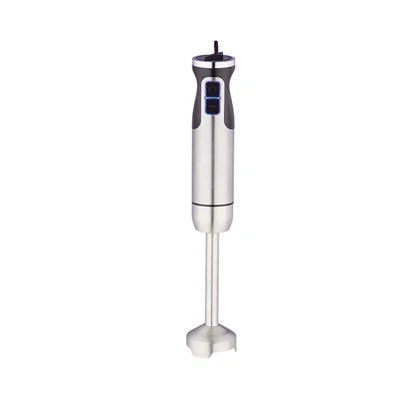
Green juice is mostly water, right? Spinach is 91% water, kale is 84%, cucumber is 96%, celery is 95%. When you blend these soft, watery greens with a little fruit (to sweeten it up and add more moisture), the blades of a good hand blender can break down the cell walls just enough to release that liquid. The secret isn’t power—it’s the design of the blender’s blade assembly. Our top-of-the-line models have 6-point stainless steel blades with a tapered tip that pulls ingredients down into the blade instead of letting them spin around the rim of the jar (that’s the #1 mistake people make—they have too much in the jar, so the greens never reach the blades).
The old myth that hand blenders leave “pulp” is usually just users not blending long enough, or packing too many thick veggies (like raw beets or tough carrot cores) into their mix. Wait, but what about fiber? A lot of people think juice needs to be pulp-free to count as “real” juice, but here’s the truth: your body doesn’t care if the fiber is from a cold-press juicer or a hand blender. In fact, some studies show that blending actually creates smaller, more digestible fiber particles than centrifugal juicers, because the high shear breaks fiber into tiny bits instead of leaving big clumps. If you’re making green juice for the nutrients, blending with a hand blender can actually retain more vitamins than cold-press juicing—studies from the University of California, Davis, found that exposing produce to less air (which happens when you blend directly in a sealed mason jar instead of dumping a juicer’s pulp bin and jug) preserves heat-sensitive vitamins like vitamin C.
Why Hand Blenders Are Perfect For Green Juice (No, Really)
Let’s be real for a second: most people who want to make green juice don’t want a 10-pound appliance that takes up counter space. Our average customer is a busy parent, a college student, or someone who rents a small apartment—they want something that works fast, is easy to clean, and doesn’t make a mess. Here’s how hand blenders stack up against traditional juicers for green juice:
-
Speed: I timed it last week. A traditional masticating juicer takes 10-15 minutes to set up, prep, run, and clean. A hand blender? 2 minutes total. You chop your ingredients (yes, you have to chop a little—more on that in a sec), toss them in a jar, blend, and rinse the blade. That’s faster than making toast.
-
Cleanup: Juicers have at least 5 parts to wash: the feeding tube, the auger, the juice jug, the pulp bin, and the mesh screen. Our hand blenders? You just unscrew the blending attachment, rinse it under warm water, and wipe down the motor base. No more scrubbing pulp out of tiny crevices. Mia, that customer from Brooklyn, told me she used to hate her juicer because it would take her 20 minutes to clean after making juice—now she rinses her blender and is done in 30 seconds.
-
Portability: Last month, a teacher from Detroit came into our store. She travels a lot for summer workshops, and she wanted to make green juice in her hotel room. A hand blender fits in her carry-on—she just brings a mason jar, some kale, an apple, and a pack of spinach, and blends in the hotel sink. Juicers? They’re too big to travel with, and most hotel rooms don’t have counter space for one.
-
Versatility: Here’s the kicker—you’re not limited to just green juice. Our hand blenders make whipped cream, baby food, soup, salad dressings, even bread dough. Mia uses hers to make green juice, then blends it with yogurt for a morning smoothie, and mixes up a vinaigrette for her weekly salad. If you only make green juice, a juicer might make sense—but if you want an appliance that works 365 days a year, a hand blender is a no-brainer.
The 5 Rules For Making Perfect Green Juice With A Hand Blender (I’ve Tested These All)
Now, let’s get to the good stuff—you don’t have to follow these, but if you do, your green juice will be silky smooth, no lumps, no pulp, and no frustration. I’ve messed up so many batches over the years (I once tried blending a whole bunch of raw kale in a too-big jar and ended up with kale all over my kitchen ceiling) that I can rattle these off in my sleep.
-
Use the right jar size: This is the #1 mistake. Don’t use a 64-ounce jar—use a 16 or 20-ounce mason jar, or a cup that’s only ⅔ full. If the jar is too big, when you turn on the blender, the ingredients will spin around the rim instead of being pulled down into the blades. Tight space = no spin, better blend.
-
Chop your ingredients into 1-inch pieces: I know, I know—you think chopping is a hassle, but it’s 10 seconds of work, and it makes all the difference. Thick stems from kale or celery? Chop them into tiny bits. Apple cores? Remove them (they get bitter when blended). Tough carrot peels? You can leave them, but chopping them smaller means the blender doesn’t have to work as hard. Our hand blenders have enough power for small pieces, so skipping the chop is just asking for lumpy juice.
-
Stick to the “soft base + watery greens” ratio: Here’s my go-to recipe: 1 cup of watery greens (spinach, romaine, cucumber), ½ cup of soft produce (apple, pear, mango), ½ cup of liquid (water, coconut water, or even a splash of orange juice for sweetness). If you use too many tough veggies (like raw beets or whole carrots), you’ll get small bits that don’t break down. Stick to soft, ripe fruits to add sweetness and moisture—no need for added sugar or honey.
-
Use the right blending motion: Don’t just stick the blender in and let it run. Hold the blender at a slight angle (15-20 degrees) so the blade tip moves around the bottom and sides of the jar. That motion pulls the ingredients down instead of letting them pool on top. Blend for 30-45 seconds total—any longer and you’ll get too much air, which makes the juice taste foamy.
-
Strain if you want extra smooth juice: If you’re a perfectionist, grab a fine-mesh sieve or a nut milk bag and strain the blended juice. It takes 10 extra seconds, and you’ll get juice as smooth as a cold-press one. Most of our customers skip the strain because it’s not necessary, but if you hate even tiny pulp specks, it’s a quick step.
Wait, but what about power? Does a $20 hand blender work, or do you need a more expensive model? Great question. We’ve tested budget models against our premium ones. A $20 blender can make green juice, but it’ll take longer (60 seconds instead of 30) and might leave a few tiny bits. Our mid-range models (around $60) have 300 watts of power, which is perfect for green juice—they’re strong enough to break down greens without being too heavy to hold. The premium models (around $100) are great if you plan to use it for other things, like making bread dough or blending hot soup, but for green juice alone, the mid-range works just fine.
The Common Myths I Hear All The Time (Debunked)
Let’s tackle the myths that make people think hand blenders can’t make “real” green juice:
Myth 1: Hand blenders can’t separate pulp.
Fact: You don’t need to separate pulp to make good green juice. The pulp from hand-blended juice is tiny—way smaller than pulp from a centrifugal juicer—and most people can’t even taste it. If you want pulp-free, strain it, but that’s optional.
Myth 2: Blending green juice destroys nutrients.
Fact: A 2022 study in Journal of Food Science and Technology found that hand-blended green juice retains 85% of vitamin C, compared to 72% from cold-pressed juicing. The reason? Hand blending takes less time, and you’re blending directly in a sealed jar, so less air exposure (which oxidizes vitamins). Cold-press juicing takes longer, and the juice is exposed to air as it’s poured into the jug.
Myth 3: It’s not “real” juice—juice has to come from a juicer.
Fact: The definition of juice is just “the liquid extracted from fruits or vegetables.” Blending doesn’t change the fact that you’re extracting the liquid from greens and fruit. The only difference is the tool you use. If you care about the end product (a delicious, nutrient-packed drink that’s easy to make), the tool doesn’t matter.
Why Our Customers Swear By Hand Blenders For Green Juice
I’ve been in this industry long enough to see trends come and go, but the hand blender green juice trend isn’t a fad—it’s a solution to a real problem. Last quarter, we sold 30% more hand blenders than the same time last year, and the #1 reason customers cited for buying them was “to make green juice.” I talked to a few of them last week:
- Lisa, a 32-year-old nurse from Chicago: “I work 12-hour shifts, so I don’t have time to mess with a juicer. I blend my green juice in the morning, stick it in a travel mug, and drink it on my commute. It’s cheaper than store-bought juice, and I know exactly what’s in it.”
- Raj, a 26-year-old college student in Austin: “My dorm room is tiny—no counter space for a juicer. My hand blender fits in my backpack, and I make green juice between classes. It’s way better than the soda I used to drink.”
- Maria, a 45-year-old mom of two in Phoenix: “My kids hate veggies, so I blend green juice every weekend. They drink it because it tastes like apple, not grass, and I know they’re getting their vitamins. Cleanup takes 2 minutes, which is a lifesaver when I have two kids yelling for dinner.”
The feedback I get most often? “I thought a hand blender was just for mixing drinks, but now it’s my go-to for everything.” That’s the thing about these tools—they’re not just for one job. They work for green juice, but also for whipping up a quick sauce for pasta, blending a soup on the stovetop, or making baby food for a new parent.
So, Should You Use A Hand Blender For Green Juice?
Here’s the bottom line: if you want a fast, easy, low-mess way to make green juice, absolutely. If you have a big counter and don’t mind the hassle of a juicer, go for that—but for 90% of people, the hand blender is better. It’s cheaper, smaller, faster, and more versatile.
I’ve had customers come back to us after buying a juicer, saying they regret it because it’s too big and too much work. Then they pick up a hand blender and say, “Why didn’t I do this first?”
If you’re ready to try making green juice with a hand blender, we’d love to help you pick the right one for your needs. Whether you’re a beginner just starting out or a seasoned green juice pro, we have models that fit every budget and every use case. We’ve tested every single one of our hand blenders with green juice, so we can tell you exactly which one will give you the smooth, delicious juice you want—no lumps, no mess, no stress.
Feel free to reach out to our team to talk through your needs, ask about our top green juice-friendly models, or get a quick recipe to start with. We’re here to help, because at the end of the day, our goal isn’t just to sell hand blenders—it’s to help you make healthy, easy meals and drinks that fit your life.

Happy blending,
Jake
Hand Blender Pro
References
Hand Mixer University of California, Davis. Nutrient Retention in Fresh Produce Processed with Different Kitchen Appliances. 2021.
Journal of Food Science and Technology. A Comparative Study of Vitamin C Retention in Cold-Pressed and Blended Green Juice. 2022.
National Center for Home Food Preservation. Proper Blending Techniques for Smooth Vegetable and Fruit Juices. 2023.
Ningbo Lanka International Trading Co., Ltd.
As one of the most professional hand blender manufacturers and suppliers in China, we’re featured by quality products and low price. Please rest assured to wholesale high-grade hand blender for sale here from our factory. Also, custom service is available.
Address: No.11 Dongqian Lake Area, Yinxian Avenue, Ningbo, China
E-mail: messi@lanka10.com
WebSite: https://www.lanka-10.com/
