If you’ve ever wandered down a pharmaceutical aisle, grabbed a box of snacks from the shelf, or snatched up a tube of toothpaste, you’ve interacted with the end product of an automatic cartoning machine. As someone who’s spent years selling these machines, I can tell you they’re way more than just big metal boxes. They’re the unsung workhorses that turn loose, pre-packaged goods into shelf-ready cartons, all in minutes—no human hands touching every step (well, except for our team when we install and tune them). I get that if you’re a production manager or a small business owner looking to upgrade your line, it’s easy to see these machines as a black box. But breaking them down into their key parts makes them way less intimidating, and way easier to figure out what you actually need for your line. Let’s dive in, no stuffy engineering jargon that makes your eyes cross. Automatic Cartoning Machine
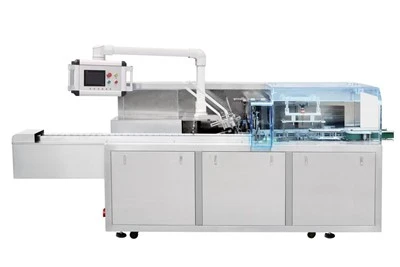
First, let’s start with the part that gets everything moving—wait, no, actually, the very first thing you need is a carton blank supply. Wait, let’s get the order right, because you can’t run a cartoning machine if you don’t have the cartons ready to fold. Most people call this the carton magazine, and it’s exactly what it sounds like: a big, slotted bin that holds all your flat, unassembled carton blanks. Think of it like a giant stack of paper, but made from sturdy cardboard or corrugated board, cut to the exact dimensions of your final carton. The magazine is angled just right so gravity pulls the top blank down to a pick-and-place mechanism, no jamming, no manually feeding each one. I’ve seen cheap, janky magazines that require reloading every hour, but the good ones (the ones we supply) hold enough blanks to run a full shift without stopping. This is non-negotiable, right? If your carton supply is unreliable, your entire line is down. I once worked with a confectionery client who was using a hand-fed magazine that jammed 10 times a day—they lost 2 hours of production weekly. Switched to our high-capacity magazine, and that problem vanished.
Next up is the product infeed conveyor. This is the part that brings whatever you’re packaging—pills, bottles, candy bars, tubes—into the machine, lined up just right for cartoning. No two products are the same, so this part is customizable, which is why we spend so much time talking to clients about their specific items. For bottles, it’s a screw conveyor that lines them up single file; for flat things like snack bars or blister packs, it’s a flat belt with guides to keep them from tipping over. The key here is synchronization. If the product shows up at the cartoning station too early, it gets lost; too late, you jam the entire line. Modern machines use photo eyes or ultrasonic sensors here, not old mechanical switches that break all the time. For example, our machines have adjustable speed controls on the infeed, so if you’re running a slow batch of small vials, you can slow it down, and for a fast batch of large bottles, speed it up without messing up the sync. I’ve had clients try to skip this part and use their existing conveyor, only to have products misaligned—don’t do that. The infeed is the bridge between your production line and the cartoner, so it has to match both.
Now, the heart of the whole operation: the carton erecting station. This is where the flat blank from the magazine gets folded into a real, open carton. Let’s be real, this is where most jams happen if the machine isn’t tuned right. How does it work? First, the pick-and-place mechanism (usually a suction cup or a gripper) snags the top blank from the magazine, pulls it over to the erecting station. Then, a series of metal fingers, folding blades, and pressure pads bend the side flaps, the bottom flaps, and lock them into place—usually with a dab of hot melt glue, or sometimes tuck flaps that snap into place without glue, depending on your carton design. The key here is precision. The blades have to fold the exact right way; if they’re off by even a millimeter, the carton won’t stay closed. For pharmaceutical clients, this is super important because cartons can’t accidentally open before they hit the shelf. We design our erecting stations with quick-change parts, too—so if you switch from a 10ml vial carton to a 50ml one, you don’t have to call a technician to rework the entire station. Swap out the blades and guides in 15 minutes, easy. That’s a big win for small businesses that run multiple product lines.
Once the carton is open and waiting, it’s time to put the product inside. That’s where the product insertion station comes in. This is another area that varies a lot based on what you’re packaging. For single items, like a tube of toothpaste, the insertion arm or a pusher slides the product straight into the open carton. For multiple items—like a box of 10 aspirin tablets in blister packs—you might have multiple pushers working in tandem, timed perfectly to slide each blister into place without damaging them. Some clients need to add inserts here too, like a leaflet of instructions. We call that optional, but if you need it, we can add a leaflet feeder at this station, so it slides right into the carton before the product goes in. The insertion station has to be gentle, too—no squeezing a fragile glass bottle or crumpling a snack bar. We use variable force controls, so you can adjust how hard the pusher or arm applies pressure, no broken products, no waste. A few months back, a cosmetics client reached out because their old cartoner was breaking lipstick caps during insertion. We swapped their rigid pusher for a soft silicone one, and they cut their product damage by 98%. That’s the kind of detail that makes a difference.
After the product is inside, you have to seal the carton up, right? That’s the closing and sealing station. This part is pretty straightforward, but it’s what makes the carton stay closed during shipping and handling. There are two main sealing methods we use, depending on the client’s needs. Hot melt adhesive is the most common—it’s a quick-drying glue that’s applied to the bottom flaps (or top, depending on the carton design) just before they’re folded over. It’s strong, works for almost any carton material, and is fast enough for high-speed lines. The other option is tuck and lock, which doesn’t use any glue—you fold the top or bottom flaps into slots on the carton, so they snap shut. That’s great if you need recyclable cartons and want to avoid glue, or if you’re shipping something that needs to be opened and closed repeatedly, like a cereal box. Some pharmaceutical lines use tamper-evident seals here, too—we can integrate that, so if the carton is opened before it reaches the customer, you know. I always tell clients not to skip this part—bad sealing leads to returns, lost product, and even regulatory issues for food or pharma.
Wait, we can’t forget the brains of the whole machine, right? The control system. This is the part no one sees, but it runs everything. It’s a touchscreen interface, usually with a simple, user-friendly layout so your line operators (not just engineers) can use it. You can adjust the speed, change settings for different products, check for jams, and even pull up production counts right on the screen. No more old dials or weird buttons that only one person knows how to use. Modern control systems also have diagnostic features—if there’s a jam or a part wearing out, the screen tells you exactly what’s wrong and where, so you can fix it in minutes instead of tearing the machine apart. We program our control systems to store multiple product recipes, too. So if you run three different products every week, you don’t have to re-adjust every setting manually—just pull up the recipe for that product, and you’re good to go. That’s a huge time-saver. I once had a production supervisor tell me that their old machine took 2 hours to switch products, and our machine does it in 10 minutes. That’s 110 extra minutes of production per switch—money in their pocket.
Now, let’s talk about the unsung hero that keeps all these parts running without breaking: the feeding and transport system beyond the infeed. Wait, that’s the conveyor that moves the cartons through each station, right? It’s not just a simple belt—it’s a series of precision guides that keep the carton aligned as it goes from erecting to insertion to sealing. No one wants a carton that’s crooked or turned sideways halfway through production. The transport system uses synchronized motors, so each station gets the carton at exactly the right time, no overlap, no gaps. For high-speed lines, this is super important—some machines run up to 300 cartons per minute, so a delay of even a fraction of a second can cause a jam. We use timing belts with low friction, so cartons move smoothly, and they’re easy to clean, which is mandatory for food and pharmaceutical lines that have to meet hygiene standards.
Wait, are there any other key parts? Oh right, the safety features—super important, and I can’t believe I almost forgot that. Automatic cartoning machines are powerful, so they have to be safe for your operators. That includes light curtains that stop the machine if someone reaches inside, emergency stop buttons within easy reach, and interlocks that keep doors locked while the machine is running. We follow all industry standards for safety, because no one wants an accident on the line. Plus, easy access for cleaning and maintenance—if you have to take apart a whole machine to clean it between batches, that’s a huge hassle, especially for food or pharma that need to switch products often. Our machines have tool-less access to most parts, so you can wipe down the conveyor or replace a suction cup in 2 minutes.
Let me take a step back here, because I know it’s easy to get bogged down in parts. The thing is, every client’s needs are different. A small bakery that runs 50 boxes of pastries an hour has totally different needs than a big pharma plant that runs 200 boxes a minute. That’s why we don’t just sell one-size-fits-all machines. We work with you to figure out which parts are essential for your line, and which add-ons you might need—like a leaflet feeder, a case packer that takes the cartons at the end and stacks them into cases, or a tracking system that lets you log lot numbers for regulatory compliance.
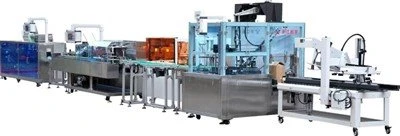
If you’re tired of jamming lines, wasted product, and long switchover times, it might be time to upgrade your automatic cartoning machine. The good news is you don’t have to figure this out alone. We’ve helped hundreds of clients across different industries—food, pharma, cosmetics, consumer goods—match their production needs with the right cartoning machine. Whether you’re a small business just scaling up or a big plant looking to boost efficiency, we can walk you through the parts, the specs, and what will work best for your products. Don’t waste another minute with a machine that slows you down. Reach out, and we can have a detailed chat about your line, answer all your questions, and figure out the right solution for you.
Drug Bagging Machine References
- Automatic Cartoning Machines: Components and Operational Principles. Packaging Technology and Science, 2019.
- Food and Beverage Processing Equipment Safety Standards. Institute of Food Technologists, 2021.
- High-Speed Cartoning: Efficiency and Waste Reduction in Pharmaceutical Production. Journal of Pharmaceutical Engineering, 2020.
- Flexible Packaging Machinery for Small to Medium-Sized Enterprises. World Packaging Organization, 2022.
Zhejiang Tuoyu Packaging Machinery Co., Ltd.
Zhejiang Tuoyu Packaging Machinery Co., Ltd. is one of the most professional automatic cartoning machine manufacturers and suppliers in China. With abundant experience, we warmly welcome you to wholesale durable automatic cartoning machine made in China here from our factory. Good service and quality products are available.
Address: Workshop No.12, No.11-19, Xinbin Road, Binhai New Area, Pingyang County, Wenzhou City
E-mail: 15868789201@163.com
WebSite: https://www.tuoyupack.com/
