If you’ve ever walked past a construction site or worked in a manufacturing plant that relies on gypsum-based materials, you’ve probably come across desulfurization gypsum powder by now. As a supplier of desulfurization gypsum powder production lines, I get this question at least once a week: Can this type of production line actually make different grades of gypsum powder? The short answer is yes—but it’s not just a simple “flip a switch and change the grade” scenario. It requires a deep understanding of how desulfurization gypsum behaves, what defines gypsum grades, and the flexible design of modern production lines. Let’s break this down the way I do with my clients, mixing technical details with real-world experience from years of building and installing these lines. Desulfurization Gypsum Powder Production Line

First, let’s get clear on what desulfurization gypsum is. It’s a byproduct of flue-gas desulfurization (FGD) in coal-fired power plants, steel mills, and other industrial facilities. Instead of letting sulfur dioxide (SO₂) escape into the atmosphere (where it causes acid rain), plants capture it by reacting it with limestone slurry. The result is a fine, powdery material: calcium sulfate dihydrate (CaSO₄·2H₂O), which is chemically almost identical to natural gypsum. That’s why it’s a popular alternative to mined gypsum—sustainable, cost-effective, and widely used in construction, agriculture, and even food additives.
Now, what defines “different grades” of gypsum powder? Grades aren’t arbitrary—they’re based on physical and chemical properties that match specific end uses. Let’s list the main ones, because this is where the production line’s flexibility comes into play. There’s agricultural grade gypsum, which needs high calcium and sulfur content, low heavy metal levels, and fine enough particle size to dissolve in soil. Then there’s construction grade, split into sub-types: Type II is for plasterboard, requiring a specific purity (usually 95%+ calcium sulfate dihydrate), controlled particle distribution, and consistent setting time. Type I is a higher-grade, fast-setting plaster used for molding, dental applications, and decorative concrete. There’s also industrial grade for cement retarders, which only needs consistent chemical composition and low impurity, and specialty grades used in 3D printing, food processing, or pharmaceutical excipients—those have even stricter purity and particle shape requirements.
A common mistake I see new plant owners make is assuming all desulfurization gypsum is the same, so their production line only needs to run one setup. But desulfurization gypsum isn’t uniform by nature. Its quality depends on the FGD process: some lines produce gypsum with higher moisture, others have traces of limestone, residual sulfites, or heavy metals (like lead, cadmium, from the coal). So the first step to making different grades is pre-processing the raw FGD gypsum. A well-designed production line starts with a pre-treatment section that can be adjusted. For example, if you want agricultural grade, you need to wash the raw gypsum to remove soluble salts and any residual limestone—this washing stage is adjustable: you can change the water-to-gypsum ratio, the speed of the slurry through the wash tanks, and even add chemical agents (like flocculants) to separate impurities without damaging the gypsum crystals. If you’re making construction grade plasterboard, you might skip the aggressive washing, instead relying on screening and cyclone separation to remove oversized or undersized particles, while keeping the natural calcium sulfate content intact.
The next critical stage is calcination—this is where gypsum turns from dihydrate (CaSO₄·2H₂O) into hemihydrate (CaSO₄·0.5H₂O), the key component of usable gypsum powder. Calcination is where the grade differences really start to show, because the temperature and retention time directly control the setting time and strength of the final product. Modern production lines don’t use fixed calcination parameters. I design each line with a rotary kiln or a fluidized bed calciner that has adjustable temperature zones. For Type I fast-setting plaster, you calcine at a lower temperature (around 150–160°C) for a shorter time—this leaves more of the crystal structure intact, so the powder sets quickly, which is perfect for molding or dental use. For Type II plasterboard, you need a slower set, so you calcine at 170–180°C for a bit longer, which causes more crystal breakdown, leading to a slower, more predictable setting time. For cement retarder grade, you don’t need calcination at all—you just dry the raw FGD gypsum to remove surface moisture (around 100–120°C) and mill it to a specific particle size, since the raw dihydrate acts as a retarder when added to cement. That’s the beauty of a flexible calciner: you can switch between these parameters in a matter of hours, not days, so one line can produce multiple grades without shutting down for reconfiguration.
Milling and classification are the third adjustable stage. Particle size distribution is a big part of grade. Agricultural grade needs a fine particle size (usually 90% passing 200 mesh) to disperse evenly in soil. Construction plasterboard needs a coarser, more uniform size (around 90% passing 100 mesh) to ensure it blends well with additives like starch or fiberglass. Specialty 3D printing gypsum needs an extremely narrow particle size range (often 10–50 microns) for smooth flow through print heads. The classification system in a production line uses air classifiers, which adjust the air flow rate to separate particles by size dynamically. You don’t have to change the mill or the classifier itself—just tweak the air flow and the cut point, and you can switch between grade specifications in minutes. I’ve had clients who run a single line that switches between agricultural grade in planting season, plasterboard grade for peak construction months, and cement retarder grade year-round, all without any major downtime.
But here’s the catch: you can’t make every grade on the same line, and there are limits. For example, pharmaceutical or food grade gypsum requires the strictest purity—no detectable heavy metals, no residual chemicals, and even a crystal structure that meets USP or food additive standards. That’s going to require extra steps: more rigorous washing with deionized water, multiple filtration stages, and even a final drying process in a sterile environment. A standard desulfurization gypsum line can’t handle that, because it’s designed for industrial or construction use. But most clients don’t need that—they’re looking for the ability to switch between agricultural, construction, and industrial grades, which is totally feasible.
I’ll share a real example to make this concrete. Last year, I worked with a client in the Midwest US who operates a 500 MW coal power plant that produces 100,000 tons of FGD gypsum annually. They originally installed a line only for plasterboard grade, but then realized they could sell agricultural grade during the off-season, which had a higher profit margin. We retrofitted their existing line with an adjustable washing section and a variable-speed air classifier. Now, in spring and fall, they run agricultural grade: wash the raw gypsum three times, dry it to 1% moisture, mill it to 200 mesh, and test for lead, cadmium, and sulfur content (they average 22% sulfur, which is ideal for soil amendment). In summer, when construction is busy, they switch to plasterboard grade: reduce washing to one pass, adjust calcination to 175°C, and set the classifier to 100 mesh. They still run cement retarder grade in winter, when demand for construction plaster is low. Their revenue from gypsum products went up 40% in one year, all because their line was flexible enough.
Another example: a client in India that works with a steel mill’s desulfurization gypsum, which initially had higher residual sulfites than standard. Instead of building a whole new line, we installed an adjustable pH control stage in the pre-treatment section. When making plasterboard, they adjust the pH to neutral to remove sulfites, and when making agricultural grade, they keep a slightly acidic pH to preserve the sulfur content that plants need. That flexibility turned a waste byproduct that was almost unusable into three marketable grades.
Now, let’s talk about the quality control part—this is non-negotiable if you want to produce different grades. Every modern production line I design has an inline monitoring system that tests moisture, purity, particle size, and setting time every minute. If you switch grades, you can input the new specifications into the system, and it adjusts all the parameters automatically. No more manual testing that leads to inconsistent product. For a supplier like me, that’s a key feature—clients need reliability, and the last thing they want is a batch of agricultural grade that’s too coarse or a plasterboard batch that sets too fast because someone forgot to adjust the calciner.
I should also address a common concern: will switching between grades affect the line’s lifespan? The short answer is no, as long as the line is designed for flexibility. The parts that adjust—air classifiers, calciner burners, washing pumps—are sized to handle different loads and temperatures. We build our lines with modular components, so if a client wants to add a new grade later, they can just swap out a single module instead of replacing the whole line. That’s why I always emphasize designing for future flexibility, not just current needs.
What about the cost? Clients often ask if a flexible line is more expensive. Yes, it’s a small upfront premium, but the ROI is huge. Being able to sell multiple grades means you’re not dependent on one market. If plasterboard demand drops, you can pivot to agricultural or cement grade. Last year, during the supply chain crunch when plasterboard prices spiked, some of my clients shifted to industrial grade for cement retarders, which was more stable. Without a flexible line, they would have been stuck with excess capacity during a slow period.
Now, let’s wrap this up with what this means for you, as a potential user of a desulfurization gypsum powder production line. If your goal is to produce a single grade, a fixed line works. But if you want to maximize revenue, reduce risk, and adapt to changing market demand, a flexible line that can switch between agricultural, construction, and industrial grades is the way to go. You don’t need a line that makes every grade under the sun—most of my clients don’t even use specialty grades. What they need is the ability to adjust to what their market is asking for at any given time.
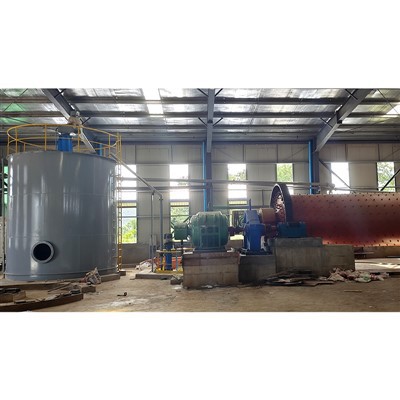
At the end of the day, desulfurization gypsum is a sustainable material that turns industrial waste into something valuable. The production line that processes it doesn’t have to be a one-trick pony. It can be a versatile asset that grows with your business. If you’re looking to invest in a desulfurization gypsum powder production line and want to talk through how to build flexibility into your setup—whether you’re just starting out or looking to expand your product line—feel free to reach out and start a conversation. We can walk through your raw material quality, your target markets, and design a line that fits your needs, not a one-size-fits-all solution.
Paperboard Gypsum Board Production Line References
- American Coal Ash Association. (2022). 2021 Coal Combustion Product Production & Use Survey Report.
- World Gypsum Association. (2023). Desulfurization Gypsum: Properties, Production, and End-Use Applications.
- Liu, Y., et al. (2021). Flexible Production of Gypsum Powder Grades from Flue Gas Desulfurization Gypsum: Process Optimization and Market Analysis. Journal of Environmental Management, 291, 112658.
- European Gypsum Industry Association. (2022). Best Available Techniques (BAT) for the Production of Gypsum Products from Industrial Byproducts.
Shineye Mach Co., Ltd.
Shineye Mach Co., Ltd. is one of the most reliable manufacturers and suppliers of desulfurization gypsum powder production line in China, also supports customized service with reasonable price. Please feel free to buy advanced desulfurization gypsum powder production line made in China here from our factory. For quotation, contact us now.
Address: Jinzhou Circular Industry Park, Jinzhou City, Shijiazhuang City, Hebei Province, China
E-mail: xiangyijixielucia@yeah.net
WebSite: https://www.shineyemach.com/
