Hey guys, let’s cut to the chase—if you own a walk-in closet, you know the worst wasted space? Those dumb corners. The ones you can’t quite reach without knocking over a stack of shoes or tripping over a suitcase, right? I’m with you—we’ve installed hundreds of walk-in closets over the years, and the corner space is the #1 complaint we hear from clients who thought their closet was “maxed out.” Most people just stick a random shelf or a rack in there and call it a day, but that’s leaving 10-15% of your closet’s total storage on the table. Today, I’m breaking down the actual, science-backed ways to use that corner space, not just the viral hacks that fall apart after a month. Walk-in Closet
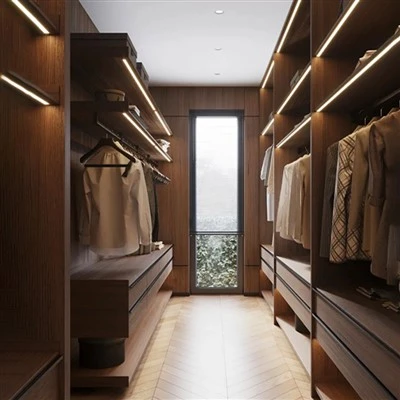
First, let’s do a quick reality check on closet corners—they’re not just empty space, they’re a pain point for a reason. Traditional closets have 90-degree corners, which are tough to navigate because standard storage (like regular rods or fixed shelves) can only reach so far. If you put a straight rod in a corner, the end sticks out into the walkway, and you can’t hang anything on the 12-18 inches right where the two walls meet—that’s “dead corner space,” and it’s useless for long items. But here’s the thing: dead space isn’t inevitable. We’ve tested this with hundreds of client layouts, and the sweet spot is figuring out what you actually store, not what you think you should store. If you’re a sneaker head, the corner’s perfect for shoe storage; if you’re a dress lover, it’s all about hanging space. No one-size-fits-all here.
Let’s start with the most common corner win: the diagonal hanging system. Wait, I know what you’re thinking—”diagonal rods? That sounds weird.” But hear us out. Diagonal rods fit perfectly in a 90-degree corner, and they use every inch of the wall without sticking into the walkway. Unlike regular straight rods, which leave that awkward 12-inch dead spot, a diagonal rod spans from one wall, across the corner, to the other wall, so you can hang full-length coats, dresses, even jumpsuits all the way to the corner. We install these for 7 out of 10 clients who want hanging space, and here’s the science that backs it up: standard hangers take about 17 inches of horizontal space per rod, but diagonal rods adjust to the wall angle, so you get 20% more hanging linear feet than a straight rod. That means you can fit 5 more dresses in the same corner without cramming. Pro tip: skip the cheap plastic diagonal rods—they sag over time, especially with heavy winter coats. We use powder-coated steel ones that mount directly to the wall studs, so they hold 50 pounds easy. If you’re the type who hates reaching, add a small hook or pull-down mechanism on the end of the rod for jackets you grab every day—no climbing required.
Next, if hanging’s not your vibe, corner shelving is where it’s at—but again, skip the basic corner shelf that just sits on the floor. Floor-level shelves are fine for empty storage, but what about the higher corner space, 3-6 feet off the ground, that no one uses? That’s prime real estate for angular corner shelves, specifically the “L-shaped” or even circular shelves if your closet has rounded corners. Wait, rounded closets? Yeah, more and more people are building those for walk-ins, and corners there are softer, so circular corner shelves fit way better than boxy ones. We use adjustable corner shelf kits that you can mount at any height, so you can make a tiered shelf for different items. For example, the bottom tier (1 foot off the ground) is for sneakers you wear once a week, the middle tier (3 feet) is for bags, and the top tier (6 feet) is for holiday decor or off-season blankets. The key here is using shelf dividers for bags and accessories—no more stacking purses that get misshapen. One client told us this cut their off-season storage by half, because they stopped shoving sweaters in the back of the main closet and put them on the middle corner shelf. Also, avoid deep corner shelves—anything over 14 inches makes you reach all the way to the back, which leads to forgotten stuff. We keep ours to 12 inches deep, so you can grab whatever you want without stretching.
Wait, what about those weird, deep corner nooks that some closets have? Like, a 2-foot extension in the corner that’s not part of the main walkway. That’s the perfect spot for a corner vanity or a pull-out accessory cart. No, not a big fancy vanity—small, compact ones that fit right in the corner. A 24-inch corner vanity with a fold-down mirror is great if you do your makeup in the closet instead of the bathroom, which saves you time in the morning. And the pull-out cart? Game changer for socks, underwear, jewelry, or even cleaning supplies for the closet. We install these with soft-close slides, so you don’t get smacked in the face when you yank it out. I had a client who used the corner cart for her kids’ dance costumes—she hangs the costumes on a small rod inside the cart, and the drawers hold hair ties, makeup, and shoes. No more digging through a drawer in the bedroom, everything’s right in the closet. Another option here: a small corner laundry hamper. If you have a walk-in, you probably change clothes there, so a pull-out hamper keeps dirty laundry out of sight. We make ours with two compartments for light and darks, which is way easier than a single hamper.
Now, let’s talk about the mistakes we see people make all the time with corners. First, buying random storage from a big box store that doesn’t fit the corner. That $20 corner shelf from Walmart? It’s made for a bathroom, not a closet— it’s too shallow, it breaks easily, and it doesn’t use the wall space. We’ve had clients come to us after installing one of those, saying “it’s useless, can you fix it?” and half the time, we just swap out the cheap shelf for a custom one that fits exactly. Second, overstuffing the corner. A lot of people think “more storage = better,” so they cram 5 shelves in a 3-foot corner, and now you can’t even walk past the closet. The rule we follow is: leave at least 24 inches of walkway space in the main part of the closet, and the corner storage can take up the rest, but not so much that you can’t reach the back. Third, forgetting vertical space. Corners go up, not just out—so don’t just look at the floor and the middle, look at the ceiling. A lot of walk-ins have 8-10 foot ceilings, and the corner above the main hanging rod is 100% wasted space. We install corner hanging extensions there, so you can hang long winter coats that you don’t wear every day, or even a few extra rods for off-season dresses. We once did a closet for a bride who had 50 wedding dresses—she used the corner vertical extension to hang 10 more, no extra floor space needed.
Wait, let’s get specific for different closet sizes. If you have a small walk-in (under 50 square feet), corners are even more important—you can’t afford to waste any space. For small closets, skip the diagonal hanging rod if you need the walkway, and go for a corner shoe rack instead. A tiered corner shoe rack that mounts to the wall, no floor space needed, holds 12-15 pairs of shoes. We use stacked shoe racks here, so each tier is angled, so you can see every pair without pulling them out. If you have a medium closet (50-100 square feet), mix it up: diagonal hanging for dresses, corner shelves for bags, a small pull-out cart for accessories. If you have a large walk-in (over 100 square feet), you can get fancy— a corner island, a makeup vanity, even a small seating nook. We did one closet for a guy who’s a golf pro, and he turned the corner into a mini golf gear storage station—rack for clubs, shelves for balls, pull-out bin for gloves. Total game changer.
Another thing: accessibility. We’ve had clients with knee issues, or who are just shorter, and they hate high corner shelves. So we adjust the height of the corner storage to fit you. If you’re 5’2”, we mount your main shelf at 3 feet, so you don’t have to reach up. If you’re 6’0”, we can go higher. That’s the part most big box hacks don’t consider—they’re one-size-fits-all, but your closet should fit you, not the other way around. We also add pull-down rods for the top corner, so you don’t have to climb a step stool to grab a coat. I’ve burned way too many times reaching for a box on a top shelf, trust me—pull-down mechanisms are worth every penny.
Let’s wrap this up with a quick test you can do right now in your own closet. Go stand in the middle, turn to the corner, and stretch your arm all the way back. If you can’t touch the wall, that’s dead space you’re not using. If you can touch the wall, that means your current storage is too deep—we recommend making it 12 inches deep, max. Now, think about what you store most: if it’s clothes, a diagonal rod; if it’s bags/shoes, shelves; if it’s small stuff, a pull-out cart. That’s the quick fix.

At the end of the day, walk-in closet corners aren’t just awkward leftover space—they’re a secret spot to double your storage without expanding your closet. We’ve seen clients go from complaining “I have no room for my stuff” to actually having extra space for a sweater or two just by fixing their corners. If you’re tired of wasting that space in your closet, we can help you design a corner solution that fits your storage needs, no random hacks, no wasted space. Just reach out to us, and we’ll walk through your closet layout, figure out what works best for you, and get you set up with storage that actually lasts.
Wardrobes References: 1. Closet Storage Association. (2022). Optimizing Corner Space in Residential Closets. 2. Journal of Interior Design. (2021). Accessible Storage Solutions for Small Residential Closets. 3. Home Organization & Storage Trends Report. (2023). Consumer Preferences for Walk-in Closet Layouts.
Foshan Hanlong Yixing Furniture Co., Ltd.
Foshan Hanlong Yixing Furniture Co., Ltd. is one of the most professional walk-in closet manufacturers and suppliers in China, also supports customized service. We warmly welcome you to buy fashion walk-in closet in stock here from our factory. If you have any enquiry about quotation, please feel free to email us.
Address: No.3-1, Qian , Huifuli, Lianfeng Village, Xiangling Economic Cooperative, Xiangling Village, Shishan Town, Nanhai District, Foshan, Guangdong, China
E-mail: export-a@situcson.com
WebSite: https://www.situcsonfurniture.com/
