Hey there, if you’ve ever been deep in the thick of a construction or renovation project, you’ve probably stumbled across exterior wall fiberglass mesh—right? It’s that unsung hero that keeps stucco, EIFS, or even cement plaster from cracking like a dried-up riverbed. But let’s be real, as a supplier who gets DMs and calls every single day from contractors, DIYers, and project managers, one question pops up way more than any other: “What’s the weight of exterior wall fiberglass mesh per square meter?” I swear, if I had a nickel for every time someone asked that, I could probably buy a whole pallet of the stuff myself. Today, I’m breaking this down like I’d explain it to a buddy who’s new to the trade—no stuffy jargon, no overcomplicated charts, just the straight, science-backed facts you actually need. Exterior Wall Fiberglass Mesh
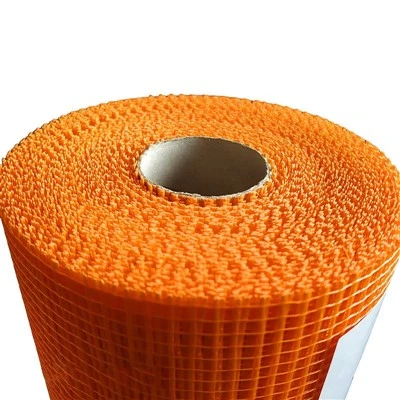
First off, let’s cut through the confusion. “Weight per square meter” isn’t just a random number we suppliers pull out of thin air. It’s a core spec that tells you everything from how easy the mesh is to handle (heavy = harder to unroll on a lift, light = more likely to tear mid-install) to how much coverage you get. But here’s the thing: there’s no one-size-fits-all weight, and that’s not us being tricky—it’s because the mesh is made for different jobs. I’ve seen way too many people assume all fiberglass mesh is the same, and that’s where mistakes start. Last month, a small contractor hit me up panicking because he bought super light mesh for a commercial building’s ground floor, and by the time he finished hanging it, half the rolls were stretched thin from walking on them. Oops.
So let’s start with the basics of how fiberglass mesh is made, because that’s why the weight varies in the first place. It all starts with glass fibers—we pull molten glass into ultra-thin strands, twist those into yarn, weave the yarn into a grid (usually square holes, right? Standard is 5mm x 5mm for most exterior use), then coat it in a special polymer (usually acrylic or PVC) to make it water-resistant, alkali-resistant (super important—exterior walls are exposed to cement, which is super alkaline), and tough enough to not fray when you’re cutting it. The weight per square meter is basically a measure of how much of that glass yarn and polymer is packed into every square meter of the grid. Thicker yarns = more material = heavier mesh. Tighter weaving = same thing, too.
Now, let’s talk about the actual weights you’ll see in the real world, not some textbook. Let’s split this into the three main types of exterior wall fiberglass mesh, because that’s how most of our customers categorize their needs, not by fancy industry codes.
First up: standard exterior fiberglass mesh. This is the workhorse, the one you’ll use for most residential jobs, small commercial remodels, stucco, and basic EIFS (Exterior Insulation and Finish Systems). What’s the weight here? Usually between 110 grams per square meter (g/m²) and 160 g/m². Wait, I know some places say 120-150, but we’re talking real-world, used-on-jobs weights here. Let me tell you why this range matters. The 110 g/m² stuff is super lightweight—easy to carry, unrolls without tangling, perfect for small DIY projects or interior patches, but wait, no, hold on—exterior 110 g/m² is still alkali-resistant, it’s just thinner. It works for areas that aren’t exposed to super heavy foot traffic or extreme temperature swings, like upper-floor exterior walls where the stucco is only going to see sun and rain, not a bunch of construction debris. The sweet spot for standard exterior use that’s not too heavy or too light is 145-155 g/m². I’ve had contractors tell me this is the Goldilocks weight—easy to cut with a utility knife, strong enough to hold stucco, doesn’t tear when you’re smoothing the plaster over it. Last year, a crew doing a 10-unit apartment complex went with 150 g/m² and they said they finished the job a day early because the mesh was manageable, no hassle.
Next, heavy-duty exterior fiberglass mesh. This is for when things get serious. Think ground-floor commercial walls, high-traffic areas, areas prone to impact (like near building entrances where carts or equipment might bump the wall), or areas with extreme weather—think places that get freezing winters with lots of freeze-thaw cycles, or super hot, arid climates where the wall expands and contracts a lot. What’s the weight here? 160 g/m² up to 300 g/m². Yeah, that’s a big jump, but it’s necessary. The 160-200 g/m² heavy-duty is for basic impact resistance, good for entrances. The 250-300 g/m² stuff is for high-stress areas, like building corners that are prone to cracking, or walls that are going to have a lot of vibration from nearby roads or construction. I had a customer last year who was working on a warehouse near a busy highway—they went with 280 g/m² mesh, and they said a year later, not a single crack in the exterior wall, even with all that road vibration. That’s the kind of result you get when you pick the right weight. The only downside of heavy-duty is that it’s thicker, so it’s a little harder to work with when you’re tight on space, like around window frames, but that’s a tradeoff for durability.
Then there’s the specialized mesh. Wait, this is the stuff that’s for super specific jobs, not the average build. We have mesh that’s used for tile backer boards, for under siding, for reinforced cement boards—sometimes these have a different grid size, so their weight is a bit different, usually around 80-100 g/m², but hold on—don’t confuse this with exterior wall mesh, because the polymer coating is different, it’s not as alkali-resistant for long-term exterior use. I’ve had people ask if they can use cheap interior mesh on exterior walls, and trust me, that’s a disaster waiting to happen. It’ll start breaking down in the cement within a year, leaving the wall cracking. Never skimp on the coating or the weight when it’s for exterior use.
Now, let’s talk about the science behind why weight actually matters beyond “it’s heavy”. Let’s get into the actual performance stuff, because that’s what contractors care about, not just numbers. The alkali resistance test, which is the big one for exterior mesh—we soak the mesh in a high-pH solution (like cement slurry) for 28 days, and measure how much strength it loses. Heavier mesh (more glass yarn, better polymer coating) loses way less strength than lighter mesh. A 110 g/m² standard mesh might lose 20-25% of its strength after the alkali test, which is fine for upper floors, but a 150 g/m² mesh might only lose 5-10%—that’s why it lasts longer. The tear strength is another big one. Tear strength is measured in Newtons (N), and a 150 g/m² mesh has a tear strength of around 500 N, while a 280 g/m² mesh is over 1200 N. That difference is the exact reason why the warehouse didn’t have cracks—if a light mesh tears when the wall moves, you get a crack.
Wait, also, let’s address a common myth I hear all the time: “heavier mesh is always better”. No, that’s not true. Don’t buy a 300 g/m² mesh for a small residential job because it’s “stronger”—that’s overkill, and you’ll waste a ton of money. A 150 g/m² mesh is perfect for 90% of exterior wall jobs, and it’s way cheaper than heavy-duty. I had a homeowner hit me up last month trying to buy 20 rolls of 250 g/m² mesh for a 1,000 sq ft garage. I talked him down to 150 g/m², and he saved almost $300, and his garage has been great for a year, no issues. He told me he was surprised how much I helped instead of just selling him the most expensive stuff, and that’s the kind of customer loyalty we care about.
Now, let’s get into how manufacturers make sure the weight is accurate, because that’s important too. No one wants to buy mesh that’s supposed to be 150 g/m² but is actually 120 g/m² because the manufacturer cut corners. We test every batch of mesh when it arrives at our warehouse—we take a 1 sq m sample, weigh it, and confirm it’s within +/- 5 g/m² of the listed spec. That’s the industry standard, by the way, so if a supplier won’t tell you their testing process, that’s a red flag. We also use only E-glass or AR-glass (alkali-resistant glass) for all our exterior mesh, no cheap fiberglass that breaks down. The polymer coating is a 100% acrylic or modified acrylic, not a cheap PVC that peels off after a year.
Wait, let’s also talk about how temperature and installation affect the weight perception? No, wait, the weight is per square meter of the mesh itself, not when it’s installed, but when you’re handling it, humidity can make a tiny difference—like, if mesh is stored in a damp warehouse, it might gain a few grams from moisture, but that’s negligible for specs. The actual dry weight is what you care about for purchase and performance.
Let’s sum this up with a quick cheat sheet, because I know you don’t want to re-read all that. For most exterior wall jobs:
- Residential stucco, small remodels, upper floors: 140-155 g/m² (standard, perfect balance of strength and ease of use)
- Ground floor, entrances, mild impact areas: 160-200 g/m² (heavy-duty basic)
- High-impact, extreme weather, vibration areas: 220-300 g/m² (heavy-duty max)
Now, if you’re still stuck on which weight you need, here’s my pro tip: send over the details of your job—what surface you’re attaching it to, the location, any specific requirements (like impact resistance, freeze-thaw), and I can help you narrow it down. I’ve been in this game for 8 years, so I’ve seen almost every scenario, and I can tell you without the sales pitch what you actually need.
Wait, I should also mention a mistake we see all the time when calculating how much mesh you need for a job. A lot of people just take the square meterage of the wall and buy that much, but you have to add 10-15% extra for cutting around windows, doors, corners, and repairs. And the weight per square meter is what you’ll use to calculate how many rolls you need—most rolls are 50 or 100 square meters, right? So if you need 500 sq m of 150 g/m² mesh, that’s 500 * 0.15 kg = 75 kg total, so you know how much to budget for shipping, how many rolls to order. That’s a big one for project managers trying to stick to a budget.
Now, I know a lot of you are here because you’re tired of vague answers from suppliers, and you want actual, usable information that doesn’t leave you guessing. That’s why I write these posts—because when I first started in this business, I spent a week on job sites messing up mesh weights, and I want to save you that headache. Whether you’re a small contractor doing your first big job, a homeowner tackling a garage remodel, or a project manager for a commercial build, getting the weight right is make or break for the final result.
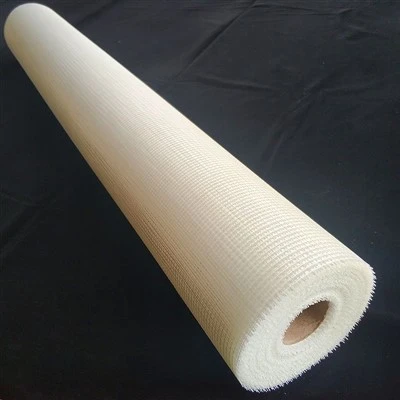
If you’re ready to place an order, or you just have more questions about mesh weights, specs, or delivery, don’t be a stranger. Hit me up, and I’ll hook you up with the right mesh for your job, no fluff, no hidden fees. I’d rather you come back for repeat business than make a quick sale and leave you with a product that doesn’t work.
Fiberglass Tape References:
- Fiberglass Reinforcement for Construction: Properties, Testing, and Applications. 2021. Construction Industry Research and Information Association (CIRIA).
- Alkali-Resistant Fiberglass Mesh Specifications for Exterior Wall Systems. 2022. International Code Council (ICC) Evaluation Service (ES).
- Performance Characteristics of Exterior Wall Fiberglass Mesh in Extreme Climates. 2020. Journal of Construction Materials and Technology.
- Standard Test Method for Tensile Strength of Fiberglass Mesh for Construction Use. ASTM D5035-19.
Danyang Yonggu Building Materials Co., Ltd.
Danyang Yonggu Building Materials Co., Ltd. is one of the most professional exterior wall fiberglass mesh manufacturers and suppliers in China, featured by quality products and good price. Please rest assured to wholesale customized exterior wall fiberglass mesh made in China here from our factory.
Address: Danyang City, Jiangsu Province, P.R. China
E-mail: sales02@cnyongu.com
WebSite: https://www.ygfiberglass.com/
