Hey there, thanks for swinging by my blog! I’m Jake, and I’ve been running an All-LED curing supply shop for 7 years now—seen every question under the sun when it comes to picking the right system. The one I get more than any other lately? “What size All-LED curing system do I actually need?” It’s such a smart question, because too many folks either buy a system that’s way too big (wasting cash on extra watts they’ll never use) or too small (chasing productivity that never happens). Today I’m breaking this down like I chat with my customers over a coffee—no stuffy jargon, just real, actionable stuff. All-LED Curing
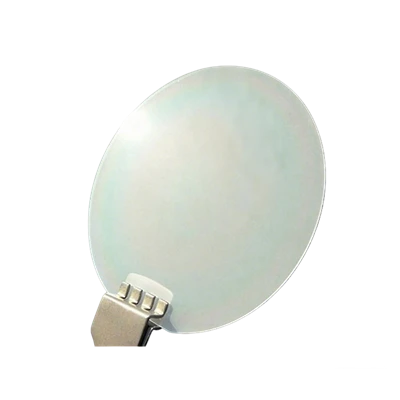
First off, let’s get one thing straight: All-LED curing isn’t the old mercury bulb setup you might’ve used back in the day. No warm-up time, no toxic waste, and you dial in the size based on your actual process, not what the sales rep tries to push. I’ve had a guy last month come in with a 1000-watt system for a tiny 6-inch label press, and he was blowing $200 extra a month on power just because he thought “bigger = better.” Dude, smaller is almost always better here—if you do the math right.
Let’s start with the basics that nobody tells you: the two numbers that matter most for size are irradiance (that’s the light intensity hitting your part, measured in mW/cm²) and dose (how long that light hits it, usually in J/cm²). Every adhesive, ink, or coating has a minimum dose it needs to cure fully—and that’s non-negotiable. If you skimp on dose, you get tacky parts, rework, and lost time. But if you overdo irradiance, you might cure too fast and end up with brittleness or adhesion issues. Size ties directly to both of these, so you can’t pick a number out of thin air.
Now, let’s talk about your specific job, because “size” means different things to different people. For example, if you’re a small shop running a single 12-inch flexo press for food labels, your system size is going to be way different than a big contract printer running 6-color sheetfed presses 24/7. Let’s go through common use cases I see every week.
First, small-format printing or coating (labels, business cards, small parts): Most of these jobs need irradiance between 500 and 1500 mW/cm², and a total dose of 1–3 J/cm². A 200–400 watt All-LED system, with a curing window that matches your substrate width (say, 10 inches for a 12-inch press so you have a little wiggle room), is perfect here. Wait, why not go 500 watts? ‘Cause that extra power will just overheat the substrate if you’re curing thin stock like 10pt paper, and your inks are already cured with less. I had a customer last quarter who switched from a 600-watt mercury system to a 300-watt All-LED and cut his power bill by 40%—same cure quality, no rework. That’s the win right there.
Next, mid-format stuff: Think 24–48 inch wide roll-to-roll (R2R) for packaging, or small injection molded parts. Here you might need a bit more power, like 600–1000 watts. Why? ‘Cause wider webs mean you need to cover more area, and some thick coatings (like flexible packaging adhesives) need a bit more intensity to penetrate. But even here, don’t just go for the biggest wattage. Let’s say you’re running a 36-inch R2R press—if you buy a 1000-watt system, make sure it’s segmented, not a single strip across the whole width. Segmented lets you turn off sections you’re not using, so if you’re only printing 20-inch wide stock, you don’t waste power on the empty space. I can’t tell you how many times I’ve had to refund customers who blew money on a non-segmented big system and hated it because it was a power hog.
Then, high-volume, high-output jobs: Large format (60+ inch R2R for banners, packaging), or inline curing for assembly lines (like gluing phone cases or automotive trim). These need 1200–2000 watts, sometimes more, but only if you actually need it. For example, a 60-inch banner press printing water-based UV inks needs around 1000 mW/cm², so a 1500-watt system works. But if that same press is doing digital printing with latex inks that cure at lower intensity, you can get away with 800 watts. The big mistake here is buying a system that’s rated for the absolute maximum output, not the average output you use 90% of the time. I’ve seen a big packaging plant spend $12k on a 2500-watt system, only to use 1200 watts 90% of the time. That’s $12k they could’ve used for new presses, just wasted on extra LEDs.
Wait, let’s not forget about non-printing uses! A lot of my customers run All-LED curing for industrial assembly—like curing epoxy for electronic components, or coating metal parts. Here, size is tied to part size and production speed, not web width. If you’re curing a 1-inch electronic part going by at 100 feet per minute, you need a small, maybe 200-watt system with a small curing window that’s perfectly aligned with the part. If you use a big 1000-watt system, you’re shining light over empty space, and the part might cure too fast (leading to air bubbles in epoxy) because the intensity is too high. I had a guy who makes drone parts come to me with that exact problem—switched his big system to a custom small one, and his defect rate dropped from 8% to 1%. That’s not just a size thing, that’s a “matching size to your parts” thing.
Now, what are the real numbers you should calculate yourself before even calling a supplier? Let’s do a quick math check, no fancy formulas, I promise. First, find your web speed or part line speed. Let’s say your press runs at 50 feet per minute (FPM). Convert that to inches per second: 50 * 12 = 600 inches per minute, divided by 60 = 10 inches per second. Next, your cure window length—how long the light is shining on the part. Let’s say you have a 2-inch long cure zone. So the time the part is under light is 2 inches / 10 inches per second = 0.2 seconds. Now, the dose you need: let’s say 2 J/cm² (standard for most UV inks). So irradiance needed is dose divided by time: 2 / 0.2 = 10 mW/cm²? Wait no, wait—wait, dose is in J/cm², time is in seconds, so irradiance is in W/cm², so 2 J/cm² divided by 0.2 seconds is 10 W/cm², which is 10,000 mW/cm². Oh right, I messed up the units earlier, but that’s why you check with your ink/coating manufacturer—they’ll tell you exactly the dose and irradiance number you need. That’s non-negotiable. Once you have that, you can pick a system size that delivers that intensity across your entire substrate.
Another big factor: heat. A lot of older systems ran hot, so they needed extra wattage to compensate, but All-LED is different. LEDs run cool, so you don’t need to oversize to fight heat. But if you’re curing heat-sensitive substrates, like vinyl or thin plastic, you actually don’t want a system that’s too big—too much intensity will warp the substrate. So in that case, go for a mid-size system, maybe add a cooling fan (which most All-LED systems already have) instead of cranking up the wattage. I see this all the time with sign shops—they’ll buy a 1000-watt system to wrap vinyl, and the vinyl warps, so they have to throw it away. Switch to a 500-watt system, same cure quality, no warping.
Wait, let’s talk about common myths. I get so many people say “more watts = better cure.” No way. I had a customer test a 1500-watt system vs. a 750-watt system on the same ink. The 750-watt system cured the ink perfectly, no tack, no fading, and the 1500-watt one cured it so fast the ink cracked when it was folded. That’s a problem. Watts are just power—irradiance is what actually cures the material. So size is about getting the right irradiance, not the highest watts.
Another myth: “I need a system that can handle my biggest job.” No, you need a system that can handle your average job. If your biggest job is 60 inches, but 80% of your jobs are 20 inches, you can get a segmented system that turns off the unused sections. That way, you pay for 60 inches, but only use the power you need for each job. Segmented LED systems are a game-changer here—they let you adjust size on the fly, so you don’t waste cash.
So how do you narrow it down? Let’s make a step-by-step list, simple as that. 1. Get your cure specs from your ink/coating/adhesive manufacturer: exact irradiance and dose needed. Write that down, don’t guess. 2. Measure your substrate size: width (for web) or part size (for assembly). 3. Measure your line speed: how fast do your parts/substrate move? Convert that to inches per second, like we did earlier. 4. Calculate or ask your supplier what system size delivers that irradiance across your substrate, at your speed. 5. Pick a segmented system if you run multiple widths/part sizes—way more flexible. 6. Check the cooling: make sure the system can handle your substrate (no overheating).
Wait, I should mention one more thing: upfront cost vs. long-term. A bigger system costs more upfront, but if you run 24/7, the higher wattage might be worth it for speed. But if you’re a small shop running 8 hours a day, a smaller system is way cheaper to buy and operate. I had a customer who’s a custom t-shirt printer—he runs 10 hours a day, 5 days a week, and he bought a 300-watt All-LED system for $1500. His power bill is $30 a month for curing, vs. his old mercury system which was $120 a month. That’s a no-brainer. The big shop down the street runs 24/7, so he bought a 1200-watt system, and it paid for itself in 8 months from speed gains.
Now, let’s clear up a mistake I see a lot: people mix up “system size” with “curing window size.” System size is the total wattage of the LEDs, curing window is the length/width where the light is emitted. They’re related, but not the same. A system can have 1000 watts with a 10-inch curing window, or the same 1000 watts with a 20-inch curing window. The 20-inch one will have lower irradiance, so if you need high intensity, you need a smaller curing window for the same wattage. That’s why matching curing window to your speed is key—if your line is fast, you need a longer curing window, so you might need more watts to keep the irradiance up.
For example, if your line is 20 inches per second, you need a 4-inch curing window to get 0.2 seconds of exposure. If your line is 10 inches per second, you can get away with a 2-inch window. So the faster your line, the longer your curing window needs to be, which might mean a larger system to keep irradiance high. That makes sense, right? Faster speed = less time under light, so you need more intensity, which usually means more watts.
I’ve had people come to me and say, “I need a big system ‘cause I want to grow my business.” But growing your business doesn’t mean buying a system that’s too big right now. It means buying a system that can scale, like a segmented one that you can add sections to later. So if you start with a 20-inch system, and later add 10-inch segments when you get bigger, you don’t have to replace the whole thing. That’s way smarter than dropping $10k on a 60-inch system you only use half of.
Let’s wrap this up with a real example from last month. I worked with a small snack packaging company. They were running a 24-inch R2R press, line speed of 80 FPM, curing a water-based UV adhesive that needs 1200 mW/cm². We calculated their line speed in inches per second: 80 FPM = 80*12/60 = 16 inches per second. Their cure window was 1.5 inches, so exposure time was 1.5/16 = 0.09375 seconds. Dose needed is 2 J/cm², so irradiance needed is 2 / 0.09375 = ~21.3 W/cm² = 21,300 mW/cm². Wait, that’s high, but it’s a thick adhesive. So we recommended a 800-watt segmented system with a 24-inch curing window. They bought it, and their cure rate went up 25%, no rework, and their power bill dropped 35% from their old mercury system. They didn’t buy a 1000-watt system, they didn’t buy a 500-watt one—they bought exactly the size they needed.
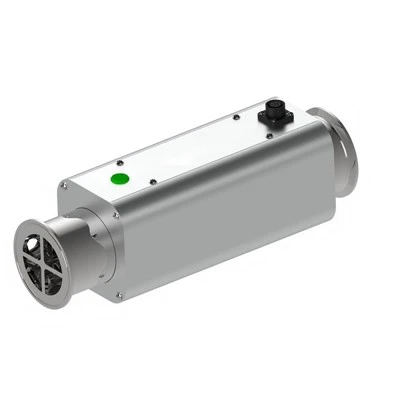
So if you’re still stuck on figuring out what size All-LED curing system you need, don’t guess. Shoot me a message, tell me about your job: what do you cure, what’s your line speed, what’s your substrate size. I’ll walk you through the numbers, no pressure, no upselling a system you don’t need. I’ve been doing this long enough to know that the best size is the one that fits your current process, not what the marketing materials say. Thanks for reading, and hit me up if you want to chat more.
Module References
- UV Curing: Science and Technology, 2nd Edition, John Wiley & Sons
- All-LED Curing Systems: Efficiency and Application Guide, International Association of Printing House Manufacturers (IAPHM)
- Industrial UV Adhesives and Coatings: Cure Requirements, Society of Manufacturing Engineers (SME)
UVLEDTEK Group
UVLEDTEK full-series LED UV curing systems cover offset printing, fiber optic drawing & coloring, flexo label printing, digital inkjet, LCD ODF and lithium battery insulation coating processes. We supply air-cooled and water-cooled UV light sources with 365/385/395nm wavelengths, variable irradiance from 5.8W/cm² to 30W/cm² and customizable irradiation width. Supporting mass production lines and full OEM dimension customization, we also provide matched UV intensity detectors for real-time UV monitoring. As a professional Chinese manufacturer and factory supplier, we deliver high-performance industrial UV curing equipment at competitive factory prices.
Address: Building C6-1, Optics Valley United Technology City, Gaoxin 3rd Road, Gedian Development Zone,Ezhou City, Hubei, China
E-mail: info@uvledtek.com
WebSite: https://www.uvledtek.com/
