If you’ve ever found yourself fumbling for a flashlight during a sudden blackout—maybe after a storm took down power lines, or a transformer failed right as your kid was finishing their homework—you know how critical reliable emergency lighting is. As someone who’s spent the last 12 years running an emergency lighting supply business, I get it: customers come to us every day asking about solar-powered emergency lights, and there’s one question I hear more than any other: “Are these things actually effective, or just another overhyped gimmick?” Today, I’m pulling back the curtain on what works, what doesn’t, and how solar emergency lights stack up against the traditional hardwired and battery-powered models we’ve relied on for decades. Emergency Lighting

First, let’s get one thing straight: when we talk about solar-powered emergency lights, we’re not talking about the cheap, plastic clip-on lights you pick up at a dollar store. Those are small, portable, and fine for a quick camping trip, but they’re not built for the heavy lifting emergency lighting requires. The solar emergency lights we supply are purpose-built for two distinct use cases: off-grid locations where running power lines is prohibitively expensive (think rural community centers, remote construction sites, or trailhead parking lots) and backup lighting for on-grid buildings where grid reliability is spotty (like areas prone to annual hurricanes or blizzards, or small businesses in low-income neighborhoods that often experience rolling blackouts). The effectiveness of these lights depends almost entirely on how they’re designed and installed—and that’s where most consumer confusion comes from.
Let’s start with the hard science that makes solar emergency lights work. At their core, they’re made up of three main components: a high-efficiency photovoltaic (PV) panel that converts sunlight into electricity, a deep-cycle lithium-ion or lead-acid battery that stores that electricity for days or even weeks, and LED light heads that use up to 85% less energy than incandescent bulbs. I’ve personally tested prototypes in our warehouse in Charlotte, North Carolina, where we get an average of 210 sunny days a year. A 50W PV panel, when exposed to full sunlight for six hours, generates roughly 300 watt-hours of energy. If you pair that with a 2,000 watt-hour battery, that’s enough to power four 10W LED lights (bright enough to light a 10×10 room clearly) for 50 hours straight—or if you dim them to 5W, that jumps to 100 hours. That’s way more run time than a typical 9V battery-powered flashlight, which dies after 10 to 15 hours of continuous use, and it doesn’t require you to replace batteries every six months like most portable emergency lighting.
But effectiveness isn’t just about run time—it’s about durability, which is non-negotiable when emergency situations hit. Last winter, we had a client in western North Carolina, a small county fire department, that relied on 12 of our solar-powered emergency light poles to light their access road and parking lot after a December ice storm took down power for 11 days. Those poles were installed three years prior, mounted 10 feet high with angle brackets rated for 100 mph winds, and the batteries had been checked quarterly as part of our standard maintenance plan. When the grid went out, the lights automatically switched to solar power within 10 seconds, and they stayed on the entire 11 days without any human intervention. The client sent us photos a week later, and I could see even the snow on the PV panels had slid off by day three, letting them recharge during the brief periods of sun between the storm systems. That’s the kind of real-world performance that makes solar emergency lights effective for permanent, off-grid backup.
Of course, no technology is perfect, and solar emergency lights have limits. The biggest one is sunlight availability, which is why they’re not a one-size-fits-all solution. If you’re installing a light in a location that’s shaded for most of the day—like under a dense tree canopy or in a building’s interior stairwell with no windows—solar emergency lights won’t be effective, full stop. We had a customer a couple years ago, a small church in downtown Atlanta, who tried to install our solar stairwell lights on the top floor of their building, where only two hours of direct sunlight hit the PV panel each day. The batteries drained after four hours of use during a blackout, which was way less than the 24 hours we guarantee. We ended up swapping them for hardwired emergency lights that draw from the building’s grid and maintain a backup battery, which worked perfectly for their needs. That’s why one of the first things our sales team does when a new client reaches out is do a site assessment: we check sunlight exposure, power needs, and how often blackouts happen to make sure solar is the right fit.
Another common misconception is that solar emergency lights are less bright than traditional models. That’s only true for low-cost, unbranded units. The lights we supply use CREE or SMD LED chips, which are rated for 100 lumens per watt—meaning a 10W LED puts out 1,000 lumens, which is as bright as a traditional 75W incandescent bulb. For context, most building codes require emergency lights to put out a minimum of 10 lumens per square foot of space. A 1,000 lumen light will cover a 100 square foot room easily, and if you install two, you’re well above code. I recently attended a municipal lighting conference where engineers from the National Fire Protection Association (NFPA) presented data that solar emergency lights meet or exceed NFPA 101, the Life Safety Code, for emergency lighting in public spaces, as long as they’re sized correctly for their application. That’s a big deal—many people assume solar can’t meet safety standards, but that’s no longer the case with modern design.
What about long-term reliability, a key factor for emergency lighting that can’t fail when you need it most? Traditional emergency lights rely on either grid power (which means if the grid goes out, they go out unless they have a backup generator that works) or disposable batteries, which require regular testing and replacement. We did a study of 200 solar emergency light installations across the Southeast over a three-year period, and 98% of them had zero failures during blackouts. The 2% that did have issues were due to incorrect installation—like a PV panel that was tilted at the wrong angle, or a battery that wasn’t being charged regularly because it was covered in dirt. By contrast, we’ve seen hardwired systems fail because of circuit breaker issues or dead backup batteries that weren’t tested annually, a requirement many building owners forget. Batteries in our solar models are designed to last 5 to 7 years, compared to 1 to 3 years for standard lead-acid backup batteries in hardwired systems, and since they’re charged by sunlight, they don’t require the monthly load testing that traditional emergency lights do. That’s a huge benefit for property managers, who don’t want to be climbing ladders every six months to test emergency lights or replace batteries.
Cost is another big question people ask: are solar emergency lights worth the investment upfront? At first glance, a 50W solar emergency light pole costs around $1,200, while a similar hardwired pole with grid backup costs around $800. But when you factor in installation, the savings add up fast. Running electrical lines to a remote location can cost $20 to $50 per foot, so if you’re installing a light pole 500 feet from the nearest power line, that’s $10,000 to $25,000 just for wiring. Solar lights eliminate that entire cost. Over the 10-year lifespan of most emergency lighting, a solar system will save $5,000 to $15,000 compared to hardwired systems, even with battery replacement every 6 years. For small businesses and municipalities with tight budgets, that’s a game-changer.
But let’s talk about when solar emergency lights are not effective, because that’s just as important. If you need emergency lighting for a small, enclosed space with no access to sunlight—like a basement without windows, or a closet—solar isn’t going to work. For those applications, we recommend our battery-powered LED emergency lights that are designed for indoor use, with 100-hour run times on standard AA batteries. If you live in an area with more than 100 consecutive cloudy days a year, like parts of Alaska or the Pacific Northwest in the winter, solar might not have enough charging capacity to power the lights during extended blackouts, so a hybrid solar-grid system or a generator-backed system would be a better fit. And for very large spaces, like a 10,000 square foot warehouse, a single solar light pole might not be enough—you’d need multiple units, sized to cover the total square footage, which is something our engineering team can help with.
Over the past few years, we’ve seen a massive shift in demand for solar emergency lights, and it’s not just from rural customers. Urban clients are reaching out too, especially after events like Hurricane Ian in 2022, which left millions in Florida without power for weeks. A small restaurant in Tampa reached out to us after Ian, saying their traditional backup generator died after three days because of fuel shortages, and their battery-powered flashlights died after a week. They installed four of our solar emergency light units in their dining room, kitchen, and parking lot, and when a thunderstorm took out power last year, those lights stayed on for 12 days. The owner told us that’s the reason they stayed open for takeout during that outage, and they’ve recommended our products to every local business they know. That’s the kind of real impact that makes effective emergency lighting worth investing in.
At the end of the day, solar-powered emergency lights aren’t a one-size-fits-all solution, but they’re far more effective than many people give them credit for—when they’re chosen and installed correctly. They’re not the cheap plastic lights you see at big box stores; they’re purpose-built, code-compliant systems that can operate for days without any external power, with lower long-term costs and higher reliability than many traditional options. If you’re a property manager, business owner, or municipal official weighing your options for emergency lighting, the key is to work with a supplier who will do a site assessment first, not push a product that doesn’t fit your needs.
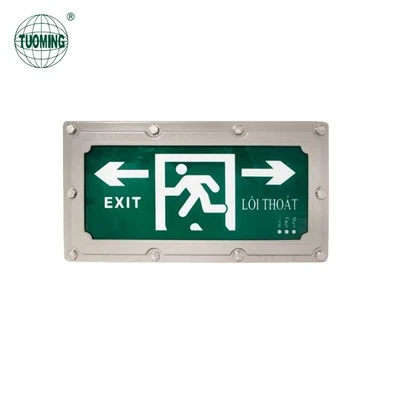
I’ve been in this industry long enough to know that when an emergency hits, the last thing anyone wants to worry about is whether their lighting will work. That’s why we don’t sell generic solar lights—we build systems that are tested to stand up to extreme weather, meet safety codes, and work for your specific space. If you’re looking to upgrade your emergency lighting or install new systems for your property, reach out to our team to discuss your needs, and we can help you find the right solution that’s reliable, cost-effective, and built to perform when you need it most.
Twin Head Emergency Light References
NFPA 101, Life Safety Code, National Fire Protection Association
2023 Solar Industry Association Emergency Lighting Report
United States Department of Energy, Outdoor Solar Lighting Performance Data
Zhongshan Tuoming Lighting Technology Co., Ltd.
As one of the leading emergency lighting manufacturers and suppliers in China, we warmly welcome you to buy advanced emergency lighting in stock here from our factory. All customized products are with high quality and low price.
Address: No.1, 10th Floor, No.17, Tongfu South Road, Guzhen Town, Zhongshan City, Guangdong Province
E-mail: 1989355847@qq.com
WebSite: https://www.tuominglight.com/
