If you’re running a busy logistics yard or port, a dock tractor operator is basically the glue holding your entire operation together. We’ve been supplying dock tractors for over a decade now, and let’s be real—we’ve seen it all. Some ops swear their new hires pick it up in a week, others take a month and still fumble. It’s not just about driving a big machine around, either. It’s about keeping docks safe, moving trailers on time, and not turning a routine run into a delay that messes up the whole supply chain. Today, I’m breaking down how we train our operators (not just because we sell tractors, but because we know a good operator makes our tractors look way better than a bad one ever could). Dock Tractor

First, let’s get one thing straight: this isn’t a “sit in a truck and go” gig. If you skip the basics, you’re asking for crashes, damaged trailers, or even worse—injuries. Our training starts way before someone even sits in the driver’s seat. We make every new hire nail a safety pre-screening first. That means they have to pass a basic eye test (no blurry vision reading mirrors mid-pull), a hearing check (you need to hear a backing alarm from 50 feet away, trust me), and a physical that proves they can lift 50 pounds—they’ll be hooking and unhooking trailer pins all day, and that’s no joke. We also vet for common sense: if they’ve got a record of reckless driving, that’s a hard pass. Dock tractors are heavy, and one wrong move can take out a whole line of containers.
Next, we skip the textbook lectures on day one. No one retains 50 pages of safety jargon when they’re nervous sitting in a $100k machine. Instead, day one is all about getting comfortable with the tractor itself, no moving required. We walk them through every button, lever, and alarm like we’re showing a friend a new gadget. Let’s be real—our tractors have way fewer buttons than a semi, but there’s a few that tripping up new folks: the trailer brake release, the fifth-wheel lock (that’s the metal plate that hooks to the trailer, for the newbies), and the back-up sensor override. We have them practice putting the fifth-wheel in neutral, testing the parking brake, and turning the tractor on and off 20 times before we even talk about driving. Most new operators are shocked how finicky the fifth-wheel is—mess that up, and your trailer could come loose mid-run. We make them hook and unhook from a static trailer 10 times until they don’t fumble the pin. No rushing here; half the mistakes we see on the job are from skimping on this step.
Day two is slow, controlled driving in a empty lot. We don’t let anyone near a dock or a trailer yet. This is all about muscle memory. We have them practice turning sharp (dock tractors have a way shorter wheelbase than semis, so their turning radius is wild—new folks always clip curbs or swing too wide), backing up in a straight line, and stopping smoothly. Here’s a pro tip we hammer into everyone: when backing up, turn your head, don’t just rely on the mirrors. Mirrors lie. A spot you think is clear might have a forklift creeping up from the blind spot. We also make them practice stopping 6 inches away from a cone, 12 inches away from a dummy trailer jack—small, precise moves that matter when you’re trying to park right next to a loading dock. On day two, we’re doing 10-minute sessions, not 2-hour stretches. People zone out, and that’s when mistakes happen. We also throw in a small emergency: what if the trailer won’t uncouple? We walk them through checking the pin, making sure the brake is released, not yanking on the lever like it owes you money.
By day three, we’re moving to actual docks, but only with a trainer right next to them in the passenger seat. This is where the rubber meets the road (literally). First, we teach them to “read” the docks. Every dock is a little different—some have raised edges, some have extra lines for power or air. We have them approach a dock at walking pace, not a sprint. New operators always want to go faster, like they’re in a personal car. We drill in the rule: 5 mph max in yard areas, 3 mph near docks, 1 mph when hooking up. That’s not just a random rule—it’s the speed that gives you enough time to react if a door flies open or a worker steps out. We also practice coupling and uncoupling on a real dock, not a static trailer. Once, a new operator hooked the fifth-wheel so tight they broke the pin trying to uncouple it—we make them work through that problem in training, so they don’t do it on the job and cost you a $500 part plus a 2-hour delay.
We also spend a full day on trailer types, because not all trailers are the same. A dry van is different from a reefer (the refrigerated ones), a flatbed, or a container chassis. Each has a different height, different pin sizes, different brake systems. New operators always mix up reefer brakes—they release the tractor’s brake but forget the reefer’s, so the trailer lurches forward. We make them pull each trailer type around the yard, practice hooking up, and test the brakes before they take one near a dock. We even throw in a trick: when approaching a reefer, tap the horn twice to let the driver inside know you’re there—they might be loading/unloading and not see you. That small move cuts down on so many near-misses.
Now, here’s the part most training programs skip: conflict resolution. Dock yards are busy, and tempers get short. A forklift driver yells at you for blocking the aisle, a receiver complains you parked the trailer in the wrong spot, a manager is texting you to move three trailers at once. We make our trainees role-play these scenarios. How do you stay calm when someone’s yelling? How do you prioritize which move is most important—moving a late trailer vs. keeping an aisle clear? We’ve seen too many good operators get fired because they lost their cool and cut someone off, or accidentally damaged a trailer in a hurry. We teach them: communication is half the job. A quick, “On my way, just finishing this hook-up” is way better than blowing off a request. And always, always radio your trainer or a supervisor if something feels off—no heroics.
We also do 30 days of on-the-job mentorship after the formal training is done. That’s a big one. We don’t just send someone out alone after 5 days. We pair them with a seasoned operator for 8 hours a day, shadowing, then driving alongside, then letting them take the lead with a trainer right there. We track their moves: did they stop at the check-in station? Did they do a pre-trip inspection every time they pick up a trailer? Did they signal when turning (even if no one’s around, it’s a habit)? Most new folks have a few rough spots—maybe they’re too fast when backing up, or they forget to check the tire pressure on the tractor every morning. The mentorship is where those habits get fixed, not in a classroom.
Wait, let’s talk about pre-trip inspections too—because this is non-negotiable. We make every operator do a full pre-trip before every shift, no exceptions. That means checking the tractor’s tires, brakes, lights, fluid levels, and also the trailer’s lights, brakes, and the fifth-wheel. A few years back, we had a customer whose operator skipped the pre-trip and blew a tire on the tractor, which sent a trailer into a guardrail—cost them $10k in damage and 8 hours of downtime. We drill into every trainee: if you don’t check it, it’s broken, and it’s your job to fix it (or report it) before you move. We even have a checklist printed right on the tractor’s door, so no one can say they “forgot.”
Another thing: weather training. Most training happens on a nice, sunny day, but what about when it’s raining, the docks are slippery, or there’s ice? We simulate that with wet paint (to mimic slick surfaces) and speed drills. New operators always slow way down when it’s wet, which is good, but they also forget to give themselves extra space when stopping. We practice stopping on the “slick” lot, so they get used to how the tractor handles differently. Ice is a whole other beast—we teach them to use gentle pressure on the brakes, no sudden turns, and to avoid any sharp moves. We’ve had too many operators slide into a dock because they didn’t train in those conditions.
Now, what about common mistakes we see? Let’s list them, because knowing what to avoid is half the battle. First, overconfidence. New operators think because they drive a car, they can drive a dock tractor. Wrong—dock tractors are 10 times heavier, have way bigger blind spots, and don’t stop on a dime. Second, skipping the fifth-wheel check. We tell every trainee to yank the trailer a little after hooking up—if it moves, it’s not locked. So many new folks skip that and end up with a trailer swinging behind them. Third, not using the radio. If you’re backing up, yell into the radio if no one’s around—at least someone hears you. Fourth, rushing. We’ve seen operators cut corners to save 2 minutes, and that’s when accidents happen.
At the end of the day, a good dock tractor operator isn’t just someone who can drive. They’re someone who’s safe, communicates well, and cares about not messing up the flow of the yard. If you’re in the market for reliable dock tractors (or if you need to train up your next crew), don’t cut corners on training. A $500 tractor is nothing compared to the cost of an accident or a delayed shipment. We’ve helped hundreds of yards train their operators, and we know that a trained crew makes our equipment perform way better.
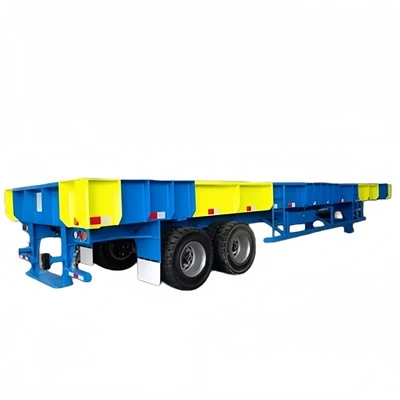
If you’re looking to upgrade your dock tractors or talk through a training plan for your team, reach out to us to get the conversation started. We’re happy to walk you through what works for your specific yard size, the types of trailers you use, and even customize a training session for your team. Don’t let unskilled operators hold your business back—invest in good equipment and good training, and your whole operation will run smoother.
Goosenck Skeleton Chassis References:
- Occupational Safety and Health Administration (OSHA). "Guidelines for Industrial Truck and Tractor Safety." U.S. Department of Labor, 2022.
- Port Equipment Manufacturers Association (PEMA). "Best Practices for Dock Tractor Operator Training." PEMA Industry Report, 2023.
- Logistics Management Association (LMA). "Yard Operations Safety and Efficiency Guide." LMA Annual Publication, 2022.
- National Workplace Safety Council (NWSC). "Pre-Trip Inspection Protocols for Yard Equipment." NWSC Training Brief, 2023.
Qingdao Leonmec Mechanical Co., Ltd.
As one of the most professional dock tractor manufacturers and suppliers in China, we have world-leading production equipment and strong manufacturing capabilities. Please feel free to buy durable dock tractor made in China here from our factory. For price consultation, contact us.
Address: ROOM 903, BUILDING 3 NO.480 JIANGSHAN SOUTH ROAD HUANGDAO DISTRICT (FORMER ECONOMIC & TECHNOLOGICAL DEVELOPMENT ZONE) QINGDAO CITY, SHANDONG PROVINCE P.R.CHINA
E-mail: info@leonmec.com
WebSite: https://www.leonmec.com/
