If you’ve ever scrolled through aerial work platform (AWP) listings online or chatted with a contractor about what makes one rig better than another, you’ve probably seen that little “certified” badge tucked somewhere in the specs. As someone who’s been selling AWPs for almost a decade—mostly scissor lifts, boom lifts, and telehandlers, the workhorses for construction, maintenance, and warehouse projects—I can tell you right now that certification isn’t just a marketing buzzword. It’s the whole reason a rental company or general contractor will sign off on using your AWP instead of grabbing a random off-lease unit from a buddy. Let’s break this down, no boring jargon, just the real stuff that actually matters for anyone putting people 30+ feet in the air. Aerial Work Platform
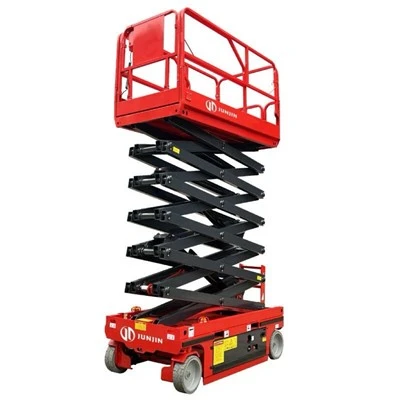
First off, let’s get one myth out of the way: certification doesn’t just mean the AWP isn’t going to collapse mid-job. Sure, that’s a huge part, but it goes way deeper than that. When a unit is certified, it’s proof that it’s passed a set of strict, standardized checks that cover every single part of the machine, from the hydraulic hoses that lift the platform to the emergency brake that kicks in if the operator slips on wet metal. Wait, you might ask—why does some certification carry way more weight than others? That’s where things get specific, and where 90% of new AWP buyers trip up.
Let’s start with the two big ones that everyone in the industry talks about in the US: ANSI A92 and SAE AS (wait, no, let’s update that—ANSI A92.20 is the current standard for mobile elevating work platforms, or MEWPs, which is the fancy technical name for the AWPs we sell). Here’s the thing: ANSI isn’t just a group of guys making rules in a conference room. It’s a group that brings together operators, safety experts, rental shop managers, even construction site foremen, to update rules every few years based on actual near-misses and accidents. The last big update was 2020, right? They tightened a ton of stuff, like requiring better guardrail stability, more sensitive tilt alarms, and even limits on how fast the platform can extend when it’s overloaded. If a unit isn’t certified to the latest ANSI standard, that’s a red flag—OSHA (the US Occupational Safety and Health Administration) actually uses ANSI standards to enforce worksite safety, so skipping that certification means a worksite inspection could shut down your entire project over a $20,000 AWP that doesn’t meet code.
Then there’s the operator side, which a lot of suppliers gloss over. Certified AWPs don’t just work better—they work more safely because the machine is designed to stop operators from making stupid mistakes. For example, a certified boom lift will have a load sensor that beeps like crazy if you stand too far forward on the platform, and it’ll even lock the boom from moving if the weight is off by more than 10%. Uncertified rigs? That sensor might be broken, or never installed in the first place. I had a client last year—small electrical contractor out in Phoenix—who bought a used uncertified scissor lift because it was $5,000 cheaper. A week later, their operator leaned over the rail to adjust a light fixture, and the platform tilted just enough to throw him 12 feet. No one was seriously hurt, but the contractor got fined $15,000 by OSHA and had to shut down a $200,000 project for a week. All because he skipped that $1,200 certification check. That’s when I realized how many people look at the upfront cost and miss the hidden costs of skipping certification.
Wait, but what about overseas certifications? If you’re selling or buying AWPs in Europe, CE marking is non-negotiable. CE isn’t like a random badge someone sticks on— it means the machine meets all EU safety, health, and environmental rules. I work with a few clients that import small boom lifts from China, and 9 times out of 10, those don’t have full CE or ANSI certification. Yeah, they’re cheaper, but here’s the catch: if you use an uncertified unit on a job that requires compliance, your client (the general contractor) is on the hook, not the supplier. I learned that the hard way when I referred a client to a guy selling cheap uncertified telehandlers, and that client got a $30,000 fine from CalOSHA. Even though I didn’t sell the units, my reputation got hit hard. Now I make it a non-negotiable: if it doesn’t have a current, third-party certification, it’s not going on my lot.
Now, let’s talk about what certification actually entails—because most people think it’s just a guy showing up, looking the machine over, and slapping a sticker on. Nope. A full certification isn’t a 10-minute walkthrough. When our service techs do a full certification, they tear down the hydraulic lines to check for internal wear (not just external leaks), test every emergency stop (including the one that triggers if the operator’s hands leave the controls), calibrate the tilt sensor so it’s not too sensitive or too loose, and even check the platform guardrails for give—like, push on the rail with 200 pounds of force to make sure it doesn’t bend. They also check the electrical system, which is a huge hidden risk for fires: frayed wires can short out when you’re 40 feet up, and uncertified rigs often have worn insulation that’s passed the point of being safe.
Another part most people don’t think about: certification means the AWP has a clear maintenance history. Wait, how? Because every time a unit is certified, the inspector writes down what parts they replaced, what issues they found, and when the next certification is due. If a unit has a certified record, you can go back and see when the last hydraulic fluid flush was, when the brakes were replaced, even how many hours it’s been used. Uncertified units? No paper trail. That means you could be buying a rig that’s 10 years old with a hydraulic pump that’s about to seize, and you’d have no idea. I had a return customer last month who traded in an old uncertified scissor lift—turns out, the previous owner never replaced the piston seals, and the lift was leaking fluid so bad that it was only at 50% lifting capacity. If he’d had it certified, the inspector would’ve flagged that, and he would’ve saved himself the hassle of a breakdown on the job.
Let’s get real for a second: I know everyone cares about price. AWP rentals and purchases are already tight margins, especially for small businesses. But here’s the thing: certified AWPs hold their value way longer than uncertified ones. Last year, we sold a 2018 boom lift that was fully certified for $18,000. A similar 2018 unit that wasn’t certified was listed for $12,000, but it took 6 months to sell because no contractor would take the risk. When we compared resale values this year, the certified one sold for $12,500—we used it for a year on local jobs, did two full certification checks, and sold it to a contractor in Denver. The uncertified one? It finally sold for $6,000, and the buyer had to get a full certification done that cost $1,800. So that $6,000 unit ended up costing the buyer way more in the long run. That’s the math most people miss when they see a lower upfront price.
Also, certification isn’t just for new or used units—even rental AWPs need to be certified every year. That’s the biggest reason rental companies pay extra for certified fleets: when a client shows up and sees the ANSI sticker, they don’t have to argue with their safety team about whether the unit is safe. I work with a national rental chain that only buys certified AWPs, and their safety manager told me that certification cuts their worksite accidents by over 70%. That’s not a coincidence. When the machine is tested to meet strict standards, operators are less likely to get hurt, which means less downtime, less insurance, less everything.
Wait, let’s address a common pushback I get all the time: “I’ve been using uncertified AWPs for 10 years and never had a problem.” Yeah, that’s possible. But that’s like saying you never got a speeding ticket because you never got pulled over. Accidents with AWPs are rare when you do it right, but when they happen, they’re catastrophic. I’ve seen the aftermath of a boom lift collapse on a construction site in Dallas a few years ago—two guys fell 35 feet, one died, one was paralyzed. The AWP was an old used unit that the owner got for cheap, and it had never been certified. The investigation found that the hydraulic cylinder had worn down to half its rated capacity, and no one caught it because there was no certification check. That’s not a “one-off bad luck” story—that’s a story of someone cutting corners on something that’s not optional.
As a supplier, certification is the backbone of my business. I don’t sell uncertified AWPs, not because I’m trying to upsell people, but because I don’t want to be the reason someone gets hurt, or the reason a project gets shut down. If you’re in the market for an AWP—whether it’s a scissor lift for warehouse work, a boom lift for exterior building maintenance, or a telehandler for material transport—don’t just ask for a “good deal.” Ask: “Is this unit current on full third-party certification?” Ask to see the certification sticker, the inspection report, the maintenance history. Any reputable supplier will have that stuff ready to send over within an hour.
If you’re still on the fence, let’s break it down simple: certification isn’t just a piece of paper or a sticker. It’s proof that the machine is safe, that it will hold up on your jobs, that it won’t cost you fines or downtime, and that it will hold its value when you go to resell it. At the end of the day, an AWP is only as good as the work it can do safely—and certification is the only thing that guarantees that.
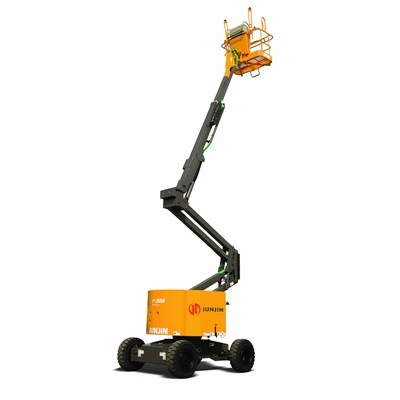
If you’re looking to buy or rent an aerial work platform, or want to chat more about what certification looks like for different job types, hit us up. We can walk you through our current certified fleet, answer any questions, and even connect you with local operators who can help you pick the right AWP for your specific project. Don’t cut corners on safety—let’s make sure your next job goes off without a hitch.
Used Scissor Lift References
ANSI A92.20-2020: American National Standard for Mobile Elevating Work Platforms (MEWPs) – Design, Calculations, Safety Requirements, and Tests
Occupational Safety and Health Administration (OSHA) 29 CFR 1926 Subpart L: Safety Standards for Aerial Lifts
CE Marking Requirements for Aerial Work Platforms (EN 280:2013 + A1:2015)
National Association of Rental Centers (NARC) 2022 AWP Safety and Certification Benchmark Report
Yantai Quanrui International Trading Co., Ltd.
As one of the most reliable aerial work platform manufacturers and suppliers in China, we’re featured by high quality customized products. Please rest assured to buy discount aerial work platform made in China here from our factory. Contact us for pricelist and quotation.
Address: No. 278, Sanya Road, Gaotuan Town, Fushan District, Yantai City, Shandong Province, China
E-mail: Info@quanjin1588.com
WebSite: https://www.qr1588.com/
