Hey everyone,
As a cement mixer supplier who’s been in the game for over 12 years, I’ve seen it all—from small construction guys panicking because their mixer got damaged mid-transport to big contractors saving thousands by getting the move right. Let’s cut the jargon: transporting a cement mixer isn’t just hitching it to a truck and hitting the road. Mess up, and you’re looking at dented drums, broken controls, or even a totaled unit. I’m gonna break this down like I’d tell a new guy on my crew—no fancy terms, just what actually works. Cement Mixer

First, let’s get one thing straight: not all mixers are the same. I sell two main types, so your transport plan changes big time. There are the “mini” push mixers—think the ones a mason rolls around a job site, holds 2-3 cubic feet, no engine. Then there are the “tow-behind” or “dump” mixers, the big ones that hook up to a pickup, hold 6-12 cubic feet, often have their own gas motor. And don’t even get me started on the truck-mounted ones—those are whole semi rigs with the drum built in, way bigger. I’m gonna focus on the tow-behind first because that’s what most of my customers buy, but I’ll touch on the others too, since people ask about ’em.
Let’s start with pre-transport checks—this is where 90% of mistakes happen, trust me. I see guys show up at the lot with a pickup, hook the ball up and bolt, no prep, and by the time they’re 10 miles down the road, the drum is tilted so bad cement is sloshing out, or the stabilizers are flapping in the wind. So first, drain every last drop of concrete or water out of the drum. If you leave wet mix in there, it’ll harden on the way, and you’ll have to chisel it off later—costs more time and money than you’d believe. Even a little leftover water can slosh and throw off the mixer’s balance, which’ll mess with your steering.
Next, lock the drum. I can’t tell you how many customers have called me crying because their drum was spinning on the highway, bouncing around and hitting the frame. Every tow-behind mixer has a locking pin or a brake for the drum—find that, stick it in. If yours doesn’t, tie it down with heavy-duty ratchet straps, crisscrossed tight, so it can’t move an inch. For mini push mixers, since they’re smaller, just make sure the handle is locked (some have a latch) so it doesn’t flop around, and drain any residual material.
Then, the stabilizers. Those are the legs that stick out to keep the mixer upright when it’s parked. Before you tow, fold ’em up all the way, and latch ’em. Don’t just set ’em loosely—if even one is hanging down, it can catch on a speed bump, a guardrail, or another car. I’ve had a customer who almost lost his mixer because a stabilizer hooked a light pole on the highway. Ouch.
Now, the tow vehicle. This is non-negotiable. A lot of guys try to use a half-ton pickup for a 10-cubic-foot mixer, and that’s a recipe for disaster. Check your tow rating—your pickup’s door jamb has a sticker that says how much it can pull. For a 6-cubic-foot mixer, you at least need a 3/4-ton pickup, no exceptions. For 12-cubic-foot? Go with a 1-ton or a small utility trailer built for heavy loads. Also, don’t forget the hitch. Use a weight-distributing hitch, not just a regular ball mount. Tow-behind mixers are heavy—if you don’t distribute the weight, the back of your pickup will sag, which messes up steering and brakes. That’s how you roll into a ditch, not fun.
When you’re hooking up, don’t cut corners on connections. The safety chains—cross ’em under the tongue of the mixer, so if the hitch comes loose, it doesn’t drag on the ground. And don’t just hook them loosely; leave enough slack to turn corners, but not so much that they drag on the pavement. The electrical plug for the taillights? That’s not a “optional” thing. Other drivers need to see your brakes and turn signals, especially if you’re hauling something slow. I had a customer once who skipped the taillights, got rear-ended on the highway, and totaled both his pickup and the mixer. Total nightmare.
Driving time. This isn’t your daily commute. You gotta adjust your speed. No going 70 mph on the highway—keep it under 55. Mixers are top-heavy, so speeding around curves is how you tip over. I tell all my customers: take turns slow, slow down for stops early, and stay at least two car lengths behind the guy in front of you. Braking distance is way longer when you’re towing a heavy load. Also, watch for bumps and potholes—avoid ’em if you can, because jostling too hard can loosen your straps or damage the mixer’s frame.
What about if you’re moving a truck-mounted mixer? Those are whole rigs, usually 10-20 cubic yards. For those, you’re not hitching to a pickup—you’re driving it, obviously, but still, make sure the drum is locked (most of these have a hydraulic lock), drain any leftover material, and check the truck’s brakes. Those things are super heavy, so you’ll need to plan stops every 50 miles or so to let the brakes cool down. Don’t overload the drum either—some guys try to cram extra cement in for the move, and that throws off the truck’s balance, leads to blowouts.
Wait, what about long distance moves? Like, driving from Atlanta to Chicago with a mixer. I’ve done that a few times for out-of-state customers. The same rules apply, but add a check every 50 miles. Pull over, get out, check the straps, check the hitch, check the stabilizers, make sure the drum is still locked. I had a customer who drove from Miami to Tampa, no checks, and one of the ratchet straps came loose, so the drum started bouncing. He almost crashed into a semi—total scare. So even if it’s a short drive, don’t skip the mid-way check.
Common mistakes to avoid, in my experience. First, overloading the mixer. A lot of new guys think “bigger is better” and stuff more concrete in than the rated capacity, which makes it heavier and harder to tow. Second, not balancing the load. If you leave more weight on one side of the drum, the mixer will pull to that side, making steering hard. Third, forgetting the safety items—like reflectors. If you’re moving a mixer on a secondary road after dark, add red reflectors to the back and sides, so other drivers can see you. I’ve seen mixers that were dark at night, got hit by a car—super avoidable.
If you’re renting a mixer instead of buying one, same rules apply, but make sure you inspect it before you tow it. Check the drum for dents, check the stabilizers for rust, check the hitch for wear. A lot of rental places have beat-up equipment, so don’t just take their word for it. I had a customer rent a mixer, tow it 20 miles, and the wheel fell off because the lug nuts were loose. He had to pay for repairs, so lesson there: inspect everything before you leave the lot.
Now, when you arrive at your job site, unload it properly too. Don’t just back up and drop it. For tow-behind mixers, put the parking brake on, lower the stabilizers all the way, so it’s steady. If you’re gonna be unloading concrete, make sure the drum is turned off and locked before you tilt it. For mini mixers, have a buddy help you carry it, don’t roll it off the back of a pickup—you can scratch the frame or hurt yourself.
At the end of the day, transporting a cement mixer is all about prep and being careful. I’ve been selling these for 12 years, and the customers who follow these steps barely ever have issues. The ones who skip checks? They’re the ones calling me at 7 PM on a Friday, panicking because their mixer is damaged and they can’t finish a job.
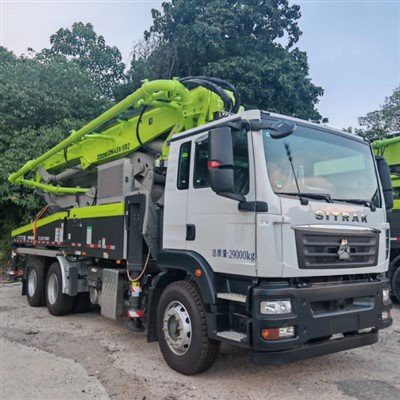
If you’re in the market for a cement mixer, or you need help figuring out the right transport for whatever unit you have, hit me up. I’ve got all kinds, from mini push mixers to heavy-duty tow-behinds, and I can walk you through exactly how to move yours without breaking anything. No stress, no hassle, just solid advice from a guy who’s been there.
Transit Mixer References:
- Construction Equipment Association. "Safe Transport of Mobile Construction Equipment." 2021.
- Occupational Safety and Health Administration (OSHA). "Mobile Equipment Transport and Operations." 2022.
- American Concrete Institute. "Best Practices for Handling and Transporting Ready-Mix Equipment." 2020.
Shandong Fuxin Automobile Technology Co., Ltd.
We’re well-known as one of the leading cement mixer manufacturers and suppliers in China, featured by quality products and good price. Please rest assured to buy advanced cement mixer made in China here from our factory. Contact us for more details.
Address: West of Nanshou Road, Beihai Road, Weifang City, Shandong Province
E-mail: h17616861003@gmail.com
WebSite: https://www.fuxinautomobile.com/
