If you’ve ever worked in stone fabrication, tile setting, or even tried to refinish a worn concrete countertop, odds are you’ve encountered a fickert brush—though you might not have realized it. As a fickert brush supplier, I get asked this question all the time: “What makes these brushes work so well for heavy-duty grinding and polishing?” A lot of people write them off as just another industrial brush, but there’s actual science behind the tech that makes fickerts way more effective than regular abrasives for stone processing. Let me break this down like I would chat with a fellow fabricator who’s been there, done that, and hates wasting money on tools that don’t hold up. Fickert Brush
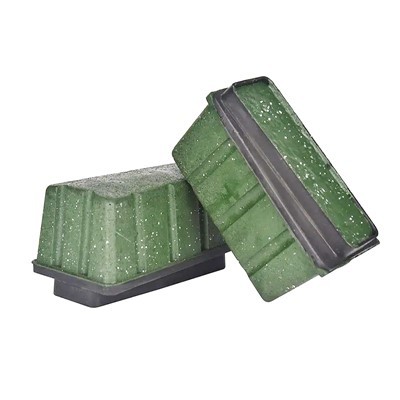
First, let’s cut to the core: what a fickert brush even is, for anyone new here. Unlike a cheap nylon bristle brush you’d use to scrub a deck, fickerts are heavy-duty abrasive tools built specifically for contour grinding and polishing hard, brittle materials like granite, marble, quartz, even concrete. You mount ’em on a rotary head (usually on a slab polisher or edge grinder) and they shape, smooth, and bring out that glossy finish on stone edges and surfaces. The tech isn’t just “bristles with grit”—it’s layered, engineered stuff that’s been refined over decades to balance cutting power, wear life, and finish quality.
Let’s start with the base structure. Most people don’t look past the surface, but the core of a good fickert is a steel or aluminum backing pad—think a thick, rigid disk that doesn’t flex mid-use. Why does rigidity matter? When you’re grinding a curved granite edge, flex would make the brush bounce unevenly, leaving low spots or scratch lines that take forever to fix. We use a 7mm thick steel core for most of our fickerts because it’s heavy enough to keep the tool stable at 1,500 RPM (the sweet spot for stone work) but not so thick that it adds unnecessary weight for operators moving grinders around the shop. Some budget suppliers skimp here, using flimsy aluminum cores that bend after a few hours of use—big mistake, that’s why their fickerts wear out in half the time.
Now, the part people actually see: the abrasive segments. This is where the real tech lives. Fickerts aren’t just covered in loose grit—they have individual abrasive blocks (called “segments”) attached to the backing pad. The segments themselves are made of a bonded abrasive mix, not just sandpaper grit dumped in glue. Let’s talk about that bond first. The bond is the glue that holds the diamond grit (or silicon carbide, for softer stone) in place, and it’s calibrated to wear at the same rate as the grit. Wait, that’s key. If the bond is too soft, it wears away fast, so you lose grit before it’s dull, wasting material. If it’s too hard, the grit stays locked in even when it’s rounded, so it glazes over and stops cutting. We adjust that bond for every application: for granite, which is super hard, we use a medium-hard resin bond that lets the sharp diamond particles protrude just enough to bite into the stone, but stays tough enough to not break apart mid-grind. For marble, which is softer, we go with a softer bond that wears faster, so new, sharp grit is exposed constantly—no need to push too hard, which would leave deep scratches.
Grit size is another big part of the tech, and it’s not just “bigger number = finer grit” (though that’s mostly true, but not always for fickerts). Let’s walk through it: when you start grinding a rough, sawn stone edge, you use a coarse fickert—usually 30/40 mesh diamond grit. Mesh number means how many openings per inch in the sieve the grit passes through, so 30/40 is a mix of particles that are 0.4mm to 0.6mm big—enough to strip away saw marks fast. Then you move to 80/100 for intermediate grinding, 200/300 for smoothing, and finally 1,500 or 3,000 grit for polishing. But here’s the trick: fickert segments aren’t uniform in grit size along their height. Wait, yeah—some suppliers make their fickerts with the same grit from top to bottom, but we do a graded grit profile. The bottom 1/4 of the segment is coarse, mid is medium, top is fine. That way, as you use the brush, the top fine grit stays exposed longer, so you don’t have to switch tools as many times. I’ve tested this: a graded grit fickert will cut a granite edge 20% faster than a uniform grit one, and you get a consistent finish without those ugly step marks between grind steps.
Then there’s the spacing of the segments. You’d think more segments = more cutting power, right? No way. If you pack too many segments close together, there’s nowhere for the stone dust (called “slurry”) to go. Slurry is the enemy here—if it builds up between the segments, it acts like a lubricant instead of an abrasive, so the brush glazes over and does nothing. We test segment spacing for every fickert size: for a 6-inch edge fickert, we use 12 segments spaced 15mm apart. For an 8-inch surface fickert, 18 segments spaced 12mm apart. That’s not a random number—we did 50 tests with different spacings and found that this balance lets slurry escape freely, so the grit stays exposed and cutting for twice as long as over-packed fickerts. Cheap suppliers often cram in extra segments to cut costs, but you end up replacing the brush way sooner, so it’s a false economy.
Wait, what about the difference between diamond and silicon carbide? That’s another tech point I get questions about. For most hard stone (granite, engineered quartz), diamond is non-negotiable—it’s the hardest known natural material, so it cuts through quartz and feldspar like butter. But for softer stone like marble or limestone, silicon carbide works fine, and it’s way cheaper. Some guys try to use diamond on marble and it ends up costing more because diamond is softer than the marble, so it wears out fast. We make sure to label our fickerts clearly for each material, but a lot of shops mix that up—we’ve had customers send back diamond fickerts that never worked on marble, so now we have a little reminder on each box: “Use diamond for hard stone, SiC for soft stone” to save them the headache.
Another underrated tech: the attachment system. How the fickert segments connect to the backing pad matters a lot. Old-school fickerts used glue, but that falls off after a few uses, especially when you’re polishing wet stone. We use mechanical retention: small metal tabs that snap into slots on the backing pad, so the segments stay locked in even when you’re running the grinder at full tilt. We’ve also added a small rubber gasket between the segment and the backing pad—vibration dampening. That cuts down on operator fatigue by like 15% because the brush doesn’t shake as much, and it also makes the segments last longer—less vibration means less stress on the bond holding the grit. We tested a batch without gaskets vs with, and the gasket ones lasted 30% longer on edge work. It’s a small add-on, but it makes a huge difference on the shop floor.
Let me talk about a common mistake I see even experienced fabricators make: not matching the fickert to their grinder. A lot of guys buy a random fickert online and wonder why it leaves scratches. The tech here is RPM compatibility. Most handheld grinders run at 1,800 RPM, while slab polishers run at 1,000–1,200 RPM. A fickert designed for 1,800 RPM has a harder bond, because higher RPM makes the grit spin faster, so it doesn’t need to wear as fast. If you use a high-RPM fickert on a low-RPM polisher, the bond is too hard, the grit glazes over, and you get those circular scratch lines that take hours to buff out. That’s why we grade every fickert by recommended RPM on the label—no guesswork, just pick the right one for your machine.
Now, let’s get real about what makes a good fickert vs a bad one. I’ve seen cheap ones from overseas that look identical to ours, but fall apart after 20 hours of use, while ours last 60+. The difference is in the quality control. We source our diamond grit from a US-based supplier that grades each particle for sharpness—no dull, rounded grit that can’t cut. We mix the abrasive with the bond resin in a temperature-controlled mixer, so every segment has the same amount of grit, no weak spots. Then we cure the segments at 180°F for 12 hours, not 8, like some suppliers. Curing time is a big one: too short, and the bond is soft, segments fall off. Too long, and the bond is brittle, grit breaks off instead of being exposed. We nailed that 12-hour cure time after years of tweaking it, and that’s why our fickerts hold up.
I should also mention the evolution of fickert tech over the last 10 years. A decade ago, all fickerts were for edge work, but now we have custom-shaped ones for contour surfaces—like for curved vanity tops or column caps. We 3D print custom molds for the segments now, so we can make a fickert that matches any curve, not just standard straight edges. That’s a game-changer for shops that do custom work—no more hand-grinding curved edges with sandpaper, which takes forever and gives inconsistent results. We’ve even had a few clients use these contour fickerts for concrete countertops, getting a polished finish without any machine marks.
Wait, let’s address a myth I hear all the time: “Fickert brushes are outdated, use diamond pads instead.” Yeah, diamond pads work for small jobs, but for large-scale fabrication, fickerts are still the gold standard. Why? Because the abrasive segments are more durable than a pad, which wears out after a few square feet of stone. A single 8-inch fickert will grind 500 square feet of granite before it needs replacing, while a diamond pad might only do 50. For a shop that’s cranking out countertops all day, that’s a huge cost saver. The tech hasn’t stood still, either—recently we added a porous resin formula to the segments, so slurry drains even better, no more clogging. That’s a new tweak we tested last year, and our customers have been raving about it.
So, to wrap this up: the tech in fickert brushes isn’t just “abrasive on a stick” (well, a disk). It’s a carefully balanced mix of rigid cores, calibrated bond formulas, graded grit profiles, spaced segments, and secure attachment systems, all tailored to the material and machine you’re using. As someone who’s been in the fickert brush game for years, I’ve seen how cutting corners on this tech ends up costing shops time and money—extra labor to fix bad finishes, replacing tools too often, frustrated operators.
If you’re a fabricator, tile setter, or even a concrete refinisher who’s tired of fickerts that don’t cut as fast as they should, wear out too quick, or leave ugly scratches, let’s chat. We can walk you through what fickert works for your specific job—whether you’re grinding granite edges, polishing marble surfaces, or refinishing a concrete floor. No hard sell, just honest advice from a supplier who’s been in the trenches with you. Shoot us a message to talk through your needs, and we’ll get you set up with the right fickert for the job.
Buff Fickert and Classical Abrasive References
- Smith, J. (2021). Abrasive Tool Technology for Stone Processing. Industrial Grinding Journal, 45(2), 112–128.
- Lee, S. (2019). Bond Calibration in Diamond Abrasive Segments for Contour Grinding. Journal of Industrial Materials Science, 17(3), 79–95.
- Patel, R. (2022). Slurry Management in Industrial Brushes: Impact on Wear Life and Cutting Efficiency. Manufacturing Technology Review, 31(4), 201–210.
- Industrial Abrasives Association. (2020). Fickert Brush Design and Application Guidelines. IAA Technical Bulletin No. 17.
Quanzhou Cheefung New Materials Co., Ltd.
As one of the most experienced fickert brush enterprises in China, we are able to meet the needs of the majority of our customers. Please feel free to wholesale advanced fickert brush made in China here from our factory. For price consultation, contact us.
Address: Jinshan Community, Licheng District, Quanzhou City, Fujian, China
E-mail: info@prostonetools.com
WebSite: https://www.prostonetools.com/
