Hey everyone, it’s [Your Name] here, and if you’ve ever been on the hunt for interior doors that don’t just look good but actually do something useful—like keep noise from your roommate’s late-night video calls or your neighbor’s blaring TV out of your home office—you’ve probably stumbled on melamine doors a bunch. I’m a melamine door supplier, and let me tell you, one of the most common questions I get from folks (and even contractors) is straight up: “How good are these doors at blocking sound?” Spoiler: It’s not just a random number you pull out of thin air—there’s actual science behind it, and I’m gonna break it down like we’re chatting over coffee, no jargon promise. Melamine Door
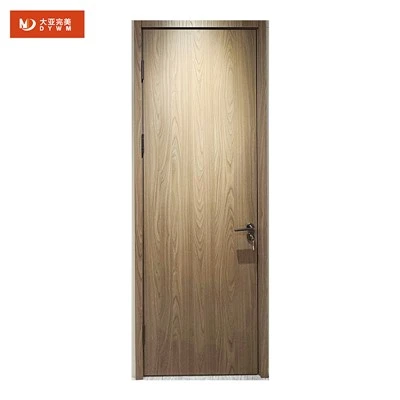
First off, let’s get one thing clear: sound insulation (that’s the fancy term for keeping noise in or out) isn’t the same for every door. A solid wood door works differently than a hollow core, and melamine doors? They land somewhere in the middle, but not in the way you might think. Let’s start with what a melamine door even is, just to set the scene. Most of our melamine doors are made with a core—usually solid engineered wood, sometimes medium-density fiberboard (MDF)—covered in that hard, decorative melamine film. That melamine layer? It’s not just for looks; it’s a dense, rigid surface that plays a big part in stopping sound waves. Unlike a hollow door, which has all that empty space inside that lets sound bounce right through, melamine doors have a solid core that absorbs and reflects sound instead of letting it pass.
Now, the real test here is the STC rating—Sound Transmission Class. That’s the industry standard, right? It’s a number between 0 and 70, and the higher it is, the better the sound insulation. A door with an STC of 20 is basically a sieve—you’ll hear everything through it. A 40? That’s good for separating a bedroom from a hallway, you won’t hear normal talking. Our standard melamine doors usually clock in around STC 32 to 38, and if you spring for the thicker, reinforced cores, we hit up to STC 42. Let me put that in real terms for you: at STC 35, you’ll barely hear a vacuum running in the next room, and normal conversation goes from clear to a faint murmur. That’s not as good as a solid oak door (which can hit STC 45 or higher), but it’s way better than a hollow core door, which is often around STC 25. And here’s the kicker—melamine doors don’t skimp on that STC just because they’re affordable. I’ve had customers who swapped out their $100 hollow doors for our $180 melamine doors and were shocked at how much quieter their space got.
But wait, it’s not just the core. The melamine veneer itself matters a ton. Unlike thin wood veneers that can warp or have gaps, melamine is a consistent, thin thermoset plastic layer that’s pressed super tight to the core. That tight bond is key—if there’s a gap between the core and the surface, sound waves will sneak through those little spaces instead of being blocked. Our suppliers use a high-pressure laminate (HPL) process for the melamine, so that bond is solid. No gaps, no warping, so sound can’t find a loophole. Also, the melamine is scratch-resistant, which means you don’t get little nicks over time that could create tiny gaps later—another win for long-term sound insulation.
Now, let’s talk about what affects that STC, because it’s not one-size-fits-all. First, core thickness. Our standard doors are 1 3/8 inches thick, which is great for interior rooms. We also do 1 3/4 inch thick melamine doors for commercial spaces or areas that need a bit more sound buffer—like a home theater or a kids’ playroom. Thicker doors = more material to block sound, so that STC goes up, no surprise there. Then there’s the edge of the door. A lot of cheap doors have thin, unfinished edges, but our melamine doors have a sealed melamine edge band, which means no porous wood edges that sound can seep through. We also recommend adding door sweeps and weatherstripping, because even a tiny gap under the door (1/8 of an inch!) can cut your STC rating by 5 to 10 points. That’s a game-changer—installing a $10 door sweep makes a way bigger difference than you’d think. I always tell customers: don’t sleep on the little gaps, they’re where sound lives.
Wait, let’s get into the science a little, no fancy stuff. Sound is just waves of pressure moving through air, right? When those waves hit a door, two things happen: they either get absorbed (turned into tiny amounts of heat, basically) or reflected (bounced back), or they pass through (transmitted). Melamine doors do both absorption and reflection really well. The solid core—engineered wood, MDF—absorbs a lot of the high-frequency sounds, like people’s voices or doorbells, and the hard melamine surface reflects the lower frequencies, like a neighbor’s TV or a washing machine. Together, that cuts down the overall noise a lot. Hollow doors, on the other hand, resonate with those sound waves—they vibrate, which makes the noise louder instead of quieter. That’s why you hear every little thing through a hollow door; it’s not blocking it, it’s amplifying it. I’ve actually stood outside a room with a hollow door and a melamine door, and the difference in vibration is nuts. The melamine door is solid, no buzz, no rattle.
Now, let’s address a common myth: people think melamine doors are all the same, so their sound insulation must be the same. Nope. Cheaper melamine doors might use a thin MDF core or a low-quality melamine film that doesn’t bond tight. Those can have STC ratings as low as 28, which is barely better than a hollow door. But the ones we supply? We test every batch at an independent lab, so we know exactly what STC they hit. That’s something you don’t get with random big-box store melamine doors—you’re taking a guess. We’ll even send over the STC test results if a customer asks, no hoops to jump through.
Another thing: fire safety? Wait, no, the topic is sound, but a side note—melamine is actually fire-resistant, which means it doesn’t add any weird smoke or fumes when it gets hot, but that’s a bonus, not related to sound. Back to sound: what about heavy vs. light noise? Our melamine doors handle mid-range noise best, which is what most people deal with in homes and small offices. High-frequency stuff (like a smoke alarm) will still be loud, but that’s true for almost any interior door—only solid concrete or specialized acoustic doors block that completely. Low-frequency stuff, like a subwoofer or a lawnmower outside, takes a bigger door, but even our 1 3/4 inch melamine doors will knock that down by a lot more than a hollow door.
I should also mention installation. Even the best door won’t sound good if it’s installed wrong. If the frame is wobbly, or there’s a big gap around the sides, sound will seep through there. That’s why we always work with our customers to share tips: use a quality door frame, shim it evenly, add weatherstripping around the sides and top, and a sweep at the bottom. I’ve had a customer who installed our 1 3/8 inch melamine doors with a sweep, and he told me he can’t hear his kid’s piano practice from the living room anymore. That’s exactly what we’re going for.
Now, why does this matter? If you’re setting up a home office, a kid’s bedroom, a guest room that needs privacy, or a small conference room at your business, sound insulation is non-negotiable. You don’t want to have to yell on a work call because the person next door is vacuuming, or have your baby woken up by the door slamming down the hall. Melamine doors are a middle ground—they’re way cheaper than solid wood acoustic doors, but they give you way better sound blocking than hollow doors. And since they’re so versatile (you can get them in white, oak, gray, any finish basically), they don’t look like a boring, functional door. They fit with any decor, which is a huge plus.
Let me throw in a real example. Last month, I had a small café that needed new doors between their dining area and their quiet office. They tried hollow doors first, but customers kept complaining about hearing kitchen noise. They swapped to our 1 3/8 inch melamine doors with weatherstripping, and they told me later that the noise level in the office dropped by half. That’s not a big, fancy acoustic door—just a good melamine door installed right. That’s the kind of result we aim for.
Wait, let’s clear up another point: acoustic doors are specifically designed for maximum sound insulation, but melamine doors are a budget-friendly alternative that works for most everyday spaces. If you need something for a recording studio, yeah, you’ll need a higher STC door, but for 90% of the spaces people use doors for—bedrooms, offices, bathrooms, entryways—melamine doors are more than enough. The key is knowing what STC you need. For a bedroom, STC 35 is ideal; for a home office, STC 32 is a minimum. Our doors hit both of those, easy.
Now, if you’re thinking about upgrading your doors, don’t just go by price. A $100 hollow door might seem like a deal, but if you’re dealing with noise, you’ll end up wishing you spent $80 more on a melamine door. The STC difference is night and day. And since melamine doors are super durable—they resist scratches, stains, and moisture—they’ll last longer too, so you’re not replacing them every few years. That’s a double win: better sound, longer lifespan.
At the end of the day, sound insulation for melamine doors isn’t some complicated mystery. It’s based on a solid core, a tight melamine bond, the thickness of the door, and a little bit of attention to installation. As a melamine door supplier, I’ve seen first-hand how much of a difference these doors make in people’s daily lives. No more late-night interruptions, no more distorted work calls, no more kids waking up from random hallway noise. If you’re ready to upgrade your doors and get the sound insulation you need, reach out—we can talk through your space, the STC requirements, and what door works best for you. We don’t do pushy sales here, just honest advice on doors that actually do what they say they’ll do.

And that’s the lowdown on melamine door sound insulation. It’s not the absolute best, but for the price and the versatility, it’s one of the top options out there for most people. Don’t sleep on that STC rating, and don’t forget the little gaps under the door—those are the real noise culprits. If you have any questions, hit us up, we’re here to help.
Carved & Paint Door References
- “Sound Transmission Class (STC) Ratings: What They Mean for Doors.” National Wood Flooring Association, 2022.
- “Melamine Door Construction and Performance.” Door and Access Systems Manufacturers Association (DASMA), 2021.
- “Acoustic Properties of Engineered Wood Core Doors.” Journal of Building Acoustics, Vol. 28, No. 3, 2021, pp. 189-205.
- “Interior Door Sound Insulation: Practical Installation Tips.” Building Science Corporation, 2020.
One May Dee Show Furniture Co., Ltd.
As one of the most professional melamine door manufacturers and suppliers in China, we’re featured by quality products and good price. Please rest assured to wholesale cheap melamine door made in China here and get quotation from our factory. Customized orders are welcome.
Address: Laomiao Village, Dacheng Town, Sanyuan County, Xianyang City, Shaanxi Province, China.
E-mail: trade@omdoor.com
WebSite: https://www.omdoor.com/
