Can I Use a 5W G4 Bulb Instead of a 10W?
Hey there, if you’re reading this, you’ve probably found yourself staring at a broken light fixture, scrolling through replacement bulbs, and hitting that little “filter” button to find G4 ones. That’s where I was last year, actually—my kitchen under-cabinet lights died, and I stood in the store for 10 minutes going, “Wait, does the wattage matter here?” As a G4 bulb supplier, I answer this exact question at least a dozen times a week, and it’s one of the most common (and most misunderstood) ones. Let me break it down for you—no confusing jargon, just real stuff I’ve learned from talking to electricians, homeowners, and everyone in between. G4 Bulb
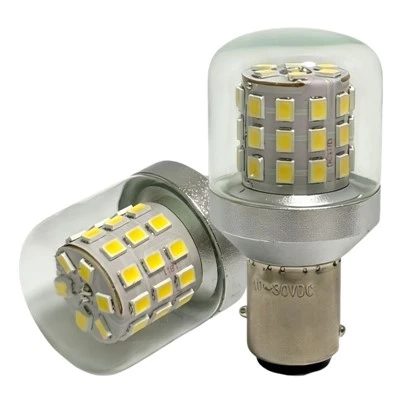
First, let’s start with the basics: what’s a G4 bulb, anyway? It’s a tiny, bi-pin base bulb—“G” stands for “bi-pin” (the two metal pins at the bottom), and “4” is the distance between those pins in millimeters. So if your old bulb has two pins 4mm apart, it’s a G4, and that part is non-negotiable. If you force a G9 or G5 into a G4 socket, you’re going to end up with wobbly lights, bent pins, or worse. But wattage? That’s where the confusion hits.
A lot of people think “higher watt = brighter light,” and to an extent, that’s true for old incandescent bulbs. A 10W incandescent G4 is definitely brighter than a 5W one—but wait, most G4 bulbs these days are LED, right? LEDs run way more efficiently. A 5W LED G4 can put out the same amount of light as a 20W incandescent, so don’t fixate on the number on the package alone. But the bigger question here is: can you swap a 10W G4 with a 5W one without breaking anything? The short answer is… usually, but it depends on two things: your fixture’s maximum wattage rating, and the type of bulb you’re using.
Let’s talk about fixture wattage limits first. Every light fixture has a label that says something like “Max 10W.” That number isn’t just a suggestion—it’s there to keep the wiring from overheating. If you put a bulb that uses more wattage than the fixture allows, you can damage the socket, melt the wiring, or even start a fire. But here’s the thing: that max wattage is based on the bulb’s heat output, not just its power draw. For incandescents, heat equals wattage, but for LEDs, it’s different. A 5W LED generates way less heat than a 10W incandescent, so even if your fixture says “Max 10W,” a 5W LED is almost always safe.
Wait, let me test that with an example. Last month, a customer emailed me saying she had a vanity light with a label that said “Max 5W,” and she wanted to switch from a tiny 5W incandescent to a brighter LED. I told her a 7W LED would work, and she wrote back a week later saying it was perfect—no overheating, no issues. So if your fixture’s max is 10W, a 5W bulb (whether it’s LED, halogen, or whatever) is totally fine. In fact, that’s the easy part. The problem comes when people try to put a 10W bulb in a fixture that’s rated for 5W—even if it’s LED, that extra heat could be a problem. But that’s not the question here; the question is 5W instead of 10W, so we’re mostly on the safe side here.
Now, let’s cover the different types of G4 bulbs, because that changes things. Halogen G4 bulbs are the traditional ones—they get really hot. A 10W halogen is way hotter than a 5W halogen, so if your fixture is rated for 10W max, swapping a 10W halogen with a 5W halogen is definitely safe. But if you’re going from a 10W halogen to a 5W LED, that’s also fine, but you might notice a small drop in brightness. Again, that’s not a bad thing unless you need that extra light. I’ve had customers who intentionally switch from 10W to 5W G4s because they want softer light for a bedroom or dining nook—no issues there.
Wait, but what about dimmable fixtures? Oh, that’s another big one. If your G4 bulb is going into a dimmer switch, you can’t just swap wattages blindly. Some dimmers are designed for specific bulb types—old incandescent dimmers won’t work well with LEDs, for example. But if you’re dimming a halogen G4, a 5W instead of 10W is totally fine, as long as the dimmer is rated for the total wattage of all bulbs. If you have two bulbs on a dimmer that’s rated for 10W, that’s 5W + 5W = 10W, which is exactly the max—no problem. If you tried two 10W bulbs, that’d be 20W, which would overload the dimmer, but that’s the opposite of our question here.
I should also mention compatibility with voltage. G4 bulbs are low-voltage, right? Most run on 12V, some on 24V. You have to match the voltage—if your old bulb is 12V, a 5W G4 has to be 12V too. If you put a 24V bulb into a 12V socket, it’ll be super dim, and vice versa. That’s a common mistake, but it’s not about wattage, it’s about voltage. So when you’re swapping, make sure both the old and new bulb have the same voltage. That’s a key point people miss, so don’t skip checking that.
Let me share a mistake I made a while back, to put this in real perspective. A few years ago, I was helping a friend install under-cabinet lights in his garage. His fixture had a label that said “Max 10W,” and he had 10W G4 halogens. I recommended 5W LEDs to save energy, and he agreed. But he didn’t check the voltage—his transformer was 24V, and he bought 12V 5W bulbs. They lit up for 10 seconds, then burned out. Oops. That’s a lesson I pass on to every customer now: voltage first, wattage second.
So, let’s sum up when it works, and when it might not. You can use a 5W G4 instead of a 10W if:
- The bulb’s pins fit (so it’s actually a G4—double-check the 4mm distance between pins)
- The voltage matches (same as your old bulb, usually 12V)
- Your fixture’s max wattage is at least 5W (which it almost always is—most G4 fixtures are rated 5W or higher)
- If it’s a dimmer, the 5W total (if multiple bulbs) is within the dimmer’s rating.
When it might be a problem? If you’re using a super old fixture that’s rated for, say, 3W, but that’s rare for G4s. If you’re trying to get more light—going from 10W to 5W will mean less brightness, so if you need that extra glow, you might want to look at a higher wattage LED, not lower. Wait, that’s an important caveat I almost forgot: wattage and brightness aren’t the same for modern bulbs. A 5W LED is about the same as a 15-20W incandescent, but a 5W halogen is still dimmer than a 10W halogen. So if you’re swapping halogens, going 5W will mean dimmer light, but if you’re going LED, it might be just as bright or brighter than a 10W halogen.
I get calls all the time from people who are worried about energy bills—switching from 10W to 5W G4s is a simple way to cut down on electricity use, especially if you have a lot of small bulbs. A 5W LED uses 5 watts per hour, versus 10W, so over a year, that adds up. For example, if a bulb is on 4 hours a day, that’s 1.8 kWh a year for 5W, versus 3.6 kWh for 10W. Multiply that by 10 bulbs, and you’re saving almost 20 kWh a year—nothing huge, but every little bit helps.
Another thing to consider: heat in enclosed spaces. If your G4 bulb is going into a closed fixture (like a ceiling fan light or a recessed light), too much heat can shorten bulb life. A 5W bulb generates less heat than a 10W, so that’s actually a benefit in enclosed spaces. I’ve seen 10W bulbs burn out fast in closed fixtures because they overheat, so switching to a lower wattage (if it fits the brightness need) can extend the bulb’s lifespan. That’s a win-win for you—cheaper to run, less frequent bulb changes.
Wait, what about non-dimmable vs dimmable bulbs? If your 5W G4 is a non-dimmable LED, and you put it in a dimmer switch that’s set to dim, it might flicker or buzz. But that’s not because of the wattage—it’s because the bulb and dimmer aren’t compatible. If you’re dimming, just make sure your 5W G4 is labeled “dimmable,” and it’ll work with any dimmer rated for low-voltage bulbs. That’s a easy fix, no need to worry about wattage here.
Let me make sure I’m not missing any edge cases. What about decorative G4 bulbs, like the ones used in chandeliers or string lights? Same rules apply—if it’s a G4 (pins 4mm apart, same voltage), a 5W instead of 10W is fine. I supply a lot of decorative G4s for weddings and events, and most of my customers switch to 5W for that soft, warm glow instead of the bright 10W ones. No complaints there—they just have to make sure the sockets fit, which they do because all G4s are the same pin size.
Now, let’s talk about when you shouldn’t use a 5W G4 instead of a 10W. If your fixture is a task light—like a desk lamp or a countertop light where you need bright light—going 5W might make it too dim. That’s a personal preference, not a safety issue, but it’s worth mentioning. If you’re replacing a 10W because it burned out, and you want the same brightness, a 5W LED might not cut it—you might need a 7W or 10W LED. But if you’re okay with slightly dimmer, that’s totally fine.
Another case: if your old bulb is a 10W incandescent, and you switch to a 5W LED, make sure the color temperature is what you want. LEDs come in warm white (2700K) to cool white (5000K), so even the same wattage can look different. But that’s a color choice, not a wattage swap issue.
At the end of the day, as someone who’s been selling G4 bulbs for over 5 years, I can tell you this: swapping a 5W for a 10W is almost never a safety risk. The only time I’d advise against it is if you need that extra brightness for a specific task, or if your fixture is rated below 5W (which is super rare for G4s). Most people don’t need the full 10W, especially with modern LEDs, so going lower is a smart move for energy and bulb lifespan.
If you’re still unsure, the best thing to do is check your old bulb’s label—write down the base type (G4), voltage, and wattage, and match that. If your fixture’s max wattage is higher than 5W, you’re good to go. If you’re ordering from a supplier, just ask them to confirm compatibility, and they’ll point you to the right bulb.
Speaking of which, if you’re looking for reliable G4 bulbs—whether you need 5W, 10W, or something in between—we’ve got you covered. We carry a wide range of options, from LEDs to halogens, in different voltages and color temperatures, so you can find exactly what fits your fixture and brightness needs. Whether you’re a homeowner doing a small remodel or a contractor outfitting multiple properties, we can work with you to get the right bulbs at the right price.
G4 Bulb Don’t hesitate to reach out if you have more questions—we’re here to help make sure you get the right bulb the first time, no wasted trips to the store or burned out bulbs. Just get in touch with our team, and we’ll walk through your specific setup to make sure your swap works perfectly.
References
- Lighting Facts: Wattage and Bulb Compatibility, U.S. Department of Energy, 2023
- G4 Bulb Specifications: Base and Voltage Requirements, Lighting Association of North America, 2022
- Low-Voltage Fixture Safety Guidelines, National Fire Protection Association, 2021
Nicebulbs
As one of the most professional g4 bulb manufacturers and suppliers in China, our products have good reputation in the market. Please feel free to wholesale cheap g4 bulb for sale here and get pricelist from our factory. Quality products and reasonable price are available.
Address: No. 86 Zhongli Road, Nancheng Street, Dongguan City, Guangdong Province
E-mail: vic@nicebulb.com
WebSite: https://www.nicebulbs.com/
