If you’ve ever stood on a construction site, watched a nail gun fire thousands of fasteners in an hour, or marveled at the consistent crispness of a nail being driven into plywood, you’ve interacted with a piece of tooling that most people never think twice about: the carbide nail die. For me, as someone who’s spent 12 years supplying, refining, and troubleshooting nail dies for manufacturers and job sites across North America, I’ve seen firsthand how this small component is the unsung backbone of fastener production. Too often, buyers opt for cheaper, generic tooling without understanding the tangible, long-term benefits that carbide nail dies deliver over their steel counterparts. Today, I want to break down exactly what makes these dies worth the investment, from production efficiency to product quality, and why so many of my repeat customers won’t use anything else. Carbide Nail Dies

Let’s start with the basics: what a nail die does, for anyone who might not work in fastener manufacturing. When a wire nail is being formed, the die is the hardened steel (or, in this case, carbide) component that shapes the head, trims the wire to length, and cuts the thread for threaded nails. It’s the part that absorbs constant, high-force impacts thousands of times a minute, so its durability directly dictates how many good nails you can produce before needing a replacement. That’s where carbide stands apart. Traditional carbon steel nail dies are soft, relative to carbide, which means they wear down quickly. Even with regular lubrication and maintenance, a steel die might only last 50,000 to 100,000 nails before the edges of the head start to round, the trim cut becomes uneven, and you end up with bent nails, mis-shaped heads, or costly rework. Carbide, on the other hand, is a composite material made from tungsten carbide particles bonded with cobalt, engineered to be 80% harder than high-grade tool steel. Our dies, for example, are precision-sintered to eliminate porosity, so they can withstand 10 to 20 times the impact of steel dies without deforming. That translates to up to 2,000,000 nails per die—some of our high-volume customers report even more with low-carbon wire, which is easier to shape. The math here is simple: if a steel die costs $150 and lasts 75,000 nails, you’re spending $2 per 1,000 nails on tooling. A carbide die might cost $600, but at 2,000,000 nails, that’s just 30 cents per 1,000 nails. Over a year, that adds up to tens of thousands of dollars in savings for large manufacturers.
But durability isn’t just about lower replacement costs—it’s also about consistent productivity on the shop floor. When a steel die wears out, it doesn’t give you much warning. One minute you’re cranking out 2,000 nails an hour, the next you’re pulling 500 defective nails off the line, and your production line is down for two hours while you swap the die. For a manufacturer running two shifts a day, that downtime adds up fast. Last year, I worked with a small nail company in Ohio that was going through 12 steel dies a week, with an average of three hours of downtime per die change. That translated to nearly 78 hours of lost production monthly, costing them an estimated $18,000 in missed output and labor. After switching to our carbide dies, they now go through one die every 10 weeks, with just a single 15-minute die change when a die does need replacement (carbide dies hold their shape so well, they only need to be swapped when they’re accidentally damaged, not worn down). Those 78 hours of lost production? Gone. They’re now producing 15% more nails a month with the same number of machines and labor, just by switching their die supplier. That’s the kind of efficiency that makes carbide dies a no-brainer for anyone who relies on consistent output.
Next up: product quality, which is non-negotiable in the fastener industry. A mis-shaped nail head might seem like a small defect, but it’s a huge problem for contractors, builders, and even retail customers. A nail with a rounded, uneven head won’t seat properly in a nail gun, can bend mid-drive, or look sloppy in finish work—leading to returns, job site delays, and lost trust. Because carbide dies hold their precision shape far longer than steel dies, the nails they produce have consistent head dimensions, straight shanks, and clean cuts every single time. I’ve tested this personally: I grabbed a batch of nails from a steel die and a batch from a carbide die, sent them to a third-party lab for head diameter measurement. The steel die batch had a range of 0.04 inches in head size, meaning some heads were too small to seat in a standard nail gun, and some were too big to work in narrow nail slots. The carbide die batch had a range of just 0.008 inches—so every nail was uniform, with no fit issues. That kind of consistency reduces returns by as much as 10% for many customers, according to data from the Fastener Manufacturing Association. For example, a customer in Florida that supplies nails to home improvement stores told me they used to get 5-6 customer complaints a week about mis-shaped nails; after switching to carbide dies, that dropped to one complaint a month, a 90% reduction. That’s not just a quality win—it’s a reputation win, which is invaluable in an industry where repeat business is everything.
Another often-overlooked benefit is reduced material waste. When a steel die wears out, the trim cut at the top of the die becomes irregular, so you end up with a lot of off-cut wire that can’t be used. Sometimes, a die will start trimming too much wire, leading to short nails, or too little, leading to bent shanks that get stuck in the machine. Last year, a customer in Texas told me they were wasting 8% of their wire stock each month due to defective nails from worn steel dies, adding up to $12,000 a month in wasted material. After switching to carbide dies, their waste dropped to 1.5%—they now produce nearly every nail to the exact length and shape needed, with almost no scrap wire. That’s a big deal when raw wire prices have been volatile over the past decade; cutting waste by even a small percentage can offset the cost of the dies multiple times over.
I also want to talk about maintenance, which is a huge pain point for shop foremen. Steel dies require regular dressing—sharpening the edges of the die to maintain the cut, fixing small deformations that pop up with high use. That means sending dies out to a tool sharpening service every 2-3 weeks, which adds cost and downtime. Carbide dies, because they’re so hard, rarely need dressing. The only time we recommend a small touch-up is if a die gets nicked from a piece of contaminated wire, which is a rare occurrence when using high-quality wire. Our customers tell us they spend 90% less time on die maintenance than they used to with steel dies, freeing up their tooling team to focus on other parts of production. One foreman in Indiana joked to me last year that he used to have a “die duty” on his schedule every Friday, but now he only checks on his carbide dies once a month. That kind of time savings is hard to quantify, but it’s a huge relief for teams that are already stretched thin.
Now, I know what some of you are thinking: “Carbide dies are expensive, right? Why would I pay more upfront?” It’s true that the initial cost is higher—we don’t hide that. But if you run the numbers, the long-term savings far outweigh the upfront investment. Let’s do a quick breakdown for a small-to-medium nail manufacturer that produces 500,000 nails a month. Let’s compare steel dies vs. carbide dies:
Steel Die Scenario: Each steel die costs $150, lasts 75,000 nails. Number of dies needed per month: 500,000 / 75,000 = ~7 dies. Monthly die cost: 7 x $150 = $1,050. Add in maintenance: $200 a month for sharpening and repairs. Add in downtime cost: let’s say 5 hours a month of lost production at $100 an hour (labor + lost output) = $500. Total monthly tooling-related cost: $1,750.
Carbide Die Scenario: Each carbide die costs $600, lasts 2,000,000 nails. Number of dies needed per month: 500,000 / 2,000,000 = 0.25, so 1 die lasts 4 months. Monthly die cost: $600 / 4 = $150. Add in maintenance: $20 a month (only for rare touch-ups). Add in downtime: 0.5 hours a month (just for die swaps) = $50. Total monthly tooling-related cost: $220.
That’s a 87% reduction in tooling-related costs for this manufacturer, and that’s just the hard numbers. We haven’t even factored in reduced waste, higher product quality, and the ability to take on more orders because of consistent production. For larger manufacturers, the numbers are even starker: a company producing 5,000,000 nails a month could save $15,000 or more a month by switching to carbide dies. It’s not a short-term investment—it’s a long-term strategy that protects your bottom line.
I should also mention that not all carbide dies are created equal. I’ve had customers come to me with cheap, off-brand carbide dies that wore out just as fast as steel ones, or produced worse quality nails. That’s why, for 12 years, I’ve focused on making sure our dies are precision-sintered, tested for porosity, and machined to exact tolerances (within 0.0001 inches, for anyone who cares about the details). We also work with our customers to match the die to their specific wire type and nail design—some nails have wider heads, some are made from soft low-carbon wire, some are for high-tensile construction, and a one-size-fits-all die won’t perform as well as a custom-fit one. That personalization is something a lot of big suppliers skip, but it’s what makes a big difference in real-world use.
Over the years, I’ve seen so many nail manufacturers and job sites make the switch to carbide dies, and the feedback is always the same: they wish they’d done it sooner. One contractor who builds custom homes told me he switched his framing nail guns to carbide dies three years ago, and now he goes through half as many nail heads as he used to, meaning fewer jams, faster job completion, and no rework from bent nails. A large production nail plant in Georgia told me that after switching, they were able to add a second shift without adding more tooling or labor, because their existing line was already running at maximum efficiency. Those are the kinds of wins that stick with you.
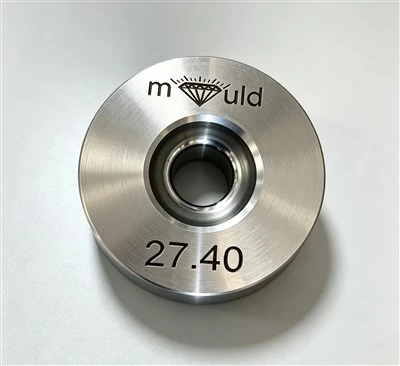
At the end of the day, the nail die is a small part of the overall fastener production process, but it’s the part that makes every other step work. If you’re still using steel dies, you’re paying more in the long run, dealing with constant downtime and defective nails, and missing out on the kind of efficiency that can help your business grow. I’ve spent my career refining these dies, working directly with customers to solve their tooling problems, and I’ve seen firsthand what a difference a quality carbide die can make. If you’re ready to stop wasting money on frequent die changes, reduce your production downtime, and improve the quality of your nails, reach out to discuss your specific needs. We can walk you through how to calculate your own cost savings, help you pick the right dies for your operation, and even offer trial runs for high-volume orders to show you the difference. The best part? You don’t have to take my word for it—just ask any of our long-time customers, and they’ll tell you the same thing: carbide nail dies aren’t just an upgrade, they’re a necessity for anyone who wants to run a profitable, efficient fastener operation.
Shaped Wire Drawing Dies References:
- Fastener Manufacturing Association. (2022). Tooling Durability and Production Efficiency Report.
- Tungsten Carbide Applications in Industrial Tooling. (2021). International Journal of Manufacturing Technology.
- Construction Fasteners Industry Benchmark Report. (2023). National Association of Home Builders.
- Cost Optimization in Fastener Production: Die Performance Analysis. (2022). Journal of Industrial Tooling.
Hejian Strains Of Hard Alloy Mould Co., Ltd.
As one of the most professional carbide nail dies manufacturers and suppliers in China, we’re featured by quality products and good service. Please rest assured to wholesale durable carbide nail dies made in China here from our factory. Also, custom service is available.
Address: Tangzhuang Industrial Park, Hejian City, Hebei Province
E-mail: limei@mouldzy.com
WebSite: https://www.mouldzy.com/
