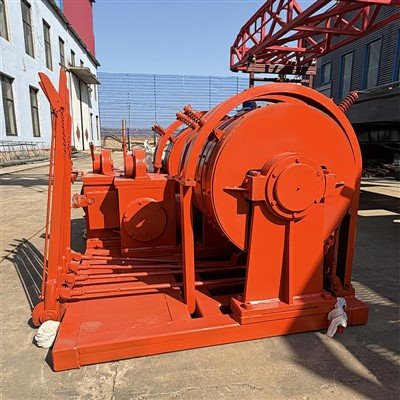
If you’ve ever stood near a working drilling rig, you know the second thing that hits you—after the thrum of the engine under your feet—is the noise. It’s not just loud; it’s the kind of sound that makes you raise your voice to speak, or reach for ear protection without thinking. As a drilling rig supplier who’s spent 18 years on job sites across North America, from oil fields in West Texas to natural gas projects in the Marcellus Shale, I get asked this question all the time: “What is a drilling rig noise level, exactly?” It’s not a number I can pull out of a thin air—it depends on the type of rig, how it’s set up, and where it’s working, but it’s a critical detail for anyone planning a project. Too much noise can lead to regulatory fines, worker safety issues, or even community pushback. Let’s break this down the way we talk about it on job sites: real, practical, and rooted in the equipment we supply. Drilling Rig
First, let’s start with the basics: how we measure drilling rig noise. We use decibels (dB), but not the kind of casual decibels you see in a movie review (like a 75 dB restaurant). The decibel scale is logarithmic, so every 10 dB jump makes a sound twice as loud to the human ear. That means a 90 dB sound isn’t just 10 dB louder than 80 dB—it’s twice as harsh, 100 dB is four times as loud as 80 dB, and so on. Most people can handle up to 85 dB for an 8-hour workday, per OSHA rules, beyond that, you need hearing protection. For context, a normal conversation is about 60 dB, a lawnmower is 90 dB, and a chainsaw hits 110 dB. That’s the range where drilling rigs land—but it varies a lot.
Let’s talk about the two main categories of drilling rigs we supply, because that’s where the biggest differences in noise come in. Onshore land rigs are the most common for our clients, used for oil, gas, or geothermal drilling on flat, remote, or semi-remote sites. Offshore rigs, whether fixed or floating, operate in open water, and their noise levels are a different beast because of regulatory rules for marine life and worker safety.
Onshore, small mobile drilling rigs—used for water wells, small gas wells, or construction geotech work—tend to clock in between 85 and 95 dB at 50 feet from the rig. These rigs are compact, often mounted on a truck chassis, so their engines and mud pumps are smaller, less powerful than large drilling units. The loudest parts here are usually the mud pump, which circulates drilling fluid down the hole, and the drawworks, the system that moves the drill pipe up and down. For a crew working right next to a small mobile rig, that’s right at the OSHA threshold for 8 hours of exposure—they’ll need foam earplugs or earmuffs to avoid long-term damage.
Larger onshore conventional drilling rigs, the kind used for major oil and gas wells, jump up to 95 to 110 dB at 50 feet. These are the rigs you see in documentaries, with tall masts, massive engine blocks, and separate components for power, circulation, and hoisting. The big three noise sources here are the diesel engines (which can be 1,500 horsepower or more), the mud pumps, and the rotary table that spins the drill string. A 10,000-horsepower drilling rig, operating at full capacity, can hit 115 dB at close range— that’s as loud as a jet engine taking off from 100 feet away. Standing 50 feet from that rig without proper protection would leave a worker with ringing ears (tinnitus) for days, and OSHA doesn’t allow more than 2 hours of exposure to 115 dB in a workday.
Offshore rigs add another layer of complexity. Fixed-platform offshore rigs have more enclosed equipment, so their noise is a bit different, but still high: main engine rooms can hit 110 to 120 dB inside the space, and at the deck edge, it’s around 95 to 105 dB. Floating rigs, like drillships, often have noise-reducing enclosures around engines and pumps because of regulations to protect marine life—sonar and other studies show that extreme noise can disrupt fish and marine mammals, so offshore operators have to balance worker safety with environmental rules.
Now, it’s not just the type of rig that matters—setup and location make a huge difference. A rig sitting on soft, uneven dirt will reverberate more than one set up on a gravel pad, adding 5 to 10 dB extra noise. Adding acoustic blankets or enclosures around the mud pumps and engines can knock 10 to 15 dB off, which is a big deal for compliance. I’ve seen clients save thousands in potential fines just by adding a simple enclosure to a high-noise component. Distance is also your friend: noise drops by about 6 dB every time you double your distance from the source. So a rig at 50 feet is 10 dB louder than the same rig at 100 feet, and 16 dB louder at 200 feet. That’s why we always advise clients to set up rigs as far from residential areas as local rules allow.
Regulatory stuff is another big piece we walk through with every client. OSHA in the U.S. sets the limit for 8-hour workday exposure at 90 dB, with a 5 dB increase for every hour you reduce exposure. The EPA also has noise guidelines for areas near residential zones—usually 55 dB during the day and 45 dB at night. A lot of our clients run into issues when they don’t check local noise ordinances before they site a rig. I once had a client in the Denver area who planned to set up a small mobile rig 1,000 feet from a subdivision, but a local ordinance limited construction noise to 60 dB at residential property lines. His rig was at 85 dB at that distance, so he had to adjust the setup with enclosures and schedule drilling during the day when ordinances are a bit looser. That’s the kind of detail we help with, not just selling rigs but making sure projects run smoothly.
Worker safety is non-negotiable, too. Even if a rig is “within regulations,” constant exposure to high noise levels causes hearing loss over time. We supply rigs with built-in noise reduction features, like enclosed engine compartments and vibration-dampening mounts, but we also train clients on the right gear: earmuffs rated for at least 25 dB, earplugs that fit correctly, and regular hearing tests for workers. Last year, we worked with a geothermal drilling company in California that switched to our latest rig model with a muffered mud pump, and they saw a 12 dB drop in noise levels on their site. That not only kept their workers safer, but let them drill closer to a small town without complaints.
I get questions all the time: “Can you get a drilling rig that’s quiet enough for a residential area?” The short answer is, it’s not going to be as quiet as a library, but we can adjust setups to meet most noise limits. For projects near homes, we recommend smaller, low-noise rigs with acoustic enclosures, scheduling drilling during daytime hours, and setting up temporary sound barriers. I’ve had clients drill water wells on the edge of suburban neighborhoods without a single noise complaint—because we planned the noise level from the start, not as an afterthought.
Here’s the thing about drilling rig noise: it’s not a static number. It changes based on depth of the well, what type of rock you’re drilling through, how much fluid you’re circulating, even the weather. Wind can carry noise farther, for example, so on a windy day, a rig might be 5 dB louder at the property line than it is on a calm day. That’s why when a client asks for a specific number, I always tell them it’s a range, not a exact figure. The good news is that modern drilling rig technology has come a long way in the last decade—we’ve added better engines, quieter pumps, and enclosure systems that cut noise without sacrificing performance.
As a supplier, we don’t just sell equipment; we work through these details with every client. We’ll walk through your site, your regulatory requirements, and your project timeline to recommend the right rig and setup to keep noise levels in line. Whether you’re drilling a small water well in a rural area, a major gas well in a remote field, or a geothermal project near a community, we’ve got the rigs and the expertise to help you meet all standards.

If you’re planning a drilling project and want to talk through noise levels, or just learn more about our rigs and how we tailor them to your site, don’t hesitate to reach out. We’re here to make sure your project is safe, compliant, and runs as smoothly as possible.
Mud Pump References
- Occupational Safety and Health Administration (OSHA). Occupational Noise Exposure. U.S. Department of Labor, 2024.
- API RP 4G. Recommended Practice for Drilling and Well Servicing Operations, 5th ed. American Petroleum Institute, 2022.
- U.S. Environmental Protection Agency (EPA). Noise Control Act and Community Noise Guidelines. 2023.
- International Association of Drilling Contractors (IADC). Rig Noise Management Best Practices, 2021.
Hebei Zhongxin Machinery Equipment Co., Ltd.
As one of the most experienced drilling rig manufacturers in China, we also support customized service. We warmly welcome you to buy high quality drilling rig for sale here from our factory. If you have any enquiry about pricelist, please feel free to email us.
Address: Wangxizhang Industrial Zone, Zhao County, Shijiazhuang City, Hebei Province, China
E-mail: zxnjbzg@163.com
WebSite: https://www.hbzxdrilling.com/
