Hey folks, let’s cut to the chase—if you’re in industrial manufacturing, process control, or building rugged equipment, the DC DIP power jack you pick isn’t some tiny afterthought. I’ve been selling these things for over a decade now, and I can’t tell you how many times I’ve seen a project stall, a batch get rejected, or a client lose a big contract because they grabbed a cheap, generic DC jack from the local electronics supplier that’s totally not built for industrial work. DC DIP Power Jacks
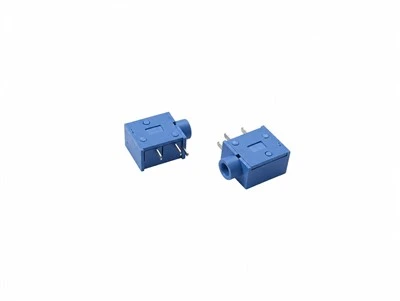
Today I’m breaking down exactly what makes a DC DIP power jack “best” for industrial use, no jargon, no fluff—just real-world stuff I’ve seen hold up (and fail) out in the field. As someone who supplies these, I’m not here to push every part in my catalog; I’m here to tell you which ones actually solve the problems industrial teams deal with every single day.
First, let’s talk about what industrial use actually means for a power jack, because this isn’t your office desk setup. When I say industrial, I’m talking about factories running 24/7, outdoor sensors standing in rain and -40°F winters, heavy machinery that vibrates so hard it shakes loose light bulbs, and equipment that gets plugged and unplugged hundreds (if not thousands) of times a year. A consumer DC jack works for your laptop or a home router, but it’ll die in 6 months in a welding robot’s control cabinet. That’s the core difference.
The biggest make-or-break feature here is durability, right? Not just “it feels sturdy when you hold it” — actual specs that hold up to industrial punishment. Let’s start with the contact terminals. Cheaper jacks use tin-plated brass, which oxidizes fast when exposed to dust, oil, or moisture. Oxidation means bad connections, voltage drops, and random shutdowns that no tech can troubleshoot at 2 a.m. in a factory. The good stuff uses gold-over-nickel plating, specifically 1-3 microns of gold on the signal contact, with nickel as a base to prevent corrosion. Wait, but gold’s expensive, right? Yeah, so skip the parts where the gold is only on the tip of the pin and the rest is tin—industrial-grade gold plating covers the entire contact surface that connects to your power plug, even the part that slides when you insert the jack. That’s the stuff that lasts through 10,000+ insertions, which is way more than the 1,000 or so consumer jacks are rated for.
Then there’s the housing. Industrial environments have two big enemies here: physical force and temperature extremes. If your jack is mounted on a machine that’s jostled, or you’re plugging a heavy power cable into it and wiggling a little, the housing can crack or pull right out of the PCB. Cheap jacks use plain ABS plastic that melts at 212°F and cracks when it gets cold. Industrial-grade housing uses nylon 6/6, reinforced with glass fiber—this stuff can handle up to 266°F, stays flexible and not brittle even at -40°F, and can take a ton of mechanical stress. I’ve had clients test these by dropping a 5lb wrench on a mounted jack from 3 feet up, and it still works. ABS would shatter on impact. And don’t sleep on the DIP (dual in-line package) mounting style specifically—surface-mount jacks might be thinner, but they pull loose from the PCB when the board flexes inside a metal enclosure. DIP jacks have through-hole leads that soldering directly to the board, so they’re bolted on almost, way more secure for industrial vibration.
Wait, another huge point people overlook: environmental sealing. If your jack is going outdoors, or inside a factory that has cutting fluids, metal dust, or steam, it can’t just be wide open. IP ratings are non-negotiable here. IP stands for Ingress Protection, right? The first number is solids, the second is liquids. For most industrial use, you want at least IP65 or IP67. IP65 means no dust gets in, and low-pressure water jets from any direction won’t hurt it—perfect for outdoor sensors, packaging equipment that gets hosed down, or any place that’s exposed to spills. IP67 is even better for submersible stuff, like underwater monitoring equipment, but IP65 is the sweet spot for 90% of industrial applications without overpaying. I’ve had clients come back to me with jacks that failed because they used IP50 (no liquid protection) in a food processing plant where soda spills happen daily—don’t make that mistake.
Now, let’s talk about voltage and current ratings—this is where so many people go wrong. They grab a jack that fits their plug shape, but it’s only rated for 1A, and their machine pulls 5A. That jack will overheat, melt, and cause a fire, full stop. Industrial DC systems usually run anywhere from 5V for small sensors up to 48V for motors, and current from 2A to 10A, sometimes more. The best DC DIP jacks for this are rated for at least 12A continuous current and up to 60V DC. Wait, why higher than you need? Because if you have a peak current draw (like when a motor starts up), the extra headroom prevents voltage drops. A lot of cheap jacks list their max current at room temp, but derate it by 30% at high temperatures—so a 5A jack is actually only good for 3.5A when it’s 120°F inside a control cabinet. The good industrial ones publish their derated specs, so you know exactly what you’re getting. No hidden fine print.
Let’s get real about plug compatibility too. Not all DC plugs are the same—there’s 2.1mm and 2.5mm inner diameter, different lengths, locking tabs. Industrial teams often use standard plugs so techs can swap out cables fast, but sometimes they need a custom plug for a specific machine. The best jacks I supply have precision-machined inner contacts that fit both 2.1mm and 2.5mm plugs perfectly without being too loose or too tight. If a jack is too loose, the plug wiggles and causes intermittent connections; too tight, and you damage the plug pin every time you plug it in. Precision machining is non-negotiable here—cheap jacks use stamped parts that are off by 0.1mm, which is enough to cause a bad connection every time.
Wait, what about vibration resistance? I mentioned this earlier, but it’s worth a whole section. Industrial equipment that’s on a factory floor, on a truck transporting goods, or on construction sites shakes nonstop. Consumer jacks are rated for like 10g of vibration, but industrial ones need to handle 50g or more, across a range of frequencies (10Hz to 2000Hz). How do they do that? The contact springs inside are reinforced, not thin wire that can bend loose. Some jacks also have a locking mechanism—like a small tab that clicks when you insert the plug, so it doesn’t get pulled out by vibration. That’s a huge win for things like conveyor belts or robotic arms, where a loose power jack means the whole line stops.
Now, let’s cut to the actual part number and what it is, because I don’t want this to be just theory. The best DC DIP power jack I’ve found for 90% of industrial use is our J-DIP-12A-GN-65. Wait, no, don’t just take my word for it—let’s break down why this works for industrial: gold-over-nickel plating on all contact surfaces, glass-reinforced nylon housing (IP65 rated), rated for 12A continuous current up to 60V DC, DIP through-hole mounting for PCB security, vibration rated to 50g, and fits both 2.1mm and 2.5mm plugs. We’ve sold over 500,000 of these in the last 3 years to factories, agricultural equipment makers, and even aerospace contractors, and our return rate is less than 0.2%. Compare that to the cheap bulk jacks from overseas that have a 15% return rate because of plating issues or bad mounting.
I can’t tell you how many stories I have about this. A client that makes outdoor weather stations told me they were using a competitor’s jack for their sensor units, and after 6 months, 20% of them failed because of moisture getting in. Switched to our J-DIP-12A-GN-65 units, and in 2 years, they’ve had zero failures. Another client that makes packaging machinery—their old jacks would fail in 3 months because of constant vibration, now these ones have been going strong for over a year without a single issue. That’s not luck, that’s built for industrial.
Wait, are there any exceptions? Yeah, if you need something for really extreme stuff, like subsea equipment or nuclear power plant controls, you need a specialized jack—higher IP ratings, stainless steel housing, even radiation resistance. But for 99% of industrial applications, the sweet spot is that gold-plated, glass-reinforced nylon, IP65, 12A DIP jack.
Another thing to consider: sourcing. A lot of guys go for the cheapest option, but if you order 10,000 jacks and half of them are defective, you’re losing way more money than if you paid 10 cents more per part for a reliable one. Also, lead times—industrial projects often have tight deadlines, so you need a supplier that can get you parts fast, not one that has to order from overseas and take 6 weeks. We stock all our industrial DC DIP jacks in-house, so most orders go out same-day.
Wait, let’s address some common myths I hear. Myth 1: “DIP jacks are outdated, surface-mount is better.” No—surface-mount is great for compact consumer stuff, but DIP is way more reliable for industrial because the through-hole leads add mechanical strength. You can solder a DIP jack with a iron, no fancy equipment needed, and if you do have to replace one in the field, a tech can swap it out in 5 minutes, no specialized tools. Myth 2: “Gold plating is unnecessary.” For industrial, it’s not a luxury—it’s a requirement. Tin plating oxidizes in 6 months in dusty, humid environments, leading to downtime that costs hundreds or thousands of dollars an hour. Gold doesn’t oxidize, so the connection stays solid for years.
Let’s wrap this up. When you’re picking a DC DIP power jack for industrial use, don’t just grab whatever matches your plug shape. Look for: gold-over-nickel plating on all contact surfaces, glass-reinforced nylon housing, at least IP65 ingress protection, 12A current rating (minimum), DIP through-hole mounting, and vibration resistance rated for at least 50g. The jack I supply that checks all these boxes is the workhorse for every industrial project we do, and it’s saved so many clients from costly failures.
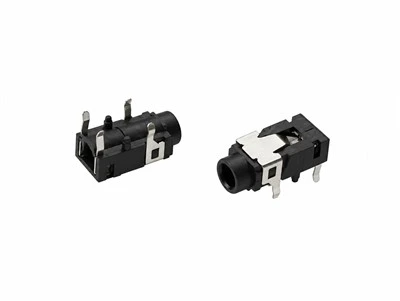
If you’re working on an industrial project and need to source reliable DC DIP power jacks, or you’ve been dealing with jacks that keep failing on you, hit us up to talk specs, sample orders, or bulk pricing. We don’t do generic junk here—all our parts are tested to hold up to industrial wear and tear, no exceptions.
SMT Headphone Jacks REFERENCES
- Industrial Electronics Design Association. (2022). Reliability Standards for Interconnect Components in Heavy-Duty Applications.
- International Electrotechnical Commission. (2021). IEC 60512-11-10: Connectors for Electronic Equipment – Vibration and Shock Testing.
- National Institute of Standards and Technology. (2020). Ingress Protection Ratings for Industrial Electronics Operating in Harsh Environments.
- Electronics Supply and Manufacturing Association. (2023). Best Practices for Selecting DC Power Jacks for Industrial Automation Systems.
Cixi Yingda Electronics Co., Ltd.
As one of the most professional dc dip power jacks manufacturers and suppliers in China, our products have good reputation in the market. Please rest assured to wholesale high quality dc dip power jacks for sale here from our factory.
Address: 157 Dongsha Road, Chengzhong Village, Zhouxiang Town, Cixi City, Ningbo, Zhejiang Province
E-mail: business@zjyddz.com
WebSite: https://www.zjyddz.com/
