If you’ve ever worked with materials like wood, foam, or lightweight composites, you know that repetitive cuts can turn a straightforward project into a tedious, error-prone chore. One tiny misalignment can throw off an entire run, wasting time, material, and the patience you brought to the job. That’s why our lattice saws exist—not just to cut, but to turn repetitive tasks into consistent, stress-free work. As a supplier who’s spent years talking to woodworkers, cabinet makers, sign makers, and hobbyists about their pain points, I’ve seen firsthand how the right technique paired with a reliable tool makes all the difference. This post breaks down how to master repetitive cuts with a lattice saw, sharing practical tips I’ve picked up from working alongside professionals who rely on our tools day in and day out. Lattice Saw
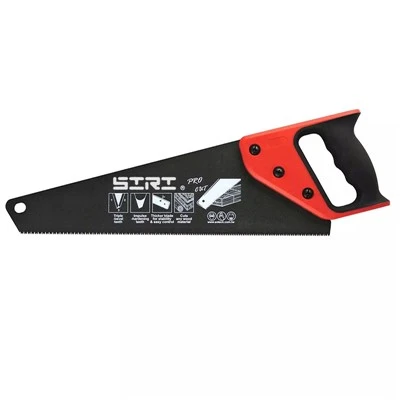
First, let’s clarify what a lattice saw is and why it’s uniquely suited for repetitive cuts. Unlike a handheld jigsaw or a circular saw, a lattice saw features a thin, flexible blade held taut between two vertical arms, designed to make smooth, precise cuts along a straight or curved path without shifting. Our models come with adjustable guides, depth stops, and blade tension settings, all built to support consistent cuts—even when you’re slicing dozens of identical pieces in a single session. The key to avoiding mistakes isn’t just the tool, though; it’s a mix of prep work, technique, and routine checks that keep your cuts aligned every time.
Start with material prep, because skimping here is where most people run into trouble with inconsistent cuts. I once had a customer, a custom cabinet maker who’d been using our lattice saw for five years, tell me he used to rush through this step and end up with 10% of his cut pieces too short or tilted. The problem? Warped, uneven material. If your workpiece is bowed or has uneven thickness, even the sturdiest lattice saw can’t compensate for that. For solid wood, I always recommend letting the material acclimate to your shop’s humidity for at least 48 hours before cutting—wood expands and contracts with moisture, and if it’s not in the right environment, your cuts will shift as you work. For foam or composite materials, check for dents or uneven edges along the cut line; a quick pass with a belt sander or a straightedge planer to true up the edge will give your saw a consistent surface to ride along.
Next, set up your saw for repetitive accuracy. This is where our lattice saw’s adjustable features shine, but you have to use them correctly. Let’s start with the blade: a dull blade causes friction, which makes the blade wander and creates uneven cuts. I tell all new customers to replace their blades every 10-15 hours of heavy use, or sooner if you notice the blade catching instead of slicing through the material smoothly. Tension is just as important: a loose blade will flex mid-cut, leading to curves or angled edges, while a blade too tight can snap. Our lattice saws have a simple tension gauge on the arm, and I suggest setting it so the blade deflects only 1/8 of an inch when you press it gently in the middle. For straight cuts, the most valuable accessory is the fence guide—a straight aluminum bar that clamps to your saw’s base, letting you set a precise distance from the blade to the fence for identical widths every time. If you’re cutting pieces that need to be the same length, add a stop block: a piece of scrap wood clamped to your workbench, positioned so the end of your workpiece hits it after you cut. I’ve seen professionals cut 50 identical 12-inch trim pieces in under 10 minutes just by using a stop block, instead of measuring and marking each one.
Once your saw is set up, the cutting technique itself is what prevents fatigue and mistakes. Repetitive cuts mean your body can get stiff, and small shifts in posture can throw off alignment. I recommend standing with your feet shoulder-width apart, both hands on the saw’s handles, and keeping your elbows close to your body to maintain control. When you start the cut, let the blade do the work—don’t push down hard or force the saw through the material. Pushing too hard makes the blade flex, and it also dulls the blade faster. Instead, apply steady, light pressure, and let the lattice saw’s blade glide along the cut line. For longer cuts, take a short break every 10 pieces to stretch your hands and arms; even a minute of rest can prevent a minor shake that leads to a bad cut.
One common mistake people make with repetitive cuts is reusing the same cut line multiple times, which leads to splintered edges and uneven cuts. Instead, mark your pieces with a pencil along the edge of the fence or stop block, so you’re always cutting fresh material that hasn’t been disturbed by previous cuts. If you’re cutting curved repetitive shapes—like identical trim pieces for a decorative frame—use a template. A template is a piece of scrap wood cut to your desired shape, clamped to your workpiece, and the lattice saw follows the template’s edge to create perfect, identical curves every time. I’ve had sign makers tell me that using templates with our lattice saw cut their production time for 20 custom signs in half, compared to drawing and cutting each piece by hand.
Quality checks are non-negotiable when you’re making repetitive cuts. It’s easy to fall into a rhythm and assume every cut is correct, but a small error in your setup early on can ruin an entire batch of pieces. After every 5 cuts, measure one piece against your template or a pre-cut perfect sample. Check the width with a tape measure, the angle with a speed square, and the edge smoothness with your finger. If you notice a piece is off by even 1/32 of an inch, stop and check your setup—maybe the fence shifted slightly, or the blade tension loosened. Most of the time, these small issues are easy to fix before they become a big batch of bad parts.
Another tip for repetitive cuts is to organize your workpiece and cut pieces as you go. I tell customers to sort their cut pieces into piles labeled “good” and “needs adjustment” as they work, so you don’t mix up good pieces with flawed ones. For larger projects, use a material cart to keep uncut stock nearby, so you don’t have to walk across the shop mid-cut, which can throw off your focus. Some of our regular customers even use a clipboard to track how many pieces they’ve cut, and note any adjustments they made to the saw for each batch—this helps them refine their setup over time, so future batches are even more consistent.
As a lattice saw supplier, I’ve also seen that investing in the right accessories pays off for repetitive work. Our range of guide bars, stop blocks, and template adapters are designed to work seamlessly with our saws, so you don’t have to rig up uneven or makeshift solutions. For example, our adjustable fence guide can be set for any width from 1 inch to 24 inches, so you can cut everything from small trim pieces to large panels without reconfiguring your setup. We also offer specialized blades for different materials—fine-tooth blades for delicate work like balsa wood, and thick blades for denser materials like hardwood—so you get the cleanest cut every time, which reduces the need for sanding or corrections later.

At the end of the day, mastering repetitive cuts with a lattice saw is about consistency, not perfection. It’s about creating a routine that works for your project, and using tools and techniques that eliminate unnecessary variables. If you’re tired of wasting time and material on inconsistent cuts, or if you’re ready to upgrade your saw for high-volume repetitive work, we’re here to help. We don’t just sell lattice saws—we work with craftspeople to find the right setup for their specific needs, whether that’s a small hobby project or a large production run. To learn more about how our lattice saws can improve your repetitive cutting workflow, get in touch with our team to discuss your project and find the right tools and accessories for you.
Coarse Branch Shears References:
- Smith, J. (2022). Precision Cutting Techniques for Woodworkers. Woodworking Journal.
- Tech Tips for Power Tool Users (2021). Professional Tool & Equipment Association.
- Material Acclimation Guidelines for Woodworking Projects (2020). National Wood Flooring Association.
- Lattice Saw Operation and Maintenance Manual (2023). Precision Cut Tools Inc.
Shandong Siri-Tools Co., Ltd.
As one of the most professional lattice saw manufacturers in China, we also support customized service. We warmly welcome you to buy high quality lattice saw for sale here from our factory. If you have any enquiry about cooperation, please feel free to email us.
Address: Hedong Distric, Linyi City, Shandong Province
E-mail: cathysiri@siri-tools.com
WebSite: https://www.siri-tools.com/
