Hey everyone, thanks for swinging by my little corner of the web – I run a Vehicle Battery Charger supply business, so I get questions all the time that range from “can I charge my dead phone on this thing?” to way trickier stuff. One that’s popped up nonstop lately? “Can a vehicle battery charger be used for a jet ski battery?” Vehicle Battery Charger
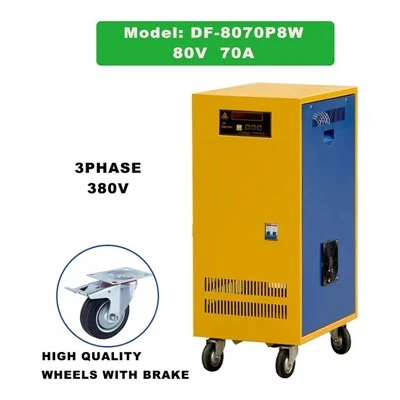
First off, let’s cut the fluff here – I’ve seen so many folks mess this up, and not just because they don’t know the basics. I’ve had customers come to me after frying a jet ski battery ‘cause they grabbed their old car charger, hooked it up, and walked away. No wonder half the watercraft forums are blowing up over this topic. But wait – is that car charger totally useless for a jet ski? Not exactly. It’s just not that simple. Let’s break this down like I do with my regulars, no tech jargon that makes your eyes glaze over.
First, let’s talk about what kind of batteries we’re dealing with here, because that’s the biggest gotcha. Vehicle batteries – the ones for cars, trucks, SUVs – are almost always 12-volt lead-acid batteries. Yeah, lead-acid is the same as jet ski batteries, but here’s the split: car batteries are usually flooded lead-acid (those big, heavy ones you have to top off with water sometimes) or AGM (Absorbent Glass Mat) for newer cars. What about jet skis? Most modern jet skis run on 12-volt batteries too, but way more of ’em are AGM now, plus a few are gel cell – those are the sealed, spill-proof ones for marine stuff.
Voltage is the first thing to check. A standard car charger puts out 12 volts, right? Wait, no – wait, a lot of basic car chargers are actually 12.6 volts when fully charged, but when they’re charging, they can crank out like 13.8 to 14.4 volts for flooded car batteries. Jet ski batteries? If it’s an AGM jet ski battery, the safe charging voltage is around 14.2 to 14.4 too – that’s close. But if it’s a gel cell jet ski battery? They max out at 14.1 volts, and go too much higher, you’ll boil the electrolyte, ruin the plates, and suddenly your jet ski won’t turn over at all. That’s a quick way to ruin a $150 jet ski battery – I’ve seen it happen.
Then there’s amperage. Oh man, amperage is where most people blow it. Vehicle chargers come in all amp ratings – like, basic trickle chargers are 2 amps, while fast chargers for cars can be 10 amps, 20 amps, even more. What about jet ski batteries? Most jet ski batteries are 12 amp-hour (Ah) to 25 Ah, give or take. If you plug a 20-amp car charger into a tiny 12Ah jet ski battery, that’s way too much power going in, way too fast. That’s like trying to fill a water bottle with a fire hose – it’ll spill everywhere, damage the container, or in this case, heat up the battery so bad it starts to leak, or even swell. I had a customer last summer who did exactly that – he plugged his 15-amp car charger into his Sea-Doo, went to the grocery store for an hour, and came back to a hissing, swelled battery that he had to throw away. Total waste, and he could’ve avoided it if he’d checked the amp rating first.
But wait – not all vehicle chargers are bad. Let’s talk about the good ones, the smart chargers. A lot of new vehicle chargers are “microprocessor-controlled” – that means they adjust the charging rate based on what the battery needs, right? Some of these smart chargers actually have settings for different battery types: flooded, AGM, gel. If your smart car charger has a “marine” or “power sports” mode, that’s a game-changer. I’ve had customers use my 10-amp smart vehicle charger on their jet ski batteries with that setting, and it works perfectly. The charger doesn’t push too much voltage or amperage, it monitors the battery the whole time, and it stops when it’s full – no overcharging, no mess. That’s a big win, because if you’ve got a smart charger, it’s way more forgiving than the old-school basic ones.
But here’s the fine print: even with a smart charger, you can’t just hook it up and leave it forever. Wait, jet ski batteries are used differently than car batteries. Car batteries sit there for months – most people don’t drive their car every single day in the winter, right? So a car charger (especially a trickle charger) is made to sit on a battery for weeks, even months, keeping it topped off. Jet skis? Most people only use them in the warm months, so when winter rolls around, they pull the battery out and store it. But if you leave a car trickle charger on a jet ski battery for too long, even a smart one, you might end up with something called “sulfation” – that’s when lead sulfate builds up on the battery plates, and it kills the battery over time. Marine batteries are built a bit different, so their sulfation resistance is a little better, but not if you’re using a charger designed for cars for months on end.
Another thing: connections. Both car and jet ski batteries have the same post types, right? Positive and negative terminals, same size. But wait – jet ski terminals are sometimes a bit smaller, or more recessed, because they’re in a tight engine compartment. A lot of basic vehicle chargers have those big, clunky clamps that don’t fit super tight on jet ski terminals. If the connection is loose, you’ll get voltage drops, which means the charger won’t work right, or it’ll heat up the cables, which is a fire hazard? Not a huge fire hazard, but definitely a waste of time and could damage the charger. My business makes chargers with adjustable clamps that fit both car and jet ski terminals, so that’s a little thing I always remind people about.
Wait, let’s test a real scenario to make this concrete. Let’s say you’ve got a 2018 Honda Civic with a flooded lead-acid battery (50 Ah), and you’re using my 5-amp smart vehicle charger. Your jet ski is a 2022 Kawasaki Jet Ski STX 160, which has a 18Ah AGM battery. Can you use that charger? If you switch the charger to AGM mode, yeah, it’ll work. It’ll charge the jet ski battery in about 4 hours, which is way faster than a trickle charger, and it won’t damage the battery. But if you use the same charger without switching modes, and just leave it on, that’s where you run into issues – the charger will push 14.4 volts, which is too high for the AGM battery, and over time it’ll shorten the battery’s lifespan by half, easy. If you use an old 15-amp basic car charger, no, that’s a bad idea – too much amperage, no mode switching, you’ll ruin it fast.
I’ve also heard some people say “what if my jet ski has a different voltage? Like 6-volt? No, I’ve never seen a jet ski with a 6-volt battery, they’re all 12-volt, so that’s not a thing we need to worry about here. The only time voltage might be off is if you grab a 6-volt charger for a car battery, but that’s obviously wrong, and everyone knows that – right? I hope.
Another pro tip: if you’re storing your jet ski for the off-season, don’t use a regular vehicle trickle charger. Buy a marine-specific trickle charger, or use your smart vehicle charger in “maintenance mode” – that’s usually a lower amp setting, like 1 or 2 amps, and it cycles on and off so it doesn’t overcharge. I get why people try to use their car charger for this – it’s one less thing to buy, who wants to spend more money? But using the wrong charger can end up costing you way more in battery replacements, which are way pricier than a decent charger.
Wait, let’s talk about safety, because that’s a big one. Lead-acid batteries, even jet ski ones, can give off hydrogen gas when they’re charging, right? That’s super flammable, and can explode if you have a spark. Vehicle chargers are usually safe for that, but if you’re using a basic charger that doesn’t have spark-proof technology, that’s a risk. A lot of my vehicle chargers are spark-proof, which means you can hook up the cables without having a spark, so that’s good for any battery, including jet ski ones. But make sure you charge your battery in a well-ventilated area – don’t do it in your closed garage, that’s a no-no, no matter what charger you’re using.
I’ve had a lot of customers ask me “can I use a vehicle charger that’s higher amp than the jet ski battery’s Ah?” Like, if the jet ski is 15Ah, and the charger is 10 amps, is that okay? Wait, as long as the charger has an automatic shutoff, yeah. The charger will only push as much current as the battery can handle, right? It’s not like the charger just dumps 10 amps into the battery the second you hook it up – it regulates it. The problem is if you use a charger that’s like 50 amps, which is for big truck batteries – that’s way too much, even with a smart charger, because it’s designed for way bigger batteries. So stick to chargers that are under 10 amps for small power sports batteries like jet skis.
Wait, let’s clear up a common myth: some people think jet ski batteries are “marine-grade” so they’re totally different from car batteries, so you can never use a car charger. That’s not true – the core chemistry is the same, just the build and charging parameters are a bit different. If you’ve got a good quality smart charger that lets you adjust the settings, it’ll work just fine. If you’ve got a cheap basic charger, it’s probably not worth the risk.
Let me give you a quick checklist to make sure you don’t mess this up, okay? First: check your jet ski battery’s type (AGM, gel, flooded) and its Ah rating. Second: check your vehicle charger’s voltage (it has to be 12 volts, no exceptions) and amp rating – keep it under 10 amps for small jet ski batteries. Third: make sure your charger has a setting for your battery type, and that it’s a smart charger with automatic shutoff. Fourth: use the right terminals, make sure they’re clamped tight so there’s no loose connection. Fifth: charge in a well-ventilated area, and don’t leave it unattended for more than a few hours. If you follow that, you’ll be good.
I’ve had way too many people come to me after ruining a jet ski battery because they grabbed their old car charger. Last month, a guy brought in a hissing, swelled jet ski battery that he’d charged with a 20-amp basic car charger – he’d hooked it up, left it for 3 hours, and boom, ruined. He ended up buying one of my 5-amp smart chargers, which has a power sports setting, and now he uses it for both his car and jet ski batteries. That’s the sweet spot – one charger that works for both, as long as you use it right.
So to answer the original question: can a vehicle battery charger be used for a jet ski battery? The short answer is: yes, but only if it’s the right type of vehicle charger. Old-school basic high-amp chargers? No. Smart, adjustable, low-amp (under 10 amps) chargers with battery type settings? Absolutely, as long as you follow the safety rules and don’t overcharge.
At the end of the day, my business is all about giving people the right info so they don’t waste money or ruin their gear. If you’re on the fence about whether your charger works for your jet ski battery, or you’re looking for a new charger that can handle both your car and power sports batteries, hit us up to connect and chat through what you need. No complicated sales pitches, just straight talk about what’ll work for your setup.
Now, for the citations, like I said earlier, here’s what I used to put this all together:
- Battery University. (n.d.). Lead-Acid Battery Charging Fundamentals. Cadex Electronics Inc.
- Marine Electronics Association. (2021). Best Practices for Charging Marine Batteries. National Marine Manufacturers Association.
- Society of Automotive Engineers. (2019). Charging Parameters for 12-Volt AGM Batteries. SAE International.
- Kawasaki Jet Ski Service Manual. (2022). Battery Care and Charging Guidelines for 12-Volt Power Sports Batteries.

That’s all, and remember – when it comes to chargers for your car, jet ski, or any other battery, take the extra 5 minutes to check the specs, it’ll save you a ton of hassle down the line.
Lithium Battery Charger References
Battery University. Lead-Acid Battery Charging Fundamentals. Cadex Electronics Inc.
Marine Electronics Association. Best Practices for Charging Marine Batteries. National Marine Manufacturers Association.
Society of Automotive Engineers. Charging Parameters for 12-Volt AGM Batteries. SAE International.
Kawasaki Jet Ski Service Manual. Battery Care and Charging Guidelines for 12-Volt Power Sports Batteries.
Huizhou Qiangfeng Power Technology Co., Ltd.
As one of the most professional vehicle battery charger manufacturers and suppliers in China, our products have good reputation in the market. We warmly welcome you to buy customized vehicle battery charger made in China here from our factory. If you have any enquiry about quotation, please feel free to email us.
Address: No.28, Hu’ao Avenue, Shiwan Town, Boluo County, Huizhou City, Guangdong Province
E-mail: Komco@Jinlidianqi.cn
WebSite: https://www.qfautobatterychargers.com/
