As a forklift solid tire supplier who’s spent the last 12 years on shop floors, loading docks, and construction yards, I get a lot of questions that sound simple at first, but unravel into a web of operational priorities, safety rules, and hidden costs. None have come up more often than this one: “Can I use forklift solid tires on a counterbalance forklift?” Forklift Solid Tire
I’ll admit, when a customer first asks this, my initial thought is usually, “That depends on two big things: the forklift itself, and what you’re actually using it for.” I’ve seen too many operators swap tire types without checking either, only to end up with premature tire failure, decreased lift capacity, or even near-misses when a load shifts because their tires couldn’t handle the weight. Let’s break this down like I would with a customer leaning over my shop counter, sipping a lukewarm coffee, and staring at a beat-up forklift they’re trying to get running for a big shipment next week.
First, let’s start with the basics: what’s a counterbalance forklift, and why do most of them come with pneumatic (air-filled) tires to begin with? A counterbalance forklift gets its name from the heavy cast iron block at the back, designed to balance the weight of a load on the forks at the front. That makes it work for loads up to 50,000 lbs, sometimes more, depending on the model. Pneumatic tires are the standard here for a long list of reasons: they cushion bumps from uneven warehouse floors, outdoor construction zones, or gravel yards, which protects the load and the forklift’s frame and hydraulics. They also have flexible sidewalls that conform to small irregularities, so you don’t jostle 1,000-lb pallets of fragile glass or produce. For years, pneumatic was the only game in town, especially for outdoor use. But over the last decade, solid forklift tires have gotten a bad rap in some circles—people think they’re only for indoor, constant-use warehouses with smooth concrete. That’s not true anymore, and that misconception is why so many people hesitate to swap them out, even when it makes perfect sense.
Now, the core question: can you mount solid tires on a counterbalance forklift? The short answer is: yes, in most cases, but only if you do it right. That means checking three non-negotiables: your forklift’s load rating, rim compatibility, and how the tires are going to be used. Let’s tackle each one, because skipping even one will lead to problems you don’t want.
First up, load rating. This is the big one, and it’s non-negotiable. Every forklift, regardless of tire type, has a load capacity stamped right on the data plate near the driver’s seat—usually something like “5,000 lbs at 24-inch load center.” Your tires also have a load rating, and when you swap to solid tires, you have to make sure that combined, your new tires can handle that full capacity, and more. Wait, hold on—did I just say more? That’s a huge benefit of solid tires that a lot of people miss. Pneumatic tires, even new ones, can lose 10-15% of their air pressure over the first month of use, especially if you’re moving over rough surfaces. A slightly underinflated pneumatic tire can cut its load capacity by 20% or more, fast. Solid tires, on the other hand, have a fixed load rating that doesn’t shift with pressure. That means if your forklift has a gross vehicle weight (GVW) of 10,000 lbs (that’s total weight: forklift, driver, forks, full fuel tank, and maximum load), your solid tires need to have a combined load rating of at least 12,000 lbs to be safe. Most solid forklift tires are overbuilt for this exact scenario. I’ve had a customer with a 6,000-lb counterbalance forklift operating in a steel yard, moving 5,500-lb coils all day, swap from pneumatic to solid and never look back—because he no longer had to stop every two hours to check tire pressure, and he didn’t have to worry about a tire blowing out on a rough patch of gravel that would have sent a $5,000 steel coil crashing to the ground. But here’s the catch: never use a solid tire rated for less than the load your forklift will carry. I once had a guy call me panicking because he’d bought cheap solid tires online that were marked for a 3,000-lb forklift, and he tried putting them on his 10,000-lb counterbalance. The tires deformed so badly after three days that the steel belts inside started poking through the rubber, and he almost lost a load when the forklift swayed on the dock. That’s the kind of mistake that makes customers swear solid tires are bad, when it was just bad sizing and bad planning.
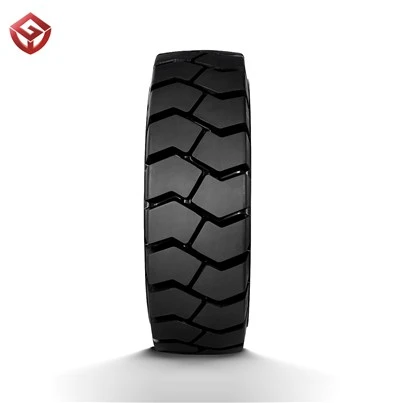
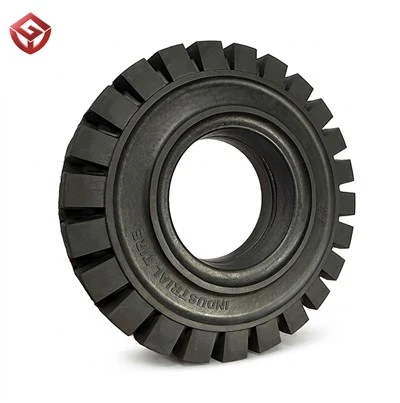
Second, rim compatibility. This is another make-or-break detail that’s easy to overlook. Counterbalance forklift rims are not one-size-fits-all, whether you’re running pneumatic or solid tires. Solid tires come in two main types: press-on solid tires (also called cushion tires) and solid pneumatic equivalents, which look like regular air-filled tires but are solid rubber on the inside. Press-on tires are the most common, especially for counterbalance forklifts used indoors, because they clamp directly onto the rim without needing a tube or an inner liner. But to mount a press-on solid tire, your rim has to have a specific taper size—usually 1.25 inches for most counterbalance models, but some older forklifts use a different taper, or have a different bolt pattern. If you try to force a press-on solid tire onto a rim that’s the wrong size, you’ll either damage the rim, or the tire will slip as the forklift moves, which is a massive safety hazard. I always tell customers to write down their rim’s measurements before they order: the inner diameter of the rim, the taper, and how many bolt holes it has, and send that to me when they’re checking tire sizes. I’ve even had a customer bring his forklift’s old tire to our shop, and we took a measurement right there in five minutes, so he didn’t order the wrong size. For solid tires that look like pneumatic tires, the rim has to be a standard fork tire rim, same as what you use for air-filled ones, but you have to make sure the bead of the solid tire fits tightly. Some lower-quality solid tires have beads that are too thin, so they slip on the rim when you corner hard with a heavy load. That’s why I only source solid tires with heavy-duty steel beads, tested to grip standard forklift rims, no custom modifications needed.
Third, and this is where a lot of customers get hung up: your operating environment. Solid tires aren’t for every counterbalance forklift use case, and I’ll be the first to tell you that. If you’re using your counterbalance forklift exclusively on smooth, level indoor concrete, moving light loads under 2,000 lbs, pneumatic tires might still be the better option. They give a smoother ride, absorb vibration better, and are cheaper to replace if you get a puncture (though let’s be real—punctures are rare with solid tires, especially if you get the right ones). But if your work is outdoors, on gravel, asphalt, or uneven construction sites, or if you’re carrying heavy loads over rough surfaces, solid tires are a game-changer. I had a customer who runs a lumber yard outside of Chicago, his 8,000-lb counterbalance forklift is moving 7,500-lb stacks of 2x4s and plywood all day on a mix of rough asphalt and dirt paths leading to storage lots. He was going through a set of pneumatic tires every three months, because they’d get punctured by nails on the lot or cut by sharp lumber edges. When he swapped to solid tires two years ago, he’s only replaced them once, and that’s only because he wore them down to the wear indicators, not because of punctures or blowouts. Another use case for solid tires on counterbalance forklifts: if you operate in a cold environment, like a freezer warehouse or a construction site in the Rocky Mountains in winter. Pneumatic tires lose pressure faster in cold temperatures, which cuts their load capacity, and they can become brittle in very cold weather, leading to cracks. Solid tires are made with rubber compounds that stay flexible in temperatures as low as -40°F, so they hold their shape, their load rating, and their grip, no matter the weather.
Wait, but let’s talk about the downsides, because no product is perfect, and I don’t want to sell you something that’s wrong for your operation. The biggest downside of solid tires on counterbalance forklifts is ride quality. Because there’s no air cushion, every bump on the floor or uneven patch jolts the forklift and the load. If you’re moving fragile items like glass bottles, computer monitors, or ceramic tiles, that extra vibration can cause damage. I always tell customers in that line of work to weigh the cost of replacing pneumatic tires (and the lost revenue from damaged goods) versus the cost of replacing solid tires. For example, if you go through a $200 set of pneumatic tires every month, and you spend $500 a month replacing broken inventory because of jostling, solid tires that cost $1,200 and last a year will save you money in the long run. Another downside: solid tires are heavier than pneumatic tires, which does add a tiny bit of extra wear on your forklift’s wheel bearings and brake components. But for most counterbalance forklifts, that’s negligible, especially if you’re not running the forklift at maximum capacity every single hour of the day. I’ve only ever had one customer complain about that, and he was running his forklift 24/7 moving 50,000-lb loads of heavy machinery parts, so we suggested he upgrade his wheel bearings when he bought the solid tires, and that fixed the issue.
Another common question I get: can you mix solid and pneumatic tires on a counterbalance forklift? The answer is a hard no. Never, under any circumstances, put one solid tire and one pneumatic tire on the same forklift. They have different traction, different load ratings, and different wear rates, which will throw off the forklift’s balance, especially when turning with a heavy load. I’ve seen a guy do this to save $200 on a new pneumatic tire, and his forklift tipped over while he was moving a 10,000-lb load, totaling the forklift and destroying the load. That’s the kind of mistake that stays with you, and it’s 100% avoidable. If you’re switching to solid tires, do all four at once, or replace the two rear tires (wait—no, wait, counterbalance forklifts have drive tires, right? Most counterbalance forklifts are rear-wheel drive, so the two back tires are the drive tires, and the front two are steer tires. So if you’re switching, you should replace the drive tires first, because those take the most wear, and then the steer tires after, but make sure they’re all solid, no mixing. That’s a small detail that makes a huge difference in safety.
Let me also clear up a myth that’s been going around for years: solid tires will damage your warehouse floor. That’s only true if you buy cheap, low-quality solid tires with hard rubber compounds. Good solid tires for counterbalance forklifts are made with a traction rubber that’s softer than old-style solid tires, so they won’t leave scuff marks or damage epoxy floors, even after years of use. I have a customer in a pharmaceutical warehouse with a brand-new epoxy floor, and he’s been running solid tires on his counterbalance forklifts for three years, no scuffs, no damage, and no complaints. The key is to get solid tires designed for indoor use, not the extra-heavy-duty ones for construction yards—those are harder, and will scuff floors.
So, circling back to the original question: Can I use forklift solid tires on a counterbalance forklift? The answer is yes, but only if you do your homework first. Step one: Check your forklift’s data plate for GVW and load capacity, so you know exactly what you need. Step two: Measure your rim’s size, taper, and bolt pattern to make sure your solid tires will fit. Step three: Assess your operating environment—outdoor, heavy loads, rough surfaces, cold weather? Solid tires are almost always a great choice. Indoor, light loads, fragile goods, smooth floors? Pneumatic might still work better for you. Step four: Buy from a reputable supplier (that’s me, by the way, the solid tire guy) who can help you match the right tire to your specific forklift and use case, not just sell you the cheapest set on the market.
I’ve been in this business long enough to know that forklift tire questions aren’t just about rubber and steel. They’re about keeping your operators safe, avoiding downtime that costs you thousands of dollars, and making sure your loads get where they need to go without damage or delay. I’ve seen customers go from losing hundreds a month on punctured tires and damaged loads to cutting their tire costs by 60% just by switching to solid tires on their counterbalance forklifts. I’ve also seen customers waste money on the wrong tires, create safety hazards, and end up stuck with a set of tires that don’t fit their needs. That’s why I always take the time to walk through every step with a customer, no matter how big or small their operation is.
If you’re a forklift operator, a warehouse manager, or a fleet owner sitting here thinking, “This sounds like it could work for my counterbalance forklift,” don’t guess. Send over your forklift model, the loads you carry, and where you’re running it, and we can talk through exactly what solid tires will work for you. No pressure, no hard sells, just 12 years of shop floor experience helping people make the right choice for their operation. At the end of the day, the best tire for your forklift isn’t the one with the lowest price tag—it’s the one that keeps you safe, keeps your forklift running, and keeps your business moving.
Solid Tire References
OSHA. (2022). Powered Industrial Truck Operator Training. Occupational Safety and Health Administration.
Forklift Tire Association. (2021). Solid vs Pneumatic Forklift Tire Performance Guidelines. Forklift Tire Industry Standards Board.
National Warehouse Association. (2023). Fleet Maintenance Best Practices for Material Handling Equipment. National Warehouse and Distribution Association.
Zhejiang Guowei Rubber Co., Ltd.
Zhejiang Guowei Rubber Co., Ltd. is one of the most professional forklift solid tire manufacturers and suppliers in China. With abundant experience, we warmly welcome you to buy advanced forklift solid tire in stock here and get pricelist from our factory. Quality products and reasonable price are available.
Address: No. 10, Nanyang 4th Road, Duqiao Town, Linhai City, Taizhou, Zhejiang Province, China
E-mail: gwsolid@gmail.com
WebSite: https://www.forkliftsolidtires.com/
